


Page 173 - (ISC)² CISSP Certified Information Systems Security Professional Official Study Guide
P. 173
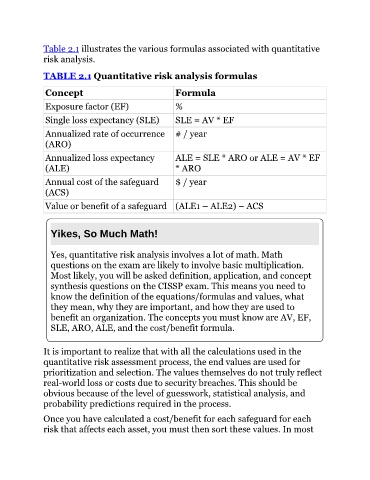
Table 2.1 illustrates the various formulas associated with quantitative
               risk analysis.


               TABLE 2.1 Quantitative risk analysis formulas

                Concept                                    Formula

                Exposure factor (EF)                       %

                Single loss expectancy (SLE)               SLE = AV * EF

                Annualized rate of occurrence              # / year
                (ARO)

                Annualized loss expectancy                 ALE = SLE * ARO or ALE = AV * EF
                (ALE)                                      * ARO

                Annual cost of the safeguard               $ / year
                (ACS)

                Value or benefit of a safeguard (ALE1 – ALE2) – ACS


                  Yikes, So Much Math!


                  Yes, quantitative risk analysis involves a lot of math. Math
                  questions on the exam are likely to involve basic multiplication.
                  Most likely, you will be asked definition, application, and concept
                  synthesis questions on the CISSP exam. This means you need to
                  know the definition of the equations/formulas and values, what
                  they mean, why they are important, and how they are used to

                  benefit an organization. The concepts you must know are AV, EF,
                  SLE, ARO, ALE, and the cost/benefit formula.


               It is important to realize that with all the calculations used in the
               quantitative risk assessment process, the end values are used for
               prioritization and selection. The values themselves do not truly reflect
               real-world loss or costs due to security breaches. This should be
               obvious because of the level of guesswork, statistical analysis, and
               probability predictions required in the process.


               Once you have calculated a cost/benefit for each safeguard for each
               risk that affects each asset, you must then sort these values. In most

