


Page 181 - Artesania Catalogo_Neat
P. 181
Zone III- Cibao: Monseñor Nouel (Bonao), La Vega, Espaillat (Moca), Hermanas Mirabal
          (Salcedo) Santiago y Puerto Plata.

     This is the zone with the greatest number of artisans,        Santiago, the second city of the country in political and
according to the diagnostic survey conducted in 2007          economic importance, has several amber mines on the pro-
(41.37% in Central Cibao) where the most vivid and visited    vincial border with Puerto Plata – known as the sweetheart
carnivals are celebrated in the cities of Bonao, La Vega and  of the Atlantic - where workshops also operate for jewelry
Santiago which have given rise to the existence of many       and stone-cutting of this fabulous semi-precious stone,
workshops of masks and disguises.                             still in great demand in the national and foreign markets.
                                                              Puerto Plata continues to offer a “market” for the artisans
     This is also the zone with the most production of ce-    of this province, especially dedicated to working with im-
ramics in the country, in the city of Bonao and its clay      berlita petrified wood and amber jewelry.
workshops along the Duarte Highway as well as in the
community of Higüerito in the Province Espaillat (Moca)            The city of Santiago and La Vega have an important
where they make faceless ceramic dolls and traditional        carnival tradition with its distinctive figure of devils and dis-
clay waterpots, kettles and griddles utilized in the making   guises using impressive masks made of papier mache and
of casava.                                                    majestically colorful costumes.

     Bonao, Jarabacoa and Constanza produce bam-                   In the community of El Pino, at Km. 8/12 of the Duarte
boo furniture in workshops sponsored by ICDF Technical        Highway between La Vega and Bonao, decorated wooden
Mission and Mission Taiwan in Dominican Republic. To date,    shallow basins, forks and spoons are offered, made of al-
the artisans making bamboo products are organized in the      macigo and fig branches painted with country landscapes.
Cooperaive COOPBAMBÚ Juma-Bonao, to market their
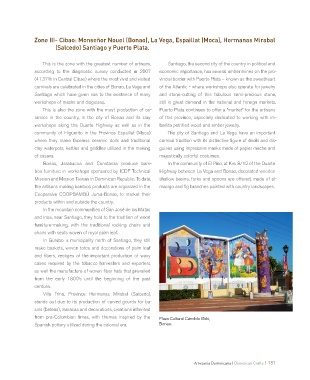
products within and outside the country.                      Plaza Cultural Cándido Bidó,
                                                              Bonao.
     In the mountain communities of San José de las Matas
and Inoa, near Santiago, they hold to the tradition of wood
furniture-making, with the traditional rocking chairs and
chairs with seats woven of royal palm leaf.

     In Gurabo, a municipality north of Santiago, they still
make baskets, woven totes and decorations of palm leaf
and fibers, vestiges of the important production of waxy
cases required by the tobacco harvesters and exporters,
as well the manufacture of woven fiber hats that prevailed
from the early 1800’s until the beginning of the past
centure.

     Villa Trina, Province Hermanas Mirabal (Salcedo),
stands out due to its production of carved gourds for ba-
sins (bateas), maracas and decorations, creations inherited
from pre-Colombian times, with themes inspired by the
Spanish pottery utilized during the colonial era.

                                                              Artesanía Dominicana | Dominican Crafts | 181

