


Page 101 - Basic Principles of Textile Coloration
P. 101
90 NATURAL CELLULOSIC FIBRES

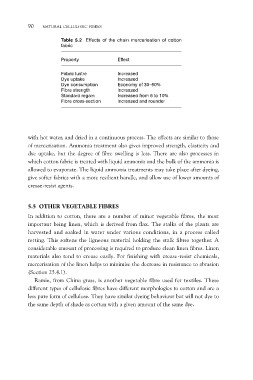
Table 5.2 Effects of the chain mercerisation of cotton
fabric

Property                      Effect

Fabric lustre                 Increased
Dye uptake                    Increased
Dye consumption               Economy of 30–50%
Fibre strength                Increased
Standard regain               Increased from 6 to 10%
Fibre cross-section           Increased and rounder

with hot water, and dried in a continuous process. The effects are similar to those
of mercerisation. Ammonia treatment also gives improved strength, elasticity and
dye uptake, but the degree of fibre swelling is less. There are also processes in
which cotton fabric is treated with liquid ammonia and the bulk of the ammonia is
allowed to evaporate. The liquid ammonia treatments may take place after dyeing,
give softer fabrics with a more resilient handle, and allow use of lower amounts of
crease-resist agents.

5.5 OTHER VEGETABLE FIBRES

In addition to cotton, there are a number of minor vegetable fibres, the most
important being linen, which is derived from flax. The stalks of the plants are
harvested and soaked in water under various conditions, in a process called
retting. This softens the ligneous material holding the stalk fibres together. A
considerable amount of processing is required to produce clean linen fibres. Linen
materials also tend to crease easily. For finishing with crease-resist chemicals,
mercerisation of the linen helps to minimise the decrease in resistance to abrasion
(Section 25.4.1).

   Ramie, from China grass, is another vegetable fibre used for textiles. These
different types of cellulosic fibres have different morphologies to cotton and are a
less pure form of cellulose. They have similar dyeing behaviour but will not dye to
the same depth of shade as cotton with a given amount of the same dye.

