


Page 56 - Fisika Terapan for Engineers and Scientists
P. 56
256                                CHAPTER 8  Conservation of Energy


                                                                          (a)
                                                                                                        Horse’s pull
                                                                                                        is parallel to
                                                                                                        inclined surface.


                                                                                      f

                                                                          (b)
                                                                              y     N
                                                                                                        x axis is chosen
                                                                                                   x    parallel to inclined
                                                                                                        street.
                                                                                                T
                                                                             O  f k           For constant velocity,
                                                                                              net F  and net F y
                                                                                                 x
                                                                                       f      are zero.
                                                                                     w

                                                                          (c)
                                                                              y     N
                                                                                       N y
                                                                                                   x
                                                                                           T x
                                                                                  f k,x
                                                                                                T
                                                                             O  f k       w y  = –mg cos f
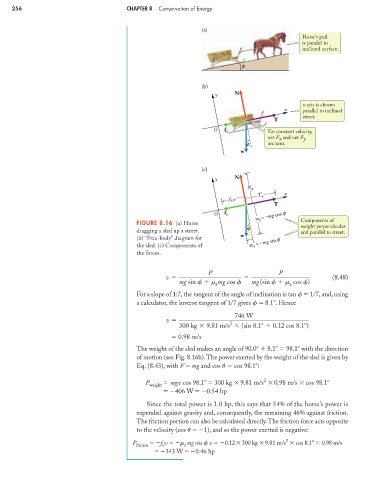
                                                      FIGURE 8.16 (a) Horse                             Components of
                                                                                                        weight perpendicular
                                                      dragging a sled up a street.     f                and parallel to street.
                                                                                     w
                                                      (b) “Free-body” diagram for
                                                      the sled. (c) Components of       w x  = –mg sin f
                                                      the forces.


                                                                            P                    P
                                                               v                                                 (8.48)
                                                                   mg sin f   m mg cos f  mg (sin f   m  cos f)
                                                                              k                     k
                                                      For a slope of 1:7, the tangent of the angle of inclination is tan     1/7, and, using
                                                      a calculator, the inverse tangent of 1/7 gives     8.1 . Hence

                                                                                    746 W
                                                               v
                                                                                  2
                                                                   300 kg   9.81 m/s   (sin 8.1   0.12 cos 8.1 )
                                                                  0.98 m/s
                                                      The weight of the sled makes an angle of 90.0   8.1   98.1  with the direction
                                                      of motion (see Fig. 8.16b).The power exerted by the weight of the sled is given by
                                                      Eq. (8.43), with F   mg and cos     cos 98.1 :

                                                                                            2
                                                        P       mgv cos 98.1   300 kg   9.81 m/s   0.98 m/s   cos 98.1
                                                          weight
                                                                406 W   0.54 hp
                                                         Since the total power is 1.0 hp, this says that 54% of the horse’s power is
                                                      expended against gravity and, consequently, the remaining 46% against friction.
                                                      The friction portion can also be calculated directly.The friction force acts opposite
                                                      to the velocity (cos     1), and so the power exerted is negative:

                                                                                                   2
                                                     P      f v      mg cos   v   0.12 300 kg  9.81 m/s   cos 8.1   0.98 m/s
                                                      friction  k   k
                                                             343 W   0.46 hp

