


Page 174 - fbkCardioDiabetes_2017
P. 174
150          DKD is Coronary Equivalent (Evidence And Remedy)


              OTHER RISK FACTORS                                 been shown  to improve  vascular reactivity and  re-
                                                                 duce markers  of fibrinolysis  and inflammation,  and
                                                                 they may reduce thickening  of the carotid artery
                                                                 wall. 22,23  They also  reduce BP and  may favorably af-
                                                                 fect the lipid profile.

                                                                 HYPERTENSION AND DYSLIPIDEMIA
                                                                 Adding further fuel to fire are the two major risk fac-
                                                                 tors:  namely  hypertension  and dyslipidemia  which
                                                                 includes hypertriglyceridemia  ; low  levels  of  high
                                                                 density  lipoprotein (HDL) cholesterol,  and elevated
                                                                 levels  of low density lipoprotein  (LDL)  cholesterol.
                                                                 Blood pressure control has been shown to reduce the
                                                                 risk of CVD and microvascular complications by one
                                                                 third or  more  in patients  with diabetes.In  the UKP.
                                                                 each 10 mm Hg reduction in systolic blood pressure
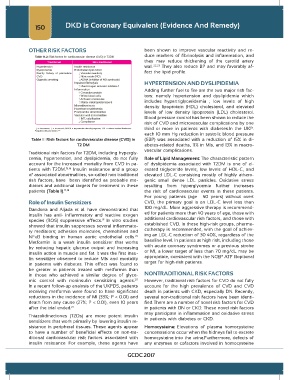
               Table 1 : Risk factors for cardiovascular disease (CVD) in   (SBP) was associated with a reduction of 15% in di-
                                   T2 DM                         abetes-related deaths, 11% in MIs, and 13% in macro-
                                                                 vascular complications.
              Traditional risk factors for T2DM, including hypergly-
              cemia,  hypertension, and  dyslipidemia,  do not  fully   Role of Lipid Management: The characteristic pattern
              account for the increased mortality from CVD in pa-  of dyslipidemia  associated with T2DM is  one of el-
              tients  with  T2DM. 15,16  Insulin resistance and  a group   evated triglyceride  levels,  low levels  of HDL-C, and
              of associated abnormalities, so-called non traditional   elevated  LDL-C consisting  mostly  of  highly  athero-
              risk  factors,  have   been identified as probable  me-  genic small dense  LDL particles.  Oxidative stress
              diators and additional targets for treatment in these   resulting  from hyperglycemia  further increases
              patients (Table 1). 17,18                          the risk of cardiovascular events in these patients.
                                                                 For  young  patients  (age  ≤  40  years)  without  overt
              Role of Insulin Sensitizers                        CVD, the primary  goal  is  an LDL-C level  less  than
              Dandona  and Aljada  et al.  have demonstrated that   100 mg/dL. More aggressive therapy is recommend-
              insulin has anti- inflammatory  and reactive oxygen   ed for patients more than 40 years of age, those with
              species  (ROS)  suppressive  effects.  In vitro studies   additional cardiovascular risk factors, and those with
                                              19
              showed that insulin suppresses several inflammato-  established CVD. In these high-risk groups, pharma-
              ry  mediators; adhesion molecules, chemokines and   cotherapy is recommended, with the goal of achiev-
              NFκB binding in human  aortic  endothelial cells.    ing an LDL-C reduction of 30–40%, regardless of the
                                                             24
              Metformin is  a weak  insulin sensitizer  that  works   baseline level. In patients at high risk, including those
              by reducing hepatic glucose output  and  increasing   with acute coronary syndromes or a previous stroke
              insulin action in muscle and fat. It was the first insu-  or MI, a lower target of less than 70 mg/dL may be
              lin sensitizer observed  to reduce  MIs and  mortality   appropriate, consistent with the NCEP ATP IIIoptional
              in  patients  with diabetes.  This  effect was  found to   target for high-risk patients.
              be  greater  in patients treated  with metformin than
              in those who achieved a similar  degree  of  glyce-  NON TRADITIONAL RISK FACTORS
              mic  control with  noninsulin sensitizing agents.     However, traditional risk factors for CVD do not fully
                                                            20
              In a recent follow-up analysis of the UKPDS, patients   account  for  the high prevalence  of CVD and  CVD
              receiving  metformin were  found  to have  significant   death in patients with CKD, especially DN. Recently,
              reductions in the incidence of MI (33%; P < 0.01) and   several non-traditional risk factors have been identi-
              death from any cause (27%; P < 0.01), even 10 years   fied. There are a number of novel risk factors for CVD

              after the trial ended. 21                          in patients with DN or CKD. These novel risk factors
                                                                 may participate in inflammation and oxidative stress
              Thiazolidinediones  (TZDs)  are  more  potent insulin   in patients with diabetes or CKD.
              sensitizers that work primarily by lowering insulin re-
              sistance in peripheral  tissues.  These  agents  appear   Homocysteine:  Elevations of plasma homocysteine
              to have  a number  of beneficial effects on non-tra-  concentrations occur when the kidneys fail to excrete
              ditional cardiovascular risk  factors associated with   homocysteine into the urine.Furthermore, defects of
              insulin resistance. For  example,  these agents have   any enzymes or cofactors involved in homocysteine

                                                         GCDC 2017

