


Page 276 - fbkCardioDiabetes_2017
P. 276
252                      Cardio Diabetes Medicine 2017


                                                                 In an analysis of 3,115 patients presenting with STEMI
                                                                 who underwent primary PCI, High-grade atrioventricu-
                                                                 lar block (HAVB) (second-degree Mobitz II or third-de-
                                                                 gree atrioventricular block) was present at baseline in
                                                                 46 patients (1.5%).  Diabetes mellitus was one of  the
                                                                 independent predictors  of HAVB. Mortality rate was
                                                                 significantly higher  in patients with  versus  without
                                                                 HAVB at 1-, and 3-year follow-ups . The greater risk
                                                                                                22
                                                                 of AV  blocks  in diabetics in setting of STEMI  could
                                                                 be due to dysautonomic disturbances of the disease
                                                                 or  the deleterious  effects of hyperglycemia  on the
                                                                 conduction system.
                                                                 Most of the elderly  patients have  many  underlying
                                                                 systemic diseases  and  multiple coronary risk  fac-
                                                                 tors. In a paper studying the prevalence of diabetes
                                                                 in elderly patients requiring permanent cardiac pace-
                                                                 maker insertion, there were more number of diabetic
                                                                 population (11.1%). DM conferred an excessive risk of
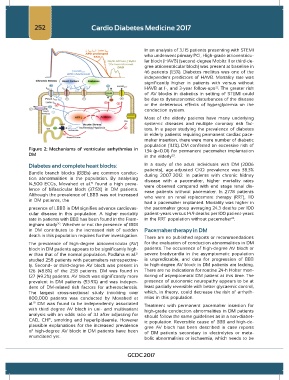
              Figure  2: Mechanisms  of ventricular  arrhythmias  in   1.34 (p<0.01)  for  permanent pacemaker  implantation
              DM                                                 in the elderly .
                                                                             23
              Diabetes and complete heart blocks:                In a study of the  adult  individuals with  DM (2006
              Bundle  branch  blocks  (BBBs)  are  common  conduc-  patients),  age-adjusted CKD prevalence  was 38.3%
                                                                 during 2007–2012.  In patients with  chronic  kidney
              tion abnormalities  in the population. By  analysing   disease  with  a pacemaker, higher  mortality rates
              14,500  ECGs, Movahed et al.  found  a high preva-  were  observed  compared  with end stage  renal  dis-
                                         19
              lence of bifascicular  block (37.5%)  in DM patients.   ease  patients without  pacemaker.  In 2778  patients
              Although the prevalence of LBBB was not increased   who were  on renal  replacement therapy  (RRT),  110
              in DM patients, the
                                                                 had a pacemaker implanted. Mortality was higher in
              presence of LBBB in DM signifies advance cardiovas-  the pacemaker group averaging 24.3 deaths per 100
              cular disease  in this population. A  higher  mortality   patient-years versus 14.9 deaths per 100 patient-years
                                                                                                       24
              rate in patients with BBB has been found in the Fram-  in the RRT population without pacemaker .
              ingham study . Whether or not the presence of BBB
                          20
              in DM contributes to the increased  risk  of  sudden  Pacemaker therapy in DM
              death in this population requires further investigation.  There are no published reports or recommendations
              The prevalence of high-degree  atrioventricular  (AV)   for the evaluation of conduction abnormalities in DM
              block in DM patients appears to be significantly high-  patients. The occurrence of high-degree AV block or
              er than that of the normal population. Podlaha et al.    severe  bradycardia in the  asymptomatic  population
                                                             21
              studied 258 patients with pacemakers retrospective-  is  unpredictable, and data for  progression  of  BBB
              ly. Second- or third-degree AV block was present in   to high-degree AV block in DM patients are lacking.
              126  (48.8%)  of the 258 patients. DM was found  in   There are no indications for routine 24-h Holter mon-
              127 (49.2%) patients. AV block was significantly more   itoring of asymptomatic DM patient at this time. The
              prevalent  in DM patients (53.9%)  and was indepen-  presence of autonomic neuropathy appears to be at
              dent of DM-related  risk  factors for  atherosclerosis.   least partially reversible with better glycaemic control,
              The largest  cross-sectional study involving over   which, in theory, could decrease the risk of arrhyth-
              800,000  patients was conducted  by Movahed  et    mias in this population.
                19
              al.  DM was found  to be independently associated   Treatment with  permanent pacemaker  insertion  for
              with  third degree  AV  block in uni- and multivariant   high-grade conduction abnormalities in DM patients
              analysis  with an odds  ratio of 3.1 after adjusting for   should follow the same guidelines as in a non-diabet-
              CAD,  CHF, smoking and  hyperlipidaemia.  However   ic population. Reversible cause of BBB and high-de-
              plausible  explanations for  the  increased  prevalence   gree  AV  block  has been  described  in  case  reports
              of high-degree  AV block in DM patients have  been   of DM patients secondary to electrolytes  or meta-
              enunciated yet.                                    bolic abnormalities or ischaemia, which needs to be


                                                         GCDC 2017

