


Page 359 - fbkCardioDiabetes_2017
P. 359
Cardio Diabetes Medicine 2017                                   335


                 (PSD) and Phase  Histogram  Bandwidth              al flow reserve estimation have been found to have
                 (PHB). Mukherjee  et al. in a study of non         good prognostic  value. Normal  perfusion  on SPECT
                 ischemic dilated cardiomyopathy patients           or myocardial flow reserve on PET predicts an excel-
                                                                    lent prognosis in the intermediate term (2–5 years).
                 noted that  responders  had significantly
                 higher dyssynchrony  indices of PSD (64  ±         Prognosis and risk stratification in heart
                 17° vs 39 ± 13°; P<.01) and PHB (215 ± 64° vs      failure:
                 110 ±  44°;  P<.01)  compared  to nonrespond-      Patients with  HF  show increased  activation  of the
                 ers.  ROC curve  analysis  demonstrated that       sympathetic nervous system, reflected by an increase
                 the maximum accuracy for prediction of CRT         in plasma norepinephrine levels. In addition, neuronal
                 response  was  obtained  with values  of  128°     uptake  of  norepinephrine  is  impaired  in the failing
                 for PHB and 43° for PSD (86% sensitivity and       myocardium. Both the enhanced  release  of  norepi-
                                                                    nephrine and changes in its cardiac neuronal uptake
                 80% specificity for both parameters)               may be responsible for the observed downregulation
                 (Figure 1) [5]                                     of adrenoreceptors  in patients with  HF  [6].  Myocar-
                                                                    dial innervation imaging with I-123 meta-iodo-benzyl-
                                                                    guanidine (MIBG) scintigraphy provides a noninvasive
                                                                    tool for  the investigation of cardiac  sympathetic in-
                                                                    nervation. Increased  norepinephrine  turnover and
                                                                    pre-synaptic norepinephrine deficits can be identified
                                                                    as  an increased  MIBG  washout  rate  (WR)  from  the
                                                                    heart and decreased MIBG activity quantified as the
                                                                    heart-to mediastinum (H/M) ratio. While the early and
                                                                    delayed  H/M  ratios and  the wash rate are thought
                                                                    to reflect specific aspects of the MIBG uptake, stor-
                                                                    age  and release  mechanisms,  the delayed  H/M  ra-
                                                                    tio has  been  found to be  the strongest  predictor  of
                                                                    HF  prognosis  in clinical  studies. ADMIRE-HF study
                                                                    revealed  that  patients with  delayed  H/M  ratio > 1.6
                                                                    had  significantly better prognosis  when  compared
                                                                    with patients with H/M  ratio  < 1.6 [7].  Assessment
                                                                    of cardiac dyssynchrony has also been used in risk
                                                                    stratification  and prognostication of non-ischemic
                                                                    cardiomyopathy patients [8].

                                                                    Molecular imaging of HF
                                                                    Molecular  mechanisms of  HF  are  operative  at the
                                                                    preclinical  stage  and imaging  these  mechanisms
                                                                    may lead to understanding  of HF  pathophysiology,
                                                                    and starting early  therapy  to halt disease  progres-
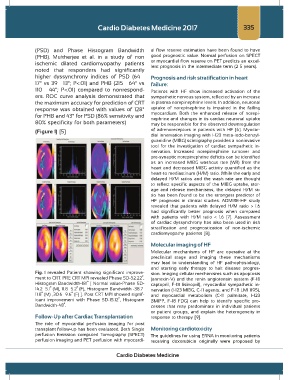
                 Fig. 1  revealed  Patient showing  significant improve-  sion. Imaging cellular mechanisms such as apoptosis
                 ment to CRT. PRE CRT MPI revealed Phase SD-52.22˚,   (annexin-V)  and the renin  angiotensin  system  (F-18
                 Histogram Bandwidth-181˚ [ Normal value-Phase SD-   captopril, F-18 lisinopril),  myocardial sympathetic  in-
                 14.2± 5.1˚ (M), 11.8± 5.2˚ (F), Histogram Bandwidth -38.7±   nervation (I-123 MIBG, C-11 agents, and F-18 LMI 1195),
                 11.8˚ (M) ,30.6± 9.6˚ (F) ]. Post CRT MPI showed signif-  and  myocardial metabolism (C-11  palmitate,  I-123
                 icant  improvement  with  Phase  SD-15.12˚,  Histogram   BMIPP,  F-18 FDG)  can  help to identify specific pro-
                 Bandwidth-48˚.                                     cesses  that  may predominate in individual  patients
                                                                    or patient  groups, and  explain  the  heterogeneity  in
                 Follow-Up after Cardiac Transplantation            response to therapy [9].
                 The role  of myocardial perfusion imaging  for  post
                 transplant follow-up has been evaluated. Both Single  Monitoring cardiotoxicity
                 perfusion  Emission  computed Tomography  (SPECT)   The guidelines for using ERNA in monitoring patients
                 perfusion imaging and PET perfusion with myocardi-  receiving  doxorubicin originally  were  proposed  by


                                                    Cardio Diabetes Medicine

