


Page 366 - fbkCardioDiabetes_2017
P. 366
Evaluvation of Cardiac Syncope And ECG Markers of
                342
                                                     Sudden Cardiac Arrest.


              saddle shaped ST elevation in V1-2 also may be seen   2.  Shen WK, Sheldon RS, Benditt DG, Cohen MI, Forman DE, Goldberger ZD,
              on the ECG.                                          et al. 2017 ACC/AHA/HRS Guideline for the Evaluation and Management
                                                                   of Patients with Syncope: A Report of the American College of Cardiology/
                                                                   American Heart Association Task Force on Clinical Practice Guidelines, and
                                                                   the Heart Rhythm Society. Heart Rhythm. 2017.
                                                                 3.  Kapoor WN. Evaluation and outcome of patients with syncope. Medicine
                                                                   (Baltimore). 1990;69(3):160-75.
                                                                 4.  Brignole  M, Disertori  M, Menozzi  C, Raviele  A, Alboni  P, Pitzalis  MV, et
                                                                   al. Management of syncope referred urgently to general hospitals with and
                                                                   without syncope units. Europace. 2003;5(3):293-8.
                                                                 5.  Blanc JJ. [The best  of 2001. Heart  stimulation].  Arch  Mal  Coeur  Vaiss.
                                                                   2002;95 Spec No 1(5 Spec 1):29-32.
                                                                 6.  Linzer M, Prystowsky EN, Divine GW, Matchar DB, Samsa G, Harrell F,
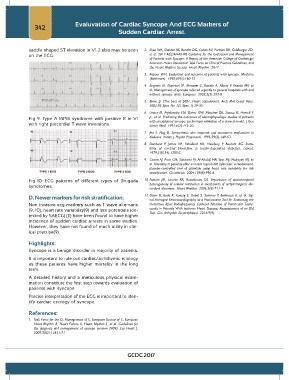
              Fig  9: Type  A WPW syndrome  with  positive  R in V1   Jr., et al. Predicting the outcomes of electrophysiologic studies of patients
              with right precordial T wave inversions.             with unexplained syncope: preliminary validation of a derived model. J Gen
                                                                   Intern Med. 1991;6(2):113-20.
                                                                 7.  Jha S, Nag D. Sympathetic  skin  response  and autonomic  dysfunction  in
                                                                   diabetes. Indian J Physiol Pharmacol. 1995;39(2):149-53.
                                                                 8.  Dandona P, James IM, Woollard ML, Newbury  P, Beckett AG. Insta-
                                                                   bility  of  cerebral  blood-flow  in  insulin-dependent  diabetics.  Lancet.
                                                                   1979;2(8154):1203-5.
                                                                 9.  Camm AJ, Pratt CM, Schwartz PJ, Al-Khalidi HR, Spyt MJ, Holroyde MJ, et
                                                                   al. Mortality in patients after a recent myocardial infarction: a randomized,
                                                                   placebo-controlled  trial  of azimilide  using  heart rate variability  for risk
                                                                   stratification. Circulation. 2004;109(8):990-6.
              Fig  10: ECG patterns of different types  of Brugada   10. Pastore  JM, Laurita KR, Rosenbaum  DS. Importance of spatiotemporal
              syndromes.                                           heterogeneity of cellular restitution in mechanism of arrhythmogenic dis-
                                                                   cordant alternans. Heart Rhythm. 2006;3(6):711-9.

              D. Newer markers for risk stratification:          11. Dinov  B, Bode K, Koenig  S, Oebel  S, Sommer P, Bollmann A, et al. Sig-
                                                                   nal-Averaged Electrocardiography as a Noninvasive Tool for Evaluating the
              Non invasive ecg markers such as T wave alternans    Outcomes  After Radiofrequency  Catheter  Ablation  of Ventricular  Tachy-
              (9, 10), heart rate variability(9) and late potentials (de-  cardia in Patients With Ischemic Heart Disease: Reassessment of an Old
              tected by SAECG) (11) have been found to have higher   Tool. Circ Arrhythm Electrophysiol. 2016;9(9).
              incidence of sudden cardiac arrests in some studies.
              However, they have not found of much utility in clin-
              ical practise(9).

              Highlights:
              Syncope is a benign disorder in majority of patients.
              It is important to rule out cardiac/arrhthymic etiology
              as  these  patients have higher  mortality  in the long
              term.

              A  detailed  history  and a  meticulous physical  exam-
              ination constitute the first step towards evaluation of
              patients with syncope.

              Precise interpretation of the ECG is important to iden-
              tify cardiac etiology of syncope.

              References:
              1.  Task Force for the D, Management of S, European Society of C, European
                Heart Rhythm A, Heart Failure A, Heart Rhythm S, et al. Guidelines for
                the diagnosis  and  management of syncope  (version  2009).  Eur Heart J.
                2009;30(21):2631-71.


                                                         GCDC 2017

