


Page 365 - fbkCardioDiabetes_2017
P. 365
Cardio Diabetes Medicine 2017                                    341


                 shaped deep T wave inversions in anterior and lateral
                 leads suggest HOCM.


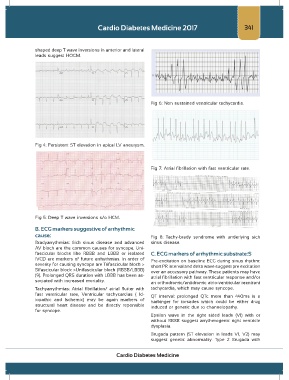
                                                                    Fig 6: Non sustained ventricular tachycardia.


                 Fig 4: Persistent ST elevation in apical LV aneurysm.


                                                                    Fig 7: Atrial fibrillation with fast ventricular rate.


                 Fig 5: Deep T wave inversions s/o HCM.

                 B. ECG markers suggestive of arrhythmic
                 cause:                                             Fig  8: Tachy-brady  syndrome  with underlying  sick
                 Bradyarrythmias:  Sick  sinus disease  and advanced   sinus disease.
                 AV block are the common causes for syncope. Uni-
                 fascicular blocks  like  RBBB  and LBBB  or  isolated  C. ECG markers of arrhythmic substrate:S
                 IVCD are  markers  of  future arrhythmias. In order  of   Pre-excitation on baseline ECG during sinus rhythm:
                 severity for causing syncope are Trifascicular block >   short PR interval and delta wave suggest pre excitation
                 Bifascicular block >Unifascicular block (RBBB/LBBB)  over an accessory pathway. These patients may have
                 (9). Prolonged QRS duration with LBBB has been as-  atrial fibrillation with fast ventricular response and/or
                 sociated with increased mortality.
                                                                    an orthodromic/antidromic atrio-ventricular reentrant
                 Tachyarrythmias:  Atrial fibrillation/ atrial flutter with   tachycardia, which may cause syncope.
                 fast ventricular rate, Ventricular  tachycardias  (  Id-  QT interval: prolonged  QTc more  than  440ms is  a
                 iopathic and Ischemic)  may  be  again markers  of   harbinger  for  torsades  which could be either  drug
                 structural  heart disease  and be directly  reponsible   induced or genetic due to channelopathy.
                 for syncope.
                                                                    Epsilon  wave in the right sided  leads  (V1)  with  or
                                                                    without  RBBB  suggest  arrythmogenic right  ventricle
                                                                    dysplasia.
                                                                    Brugada  pattern (ST  elevation in leads  V1,  V2) may
                                                                    suggest  genetic  abnormality. Type  2 Brugada with


                                                    Cardio Diabetes Medicine

