


Page 422 - fbkCardioDiabetes_2017
P. 422
398                      Cardio Diabetes Medicine 2017


              gery also.
              PARTNER  3 And  Corevalve  Low  risk  Trial  are  eval-
              uating TAVR vs Surgery  in low risk  patients. NO-
              TION(5)”container-title”:”Journal of the American Col-
              lege  of Cardiology”,”page”:”2184”,”volume”:”65”,”is-
              sue”:”20”,”abstract”:”Background    Transcatheter
              aortic valve replacement (TAVRTrial randomized 280
              patients- Mean age  was 79.1  years,  and  81.8%  were
              considered low-risk patients, STS < 4%. In the inten-
              tion-to-treat population, no significant difference  in
              the  primary  endpoint was found  (13.1%  vs. 16.3%;  p =
              0.43 for superiority)
              In the near future, all patients with degenerative aor-
              tic stenosis will undergo TAVR and not surgery.


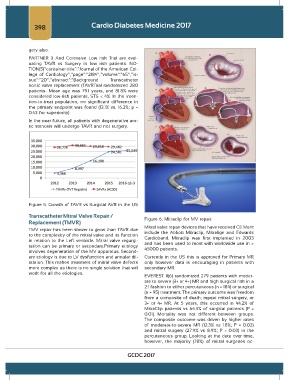
              Figure 5: Growth of TAVR vs Surgical AVR in the US
              Transcatheter Mitral Valve Repair /                Figure 6: Mitraclip for MV repair.
              Replacement (TMVR)
                                                                 Mitral valve repair devices that have received CE Mark
              TMV repair has been slower to grow than TAVR due   include  the  Abbott  Mitraclip, Mitralign and  Edwards
              to the complexity of the mitral valve and its function   Cardioband. Mitraclip  was first  implanted in 2003
              in relation to the Left ventricle. Mitral  valve regurgi-  and has been used to most with worldwide use in >
              tation can be  primary  or  secondary.Primary  etiology   45000 patients.
              involves degeneration of the MV apparatus. Second-
              ary etiology is due to LV dysfunction and annular dil-  Currently in the US this is approved for Primary MR
              atation. This makes treatment of mitral valve defects   only however  data  is  encouraging  in patients with
              more complex as there is no single solution that will   secondary MR.
              work for all the etiologies.
                                                                 EVEREST II(6) randomized 279 patients with moder-
                                                                 ate to severe (3+ or 4+) MR and high surgical risk in a
                                                                 2:1 fashion to either percutaneous (n = 184) or surgical
                                                                 (n = 95) treatment. The primary outcome was freedom
                                                                 from a composite of death, repeat mitral surgery, or
                                                                 3+ or  4+  MR. At 5  years,  this occurred in 44.2%  of
                                                                 MitraClip  patients vs 64.3%  of surgical  patients (P =
                                                                 0.01).  Mortality was not  different between groups.
                                                                 The  composite  outcome  was  driven  by  higher  rates
                                                                 of moderate-to-severe  MR (12.3%  vs 1.8%;  P = 0.02)
                                                                 and mitral  surgery  (27.9%  vs  8.9%;  P  =  0.03)  in the
                                                                 percutaneous group.  Looking  at the data over  time,
                                                                 however, the majority (78%)  of mitral surgeries  oc-


                                                         GCDC 2017

