


Page 69 - Physics Form 5 KSSM_Neat
P. 69
Example        2                                                                            CHAPTER 2

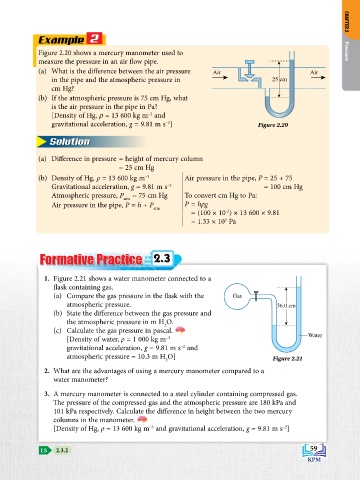
             Figure 2.20 shows a mercury manometer used to                                               Pressure
             measure the pressure in an air flow pipe.
             (a)  What is the difference between the air pressure   Air                       Air
                in the pipe and the atmospheric pressure in                        25 cm
                cm Hg?
              KEMENTERIAN PENDIDIKAN MALAYSIA
             (b)  If the atmospheric pressure is 75 cm Hg, what
                is the air pressure in the pipe in Pa?
                                             –3
                [Density of Hg, r = 13 600 kg m  and
                                                   –2
                gravitational acceleration, g = 9.81 m s ]                    Figure 2.20
                Solution

             (a)  Difference in pressure = height of mercury column
                                     = 25 cm Hg
             (b)  Density of Hg, ρ = 13 600 kg m –3     Air pressure in the pipe, P = 25 + 75
                Gravitational acceleration, g = 9.81 m s –2                     = 100 cm Hg
                Atmospheric pressure, P  = 75 cm Hg     To convert cm Hg to Pa:
                                      atm
                Air pressure in the pipe, P = h + P     P = hρg
                                               atm
                                                          = (100 × 10 ) × 13 600 × 9.81
                                                                     -2
                                                          = 1.33 × 10  Pa
                                                                    5


             Formative Practice                2.3


               1.  Figure 2.21 shows a water manometer connected to a
                 flask containing gas.
                 (a)  Compare the gas pressure in the flask with the   Gas
                     atmospheric pressure.                                          36.0 cm
                 (b)  State the difference between the gas pressure and
                     the atmospheric pressure in m H O.
                                                  2
                 (c)  Calculate the gas pressure in pascal.
                     [Density of water, ρ = 1 000 kg m                                       Water
                                                   –3
                     gravitational acceleration, g = 9.81 m s  and
                                                       –2
                     atmospheric pressure = 10.3 m H O]                            Figure 2.21
                                                   2
               2.  What are the advantages of using a mercury manometer compared to a
                 water manometer?

               3.  A mercury manometer is connected to a steel cylinder containing compressed gas.
                 The pressure of the compressed gas and the atmospheric pressure are 180 kPa and
                 101 kPa respectively. Calculate the difference in height between the two mercury
                 columns in the manometer.
                 [Density of Hg, ρ = 13 600 kg m  and gravitational acceleration, g = 9.81 m s ]
                                              –3
                                                                                      –2

             LS   2.3.2                                                                       59

