


Page 246 - Hall et al (2015) Principles of Critical Care-McGraw-Hill
P. 246
150     PART 2: General Management of the Patient


                           1. Sedation needed—target to
                               Ramsay score 3.              Yes            Fentanyl 25-50  g
                           2. Exclude reversible causes                     every 5 min until
                               of agitation.                              pain/agitation relieved
                           3. Is pain likely?

                                   No


                           Is agitation causing acute
                           deterioration (eg, hypoxia, high  Morphine 1-5  g  No  Requiring fentanyl bolus >
                           peak airway pressures)     up to every 2 hours    every 2 hours
                           necessitating immediate control?
                                                                                  Yes
                                    No       Yes

                                       Diazepam or midazolam            Fentanyl infusion 25-100  g/h
                                          2-5 mg every 5                                      Decrease fentanyl infusion by
                                         min until desired                                    25  g/h or lorazepam infusion
                                       sedation level achieved                                by 0.25 mg/h every 4 hours
                                                                                              until infusion discontinued.


                                          Requiring           Lorazepam                   Yes  Reassess sedation
                                          diazepam/midazolam  Yes  infusion  Targeted sedation  regimen and ramsay
                                          bolus >              0.5-1mg/h   achieved           score every 4 hours
                                          every 2 hours                                  No

                                              No
                                                                                           Rebolus and increase fentanyl
                                    Lorazepam 1-4 mg                                        infusion by 25  g/h and/or
                                    up to every 2 hours                                       rebolus and increase
                                                                                          lorazepam infusion by 0.25mg/h
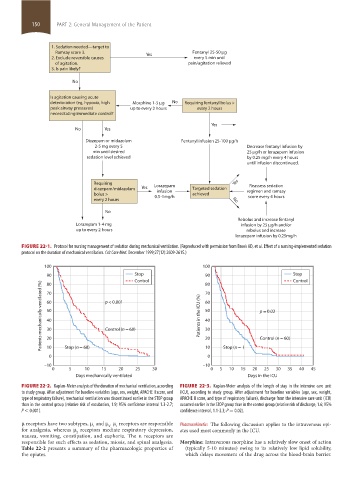
                 FIGURE 22-1.  Protocol for nursing management of sedation during mechanical ventilation. (Reproduced with permission from Brook AD, et al. Effect of a nursing-implemented sedation
                 protocol on the duration of mechanical ventilation. Crit Care Med. December 1999;27(12):2609-2615.)

                         100                                                   100
                          90                            Stop                    90                            Stop
                                                        Control                 80                            Control
                        Patients mechanically ventilated (%)  60  p < 0.001   Patients in the ICU (%)  60  p = 0.02
                          80
                          70
                                                                                70
                          50
                                                                                50
                                                                                40
                          40
                                              Control (n = 60)
                                                                                30
                          30
                          20
                          10
                                                                                10
                           0    Stop (n = 68)                                   20 0  Stop (n =  )  Control (n = 60)
                         –10                                                   –10
                            0    5     10   15    20    25    30                  0  5  10  15  20  25  30  35  40  45
                                    Days mechanically ventilated                              Days in the ICU
                 FIGURE 22-2.  Kaplan-Meier analysis of the duration of mechanical ventilation, according   FIGURE 22-3.  Kaplan-Meier analysis of the length of stay in the intensive care unit
                 to study group. After adjustment for baseline variables (age, sex, weight, APACHE II score, and   (ICU), according to study group. After adjustment for baseline variables (age, sex, weight,
                 type of respiratory failure), mechanical ventilation was discontinued earlier in the STOP group   APACHE II score, and type of respiratory failure), discharge from the intensive care unit (ICU)
                 than in the control group (relative risk of extubation, 1.9; 95% confidence interval 1.3-2.7;     occurred earlier in the STOP group than in the control group (relative risk of discharge, 1.6; 95%
                 P < 0.001).                                           confidence interval, 1.1-2.3; P = 0.02).

                 μ receptors have two subtypes, μ  and μ . μ  receptors are responsible   Pharmacokinetics  The following discussion applies to the intravenous opi-
                                               2
                                          1
                                                 1
                 for analgesia, whereas  μ  receptors mediate respiratory depression,   ates used most commonly in the ICU.
                                    2
                 nausea, vomiting, constipation, and euphoria. The  κ receptors are
                 responsible for such effects as sedation, miosis, and spinal analgesia.   Morphine: Intravenous morphine has a relatively slow onset of action
                 Table 22-2 presents a summary of the pharmacologic properties of   (typically 5-10 minutes) owing to its relatively low lipid solubility,
                 the opiates.                                            which delays movement of the drug across the blood-brain barrier.


            section02.indd   150                                                                                       1/13/2015   2:05:04 PM

