


Page 830 - Hall et al (2015) Principles of Critical Care-McGraw-Hill
P. 830
CHAPTER 63: Persistent Fever  561


                                                                          vasoconstriction.  Antipyretics, such as ibuprofen and other nonsteroi-
                                                                                      6
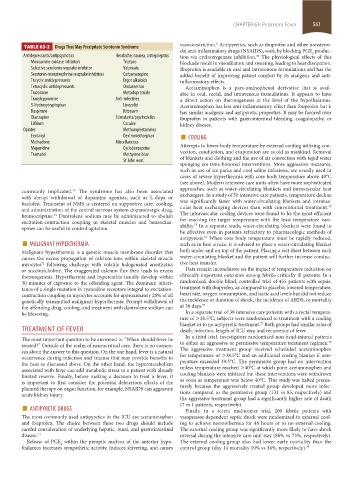
                      TABLE 63-2    Drugs That May Precipitate Serotonin Syndrome
                                                                          dal anti-inflammatory drugs (NSAIDS), work by blocking PGE  produc-
                                                                                                                       2
                    Antidepressants/antipsychotics  Headache, nausea, antiepileptics  tion via cyclooxygenase inhibition.  The physiological effects of this
                                                                                                    74
                       Monoamine oxidase inhibitors   Triptans            blockade result in vasodilation and sweating, leading to heat dissipation.
                       Selective serotonin reuptake inhibitor  Valproate  Ibuprofen is available in oral and intravenous formulations and has the
                       Serotonin-norepinephrine reuptake inhibitors  Carbamazepine  added benefit of improving patient comfort by its analgesic and anti-
                       Tricyclic antidepressants      Ergot alkaloids     inflammatory effects.
                       Tetracyclic antidepressants    Ondansetron          Acetaminophen is a para-aminophenol derivative that is avail-
                       Trazodone                      Metoclopramide      able in oral, rectal, and intravenous formulations. It appears to have
                       Tranylcypromine              Anti-infectives       a direct action on thermogenesis at the level of the hypothalamus.
                       5-Hydroxytryptophan            Linezolid           Acetaminophen has less anti-inflammatory effect than ibuprofen but it
                       Buspirone                      Ritonavir           has similar analgesic and antipyretic properties. It may be favored over
                       Olanzapine                   Stimulants/psychedelics  ibuprofen in patients with gastrointestinal bleeding, coagulopathy, or
                       Lithium                        Cocaine             kidney disease.
                    Opiates                           Methamphetamines
                       Fentanyl                       Dextromethorphan        ■  COOLING
                       Methadone                    Miscellaneous         Attempts to lower body temperature by external cooling utilizing con-
                       Meperidine                     Cyclobenzaprine
                       Tramadol                       Methylene blue      vection, conduction, and evaporation are as old as mankind. Removal
                                                                          of blankets and clothing and the use of air convection with tepid water
                                                      St John wort
                                                                          sponging are time-honored interventions. More aggressive measures,
                                                                          such as use of ice packs and cool saline infusions, are usually used in
                                                                          cases of severe hyperthermia with core body temperature above 40°C
                                                                          (see above). Modern intensive care units often have more sophisticated
                    commonly implicated.  The syndrome has also been associated   approaches, such as water-circulating blankets and intravascular heat
                                     70
                    with abrupt withdrawal of dopamine agonists, such as L-dopa or   exchangers. In a study of 50 intensive care patients, temperature decline
                    baclofen. Treatment of NMS is centered on supportive care, cooling,   was significantly faster with water-circulating blankets and intravas-
                                                                                                                            75
                    and administration of the central nervous system dopaminergic drug,   cular heat exchanging devices than with conventional treatment.
                    bromocriptine.  Dantrolene sodium may be administered to abolish   The intravascular cooling devices were found to be the most efficient
                               71
                    excitation-contraction coupling in skeletal muscles and benzodiaz-  for  reaching  the  target  temperature  with  the  least  temperature  vari-
                                                                              75
                    epines can be useful to control agitation.            ability.  In a separate study, water-circulating blankets were found to
                                                                          be effective even in patients refractory to pharmacologic methods of
                        ■  MALIGNANT HYPERTHERMIA                         antipyresis.  When core body temperature must be rapidly reduced,
                                                                                  65
                                                                          such as in heat stroke, it is advised to place a water-circulating blanket
                    Malignant hyperthermia is a genetic muscle membrane disorder that   both under and on top of the patient. Placing a wet sheet between each
                    causes the excess propagation of calcium ions within skeletal muscle   water-circulating blanket and the patient will further increase conduc-
                    myocytes  following challenge with volatile halogenated anesthetics   tive heat transfer.
                          72
                    or succinylcholine. The exaggerated calcium flux then leads to excess   Data remain inconclusive on the impact of temperature reduction on
                    thermogenesis. Hyperthermia and hypercarbia usually develop within   clinically important outcomes among febrile critically ill patients. In a
                    30 minutes of exposure to the offending agent. The dominant inheri-  randomized, double-blind, controlled trial of 455 patients with sepsis,
                    tance of a single mutation in ryanodine receptors integral to excitation-  treatment with ibuprofen, as compared to placebo, lowered temperature,
                    contraction coupling in myocytes accounts for approximately 20% of all   heart rate, oxygen consumption, and lactic acid levels but did not reduce
                    genetically transmitted malignant hyperthermia. Prompt withdrawal of   the incidence or duration of shock, the incidence of ARDS, or mortality
                    the offending drug, cooling, and treatment with dantrolene sodium can   at 30 days. 76
                    be lifesaving.                                         In a separate trial of 38 intensive care patients with a rectal tempera-
                                                                          ture of >38.5°C, subjects were randomized to treatment with a cooling
                                                                          blanket or to no antipyretic treatment.  Both groups had similar rates of
                                                                                                     77
                    TREATMENT OF FEVER                                    death, infection, length of ICU stay, and recurrence of fever.
                    The most important question to be answered is: “When should fever be   In a third trial, investigators randomized non-head-injured patients
                                                                                                                            78
                    treated?” Outside of the realm of neurocritical care, there is no consen-  to either an aggressive or permissive temperature treatment regimen.
                    sus about the answer to this question. On the one hand, fever is a natural   The  aggressive  treatment  group  received  scheduled  acetaminophen
                    occurrence during infection and trauma that may provide benefits to   for temperature of >38.5°C and an additional cooling blanket if tem-
                    the host as discussed above. On the other hand, the hypermetabolism   perature exceeded 39.5°C. The permissive group had no intervention
                    associated with fever can add metabolic stress to a patient with already   unless temperature reached >40°C at which point acetaminophen and
                    limited reserve. Finally, before making a  decision  to treat a  fever, it   cooling blankets were initiated but these interventions were withdrawn
                    is important to first consider the potential deleterious effects of the   as soon as temperature was below 40°C. This study was halted prema-
                    planned therapy on organ function, for example, NSAIDS can aggravate   turely because the aggressively treated group developed more infec-
                    acute kidney injury.                                  tions compared to the permissive group (131 vs 85, respectively) and
                                                                          the aggressive treatment group had a significantly higher rate of death
                        ■  ANTIPYRETIC DRUGS                              (7 vs 1 patients, respectively).
                                                                           Finally, in a  recent  multicenter trial,  200  febrile patients  with
                    The most commonly used antipyretics in the ICU are acetaminophen   vasopressor-dependent septic shock were randomized to external cool-
                    and ibuprofen. The choice between these two drugs should include   ing to achieve normothermia for 48 hours or to no external cooling.
                    careful consideration of underlying hepatic, renal, and gastrointestinal   The external cooling group was significantly more likely to have shock
                    disease. 73                                           reversal during the intensive care unit stay (86% vs 73%, respectively).
                     Release  of PGE   within  the  preoptic  nucleus  of the anterior  hypo-  The external cooling group also had lower early mortality than the
                                 2
                    thalamus increases sympathetic activity, induces shivering, and causes   control group (day 14 mortality 19% vs 34%, respectively). 79


            section05_c61-73.indd   561                                                                                1/23/2015   12:47:20 PM

