


Page 895 - Hall et al (2015) Principles of Critical Care-McGraw-Hill
P. 895
626     PART 5: Infectious Disorders


                 a number of other  bone-marrow-derived cells, including  monocytes,   NATURAL HISTORY
                 macrophages, Langerhans dendritic cells, and microglial cells. 17,18
                   Once within the cell, the viral ribonucleic acid (RNA) and reverse   Acute HIV infection is associated with retrospectively identified transient
                                                                                                        22
                 transcriptase are released. The reverse transcriptase generates a deoxyri-  symptomatic illness in 40% to 90% of patients.  This is most often a non-
                 bonucleic acid (DNA) sequence complementary to the viral RNA, which   specific flu-like illness often confused with acute infectious  mononucleosis
                 then integrates into the host cell’s genome to produce new viral particles,   and characterized by fever (>80%-90%), fatigue (>70%-90%), rash
                 which in turn will infect other susceptible cells. Relentless HIV replica-  (>40%-80%), headache (32%-70%), lymphadenopathy (40%-70%), phar-
                 tion ultimately causes CD4 cell dysfunction and cell death, leading to   yngitis (50%-70%), and aseptic meningitis (24%), as well as other symp-
                 severe cellular immunodeficiency.                     toms. This usually known as seroconversion illness, is believed to be an
                   The CD4+ lymphocyte count is thus regarded as one of the key surro-  immune-complex-mediated phenomenon resulting from early antibody
                 gate markers for prognostic staging and therapeutic monitoring of HIV-  response to the infection by HIV. Typically, after a variable period (rarely
                                https://kat.cr/user/tahir99/
                 infected individuals (see Table 69-1). A range of 400 to 1400 cells/mm     less than 2 years) with few or no symptoms, progressive immunodefi-
                                                                    3
                 (0.40-1.40 × 10 /L) is considered normal in most laboratories. The CD4   ciency develops, rendering the individual susceptible to the development
                            9
                 count usually is reported as a fraction and an absolute count. Although   of opportunistic infections, wasting,  and/or neoplasms characteristic of
                 the absolute CD4 count is usually a good reflection of the degree of   AIDS. AIDS remains incurable despite considerable progress in antiretro-
                 immunodeficiency in a given patient, it must be noted that under spe-  viral therapy. The often prolonged period of clinical latency is character-
                 cific circumstances this may be misleading. It is therefore advisable to   ized by continued viral replication and decline of the immune system, as
                 monitor the CD4 percentage to ensure that this is in general agreement   illustrated by the progressive destruction of the lymph node architecture. 23
                 with the absolute CD4 count. Absolute CD4 counts are used widely
                 to guide therapeutic decisions regarding the use of antiretrovirals and  ANTIRETROVIRAL THERAPY IN THE ICU
                 preventive strategies, yet they are subject to considerable variability.
                 CD4 counts show circadian variation, which is lowest in the morning   Combination therapy regimens have been shown to prolong survival and
                 and highest in the evening. In normal individuals, the evening CD4 cell   the disease-free interval substantially among HIV-infected individuals.
                 count can be nearly double the morning nadir. Despite controlling the   Therapeutic guidelines issued by national and international organiza-
                 time of collection, HIV-infected individuals who are stable clinically   tions for the management of HIV-infected individuals have evolved
                 will still show considerable variation in CD4 counts. Short-term CD4   substantially in response to findings from clinical trials, cohort studies
                 count fluctuations of nearly 30% may occur that are not attributable to a   and pathogenesis research, and are updated on a regular basis. 24-27
                 change in disease status. In addition, acute infection or illness may lead   Individuals with symptomatic disease or AIDS-defining conditions
                 to a transient decline in absolute CD4 cell count with preserved CD4   require initiation of ART. With the recognition that the inflammatory
                 percentage, a finding also associated with advanced liver disease. 19,20  consequences of unchecked HIV replication may serve as a driver of
                   Overall, it is important to monitor the trends in CD4 counts over time   non-AIDS-defining clinical events, current guidelines support early
                 to avoid placing too much emphasis on the specific number derived   initiation of therapy in asymptomatic individuals. 28,29  At present, there is
                 from a single determination. Despite these limitations, the CD4 count   broad consensus that therapy should be initiated at an absolute CD4+
                                                                                                 3
                 remains a valuable tool when attempting to establish the differential   cell count threshold of 350 cells/mm  and is recommended at thresholds
                                                                                  3
                 diagnoses in a given patient. For example, it would be very unusual   <500 cells/mm  in most guidelines. 24,25  In addition, the presence of other
                 (although still possible, particularly in the context of immune reconsti-  coinfections such as active hepatitis B, HIV-associated nephropathy,
                 tution inflammatory syndromes) to have a case of Pneumocystis jirovecii,   HIV-associated neurocognitive impairment, and preexisting coronary
                 Mycobacterium avium complex (MAC), or cytomegalovirus (CMV)   artery disease are recognized as conditions that would benefit from
                 disease with a CD4 count within the normal range.     initiation of ART regardless of CD4 cell count. 25,27,30
                 disease progression and death in untreated HIV-infected individuals. ■   ANTIRETROVIRAL DRUG CLASSES
                   Plasma viral load has been shown to be an independent predictor of
                                                                   21
                                                                       There are six major classes of antiretroviral therapy, targeting virtually all
                                                                       aspects of the viral lifecycle of the HIV including CCR5 coreceptor, reverse
                                                                       transcriptase inhibitors, integrase inhibitors, and protease inhibitors (PI).
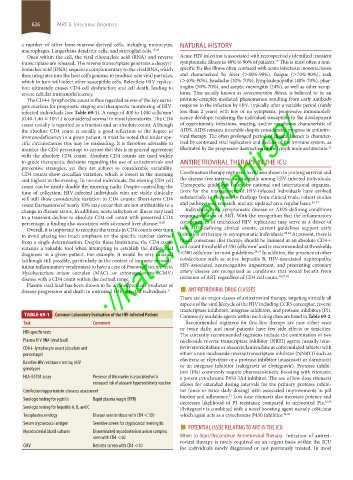
                   TABLE 69-1    Common Laboratory Evaluation of the HIV-Infected Patient  Commonly available agents within each drug class are listed in Table 69-2.
                  Test                    Comment                        Recommended regimens for first-line therapy are now either once
                                                                       or twice daily, and most patients have few side effects or toxicities.
                  HIV-specific tests
                                                                       The currently recommended regimens include the combination of two
                  Plasma HIV RNA (viral load)                          nucleoside reverse transcriptase inhibitor (NRTI) agents (usually teno-
                  CD4+ lymphocyte count (absolute and                  fovir/emtricitabine or abacavir/lamivudine as coformulated tablets) with
                  percentage)                                          either a non-nucleoside reverse transcriptase inhibitor (NNRTI) such as
                                                                       efavirenz or rilpivirine or a protease inhibitor (atazanavir or darunavir)
                  Baseline HIV resistance testing (HIV                 or an integrase inhibitor (raltegravir or elvitegravir). Protease inhibi-
                    genotype)
                                                                       tors (PIs) commonly require pharmacokinetic boosting with ritonavir,
                  HLA-B5701 assay         Presence of this marker is associated with   a potent cytochrome P450 3A4 inhibitor. The use of low-dose ritonavir
                                          increased risk of abacavir hypersensitivity reaction  allows for extended  dosing intervals for  the  primary protease inhibi-
                  Coinfection/opportunistic diseases assessment        tor (once or twice daily dosing) with associated improvements in pill
                                                                       burden and adherence.  Low dose ritonavir also increases potency and
                                                                                        31
                  Serologic testing for syphilis  Rapid plasma reagin (RPR)
                                                                       decreases likelihood of PI resistance compared to unboosted PIs. 32,33
                  Serologic testing for hepatitis A, B, and C          Elvitegravir is combined with a novel boosting agent namely cobicistat
                  Toxoplasma serology     Disease seen in those with CD4 <100  which again acts as a cytochrome P450 inhibitor. 34,35
                  Serum cryptococcal antigen  Sensitive screen for cryptococcal meningitis    ■  POTENTIAL ISSUE RELATING TO ART IN THE ICU
                  Mycobacterial blood cultures  Disseminated mycobacterium avium complex
                                          seen with CD4 <50            When to Start/Discontinue Antiretroviral Therapy:  Initiation of antiret-
                                                                       roviral therapy is rarely required on an urgent basis within the ICU
                  CMV                     Retinitis screen with CD4 <50  for  individuals  newly diagnosed or not  previously treated. In  most


            section05_c61-73.indd   626                                                                                1/23/2015   12:48:13 PM

