


Page 896 - Hall et al (2015) Principles of Critical Care-McGraw-Hill
P. 896
CHAPTER 69: Human Immunodeficiency Virus (HIV) and AIDS in the Intensive Care Unit  627


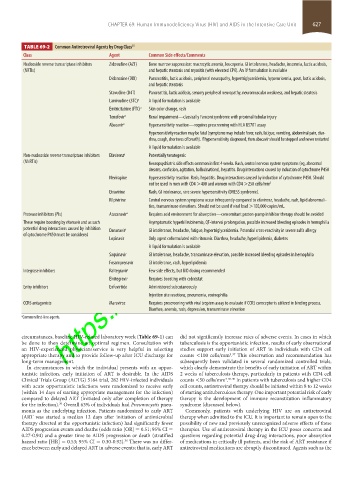
                      TABLE 69-2    Common Antiretroviral Agents by Drug Class 25
                    Class                        Agent         Common Side effects/Comments
                    Nucleoside reverse transcriptase inhibitors    Zidovudine (AZT)  Bone marrow suppression: macrocytic anemia, leucopenia. GI intolerance, headache, insomnia, lactic acidosis,
                    (NRTIs)                                    and hepatic steatosis and myositis (with elevated CPK). An IV formulation is available
                                                 Didanosine (DDI)  Pancreatitis, lactic acidosis, peripheral neuropathy, hypertriglyceridemia, hyperuricemia, gout, lactic acidosis,
                                                               and hepatic steatosis
                                                 Stavudine (D4T)  Pancreatitis, lactic acidosis, sensory peripheral neuropathy, neuromuscular weakness, and hepatic steatosis
                                                 Lamivudine (3TC) a  A liquid formulation is available
                                  https://kat.cr/user/tahir99/
                                                 Emtricitabine (FTC) a  Skin color change, rash
                                                 Tenofovir a   Renal impairment—classically Fanconi syndrome with proximal tubular injury
                                                 Abacavir a    Hypersensitivity reaction—requires prescreening with HLA B5701 assay
                                                               Hypersensitivity reaction may be fatal (symptoms may include fever, rash, fatigue, vomiting, abdominal pain, diar-
                                                               rhea, cough, shortness of breath). If hypersensitivity diagnosed, then abacavir should be stopped and never restarted
                                                               A liquid formulation is available
                    Non-nucleoside reverse transcriptase inhibitors   Efavirenz a  Potentially teratogenic
                    (NNRTIs)                                   Neuropsychiatric side effects common in first 4 weeks. Rash, central nervous system symptoms (eg, abnormal
                                                               dreams, confusion, agitation, hallucinations), hepatitis. Drug interactions caused by induction of cytochrome P450
                                                 Nevirapine    Hypersensitivity reaction. Rash, hepatitis. Drug interactions caused by induction of cytochrome P450. Should
                                                               not be used in men with CD4 >400 and women with CD4 >250 cells/mm 3
                                                 Etravirine    Rash, GI intolerance, rare severe hypersensitivity (DRESS syndrome).
                                                 Rilpivirine   Central nervous system symptoms occur infrequently compared to efavirenz, headache, rash, lipid abnormali-
                                                               ties, transaminase elevations. Should not be used if viral load >100,000 copies/mL.
                    Protease inhibitors (PIs)    Atazanavir a  Requires acid environment for absorption—concomitant proton-pump inhibitor therapy should be avoided
                    These require boosting by ritonavir and as such   Asymptomatic hyperbilirubinemia, QT-interval prolongation, possible increased bleeding episodes in hemophilia
                    potential drug interactions caused by inhibition    Darunavir a  GI intolerance, headache, fatigue, hypertriglyceridemia. Potential cross-reactivity in severe sulfa allergy
                    of cytochrome P450 must be considered
                                                 Lopinavir     Only agent coformulated with ritonavir. Diarrhea, headache, hyperlipidemia, diabetes
                                                               A liquid formulation is available
                                                 Saquinavir    GI intolerance, headache, transaminase elevation, possible increased bleeding episodes in hemophilia
                                                 Fosamprenavir  GI intolerance, rash, hyperlipidemia
                    Integrase inhibitors         Raltegravir a  Few side effects, but BID dosing recommended
                                                 Elvitegravir  Requires boosting with cobicistat
                    Entry inhibitors             Enfuvirtide   Administered subcutaneously
                                                               Injection site reactions, pneumonia, eosinophilia
                    CCR5 antagonists             Maraviroc     Requires prescreening with viral tropism assay to evaluate if CCR5 coreceptor is utilized in binding process.
                                                               Diarrhea, anemia, rash, depression, transaminase elevation
                    a Common first-line agents.


                    circumstances, baseline HIV-related laboratory work (Table 69-1) can   did not significantly increase rates of adverse events. In cases in which
                    be  done to  then determine an  optimal regimen.  Consultation with   tuberculosis is the opportunistic infection, results of early observational
                    an HIV-experienced physician/service is very helpful in selecting   studies support early initiation of ART in individuals with CD4 cell
                    appropriate therapy and to provide follow-up after ICU discharge for   counts  <100  cells/mm .   This  observation  and  recommendation  has
                                                                                          3 37
                    long-term management.                                 subsequently  been  validated  in  several  randomized  controlled  trials,
                     In circumstances in which the individual presents with an oppor-  which clearly demonstrate the benefits of early initiation of ART within
                    tunistic infection, early initiation of ART is desirable. In the AIDS   2 weeks of tuberculosis therapy, particularly in patients with CD4 cell
                    Clinical Trials Group (ACTG) 5164 trial, 282 HIV-infected individuals   counts <50 cells/mm .   In patients with tuberculosis and higher CD4
                                                                                         3 38-40
                    with acute opportunistic infections were randomized to receive early   cell counts, antiretroviral therapy should be initiated within 8 to 12 weeks
                    (within 14 days of starting appropriate management for the infection)   of starting antituberculous therapy. One important potential risk of early
                    compared to delayed ART (initiated only after completion of therapy   therapy is the development of immune reconstitution inflammatory
                    for the infection).  Overall 63% of individuals had Pneumocystis pneu-  syndrome (discussed below).
                                36
                    monia as the underlying infection. Patients randomized to early ART   Commonly, patients with underlying HIV are on antiretroviral
                    (ART was started a median 12 days after initiation of antimicrobial   therapy when admitted to the ICU. It is important to remain open to the
                    therapy directed at the opportunistic infection) had significantly fewer   possibility of new and previously unrecognized adverse effects of these
                    AIDS progression events and deaths (odds ratio [OR] = 0.51; 95% CI =     therapies. Use of antiretroviral therapy in the ICU poses concerns and
                    0.27-0.94) and a greater time to AIDS progression or death (stratified   questions regarding potential drug-drug interactions, poor absorption
                    hazard ratio [HR] = 0.53; 95% CI = 0.30-0.92).  There was no differ-  of medications in critically ill patients, and the risk of ART resistance if
                                                       36
                    ence between early and delayed ART in adverse events; that is, early ART   antiretroviral medications are abruptly discontinued. Agents such as the


            section05_c61-73.indd   627                                                                                1/23/2015   12:48:14 PM

