


Page 250 - Psychology of Wounds and Wound Care in Clinical Practice ( PDFDrive )
P. 250
Quality of Life and Well-Being  225

                                                  Acute Pain
                                                  & Stress
                                       Acute Pain
                                       & Stress
                                                    Dressing
            Chronic Stress   Acute Pain  & Stress  Dressing
                                                    Change
                            Acute Pain
                                         Change
                & Stress
                             Dressing
                  Dressing    Change
                   Change


                                   Time
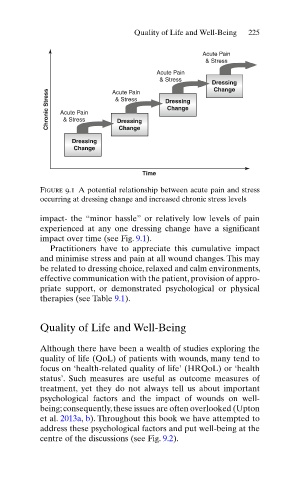
             Figure 9.1     A potential relationship between acute pain and stress
           occurring at dressing change and increased chronic stress levels

           impact- the “minor hassle” or relatively low levels of pain
           experienced at any one dressing change have a significant
           impact over time (see Fig.   9.1 ).
                   Practitioners have to appreciate this cumulative impact
           and minimise stress and pain at all wound changes. This may
           be related to dressing choice, relaxed and calm environments,
           effective communication with the patient, provision of appro-
           priate support, or demonstrated psychological or physical
           therapies (see Table   9.1 ).


               Quality of Life and Well-Being


             Although there have been a wealth of studies exploring the
           quality of life (QoL) of patients with wounds, many tend to
           focus on ‘health-related quality of life’ (HRQoL) or ‘health
           status’. Such measures are useful as outcome measures of
           treatment, yet they do not always tell us about important
           psychological factors and the impact of wounds on well-
           being; consequently, these issues are often overlooked (Upton
           et al.   2013a ,  b ). Throughout this book we have attempted to
           address these psychological factors and put well-being at the
           centre of the discussions (see Fig.   9.2 ).

