


Page 62 - Psychology of Wounds and Wound Care in Clinical Practice ( PDFDrive )
P. 62
Models of Pain  35


                                  Pain at
                                  dressing
                                  change


                                               Stress related
                    More                           to
                   dressing                     anticipatory
                                                   pain


                                                Avoidance
                    Pain
                                                 behaviour

                                  Delayed
                                  wound
                                  healing


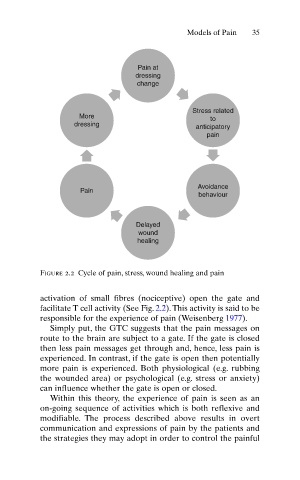
             Figure 2.2     Cycle of pain, stress, wound healing and pain


           activation of small fibres (nociceptive) open the gate and
           facilitate T cell activity (See Fig.   2.2 ). This activity is said to be
           responsible for the experience of pain (Weisenberg   1977 ).
                     Simply put, the GTC suggests that the pain messages on
           route to the brain are subject to a gate. If the gate is closed
           then less pain messages get through and, hence, less pain is
           experienced. In contrast, if the gate is open then potentially
           more pain is experienced. Both physiological (e.g. rubbing
           the wounded area) or psychological (e.g. stress or anxiety)
           can influence whether the gate is open or closed.
               Within this theory, the experience of pain is seen as an
            on- going sequence of activities which is both reflexive and
           modifiable.  The process described above results in overt
             communication and expressions of pain by the patients and
           the strategies they may adopt in order to control the painful

