


Page 85 - Psychology of Wounds and Wound Care in Clinical Practice ( PDFDrive )
P. 85
Introduction  59


                  Chronic Wound


                  Wound treatment

                                                 PAIN

                      Stress


                  Delayed healing

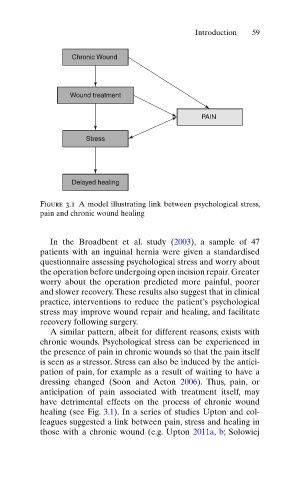
             Figure 3.1     A model illustrating link between psychological stress,
           pain and chronic wound healing


               In the Broadbent et al. study ( 2003 ), a sample of 47
           patients with an inguinal hernia were given a standardised
           questionnaire assessing psychological stress and worry about
           the operation before undergoing open incision repair. Greater
           worry about the operation predicted more painful, poorer
           and slower recovery. These results also suggest that in clinical
           practice, interventions to reduce the patient’s psychological
           stress may improve wound repair and healing, and facilitate
           recovery following surgery.
              A similar pattern, albeit for different reasons, exists with
           chronic wounds. Psychological stress can be experienced in
           the presence of pain in chronic wounds so that the pain itself
           is seen as a stressor. Stress can also be induced by the antici-
           pation of pain, for example as a result of waiting to have a
           dressing changed (Soon and  Acton   2006 ).  Thus, pain, or
           anticipation of pain associated with treatment itself, may
           have detrimental effects on the process of chronic wound
           healing (see Fig.   3.1 ). In a series of studies Upton and col-
           leagues suggested a link between pain, stress and healing in

           those with a chronic wound (e.g. Upton   2011a ,   b ;  Solowiej

