


Page 87 - Psychology of Wounds and Wound Care in Clinical Practice ( PDFDrive )
P. 87
General Adaption Syndrome (GAS) Model of Stress  61

                                          Stressor identified

                                          Body produces - Adrenaline
              Alarm                       Fight or flight response

                                      Coping with the stress
                                                     Strains
                                    Adapt environment
                                                     Demands
            Resistance
                                         Can’t keep up forever

                                   Body      Limited resources

            Exhaustion             Resources  Gradually depleted
                                         All resources - Depleted
                                            Normal function - Unable to maintain
                                               Capacity - Exhausted
                                           Damage - Long term
                                         Decompensation - Functional deterioration
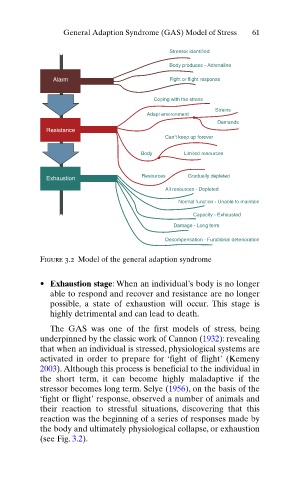
             Figure 3.2     Model of the general adaption syndrome


           •     Exhaustion stage : When an individual’s body is no longer
             able to respond and recover and resistance are no longer
             possible, a state of exhaustion will occur.  This stage is
             highly detrimental and can lead to death.
              The GAS was one of the first models of stress, being
           underpinned by the classic work of Cannon (  1932 ): revealing
           that when an individual is stressed, physiological systems are
           activated in order to prepare for ‘fight of flight’ (Kemeny
             2003 ). Although this process is beneficial to the individual in
           the short term, it can become highly maladaptive if the
           stressor becomes long term. Selye (  1956 ), on the basis of the
           ‘fight or flight’ response, observed a number of animals and
           their reaction to stressful situations, discovering that this
           reaction was the beginning of a series of responses made by
           the body and ultimately physiological collapse, or exhaustion
           (see Fig.   3.2 ).

