


Page 114 - Clinical Anatomy
P. 114
ECA2  7/18/06  6:42 PM  Page 99


                                                                 The gastrointestinal adnexae   99


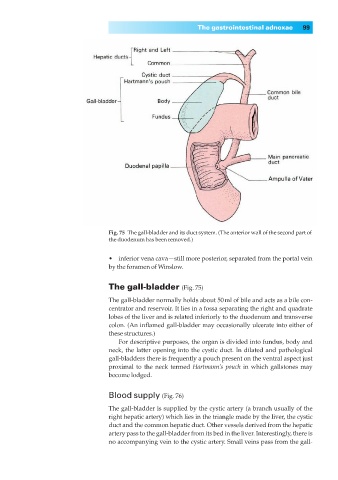
                                        Fig. 75◊The gall-bladder and its duct system. (The anterior wall of the second part of
                                        the duodenum has been removed.)

                                        •◊◊inferior vena cava—still more posterior, separated from the portal vein
                                        by the foramen of Winslow.


                                        The gall-bladder (Fig. 75)
                                        The gall-bladder normally holds about 50ml of bile and acts as a bile con-
                                        centrator and reservoir. It lies in a fossa separating the right and quadrate
                                        lobes of the liver and is related inferiorly to the duodenum and transverse
                                        colon. (An inflamed gall-bladder may occasionally ulcerate into either of
                                        these structures.)
                                          For descriptive purposes, the organ is divided into fundus, body and
                                        neck, the latter opening into the cystic duct. In dilated and pathological
                                        gall-bladders there is frequently a pouch present on the ventral aspect just
                                        proximal to the neck termed Hartmann’s pouch in which gallstones may
                                        become lodged.

                                        Blood supply (Fig. 76)

                                        The gall-bladder is supplied by the cystic artery (a branch usually of the
                                        right hepatic artery) which lies in the triangle made by the liver, the cystic
                                        duct and the common hepatic duct. Other vessels derived from the hepatic
                                        artery pass to the gall-bladder from its bed in the liver. Interestingly, there is
                                        no accompanying vein to the cystic artery. Small veins pass from the gall-

