


Page 164 - Clinical Anatomy
P. 164
ECA2  7/18/06  6:43 PM  Page 149


                                                                The posterior abdominal wall   149


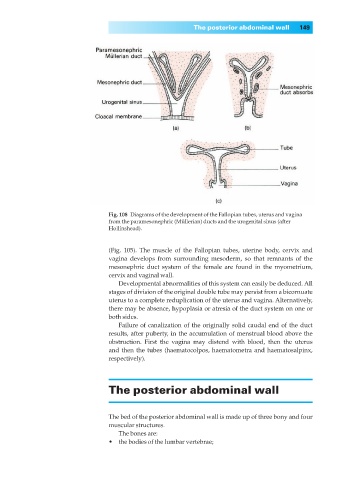
                                        Fig. 108◊Diagrams of the development of the Fallopian tubes, uterus and vagina
                                        from the paramesonephric (Müllerian) ducts and the urogenital sinus (after
                                        Hollinshead).


                                        (Fig. 105). The muscle of the Fallopian tubes, uterine body, cervix and
                                        vagina develops from surrounding mesoderm, so that remnants of the
                                        mesonephric duct system of the female are found in the myometrium,
                                        cervix and vaginal wall.
                                          Developmental abnormalities of this system can easily be deduced. All
                                        stages of division of the original double tube may persist from a bicornuate
                                        uterus to a complete reduplication of the uterus and vagina. Alternatively,
                                        there may be absence, hypoplasia or atresia of the duct system on one or
                                        both sides.
                                          Failure of canalization of the originally solid caudal end of the duct
                                        results, after puberty, in the accumulation of menstrual blood above the
                                        obstruction. First the vagina may distend with blood, then the uterus
                                        and then the tubes (haematocolpos, haematometra and haematosalpinx,
                                        respectively).


                                        The posterior abdominal wall


                                        The bed of the posterior abdominal wall is made up of three bony and four
                                        muscular structures.
                                          The bones are:
                                        •◊◊the bodies of the lumbar vertebrae;

