


Page 175 - Clinical Anatomy
P. 175
ECA3  7/18/06  6:44 PM  Page 160


                 160  The upper limb


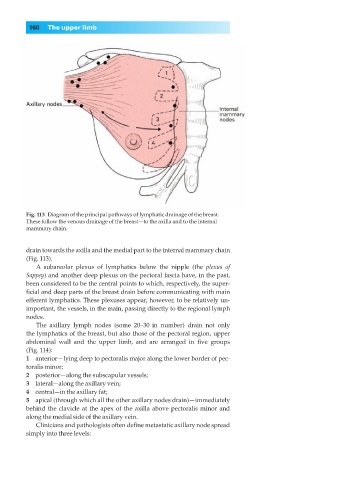
                Fig. 113◊Diagram of the principal pathways of lymphatic drainage of the breast.
                These follow the venous drainage of the breast—to the axilla and to the internal
                mammary chain.


                drain towards the axilla and the medial part to the internal mammary chain
                (Fig. 113).
                   A subareolar plexus of lymphatics below the nipple (the  plexus of
                Sappey) and another deep plexus on the pectoral fascia have, in the past,
                been considered to be the central points to which, respectively, the super-
                ficial and deep parts of the breast drain before communicating with main
                efferent lymphatics. These plexuses appear, however, to be relatively un-
                important, the vessels, in the main, passing directly to the regional lymph
                nodes.
                   The axillary lymph nodes (some 20–30 | in number) drain not only
                the lymphatics of the breast, but also those of the pectoral region, upper
                abdominal wall and the upper limb, and are arranged in five groups
                (Fig. 114):
                1◊◊anterior—lying deep to pectoralis major along the lower border of pec-
                toralis minor;
                2◊◊posterior—along the subscapular vessels;
                3◊◊lateral—along the axillary vein;
                4◊◊central—in the axillary fat;
                5◊◊apical (through which all the other axillary nodes drain)—immediately
                behind the clavicle at the apex of the axilla above pectoralis minor and
                along the medial side of the axillary vein.
                   Clinicians and pathologists often define metastatic axillary node spread
                simply into three levels:

