


Page 257 - Clinical Anatomy
P. 257
ECA4  7/18/06  6:47 PM  Page 242


                 242  The lower limb


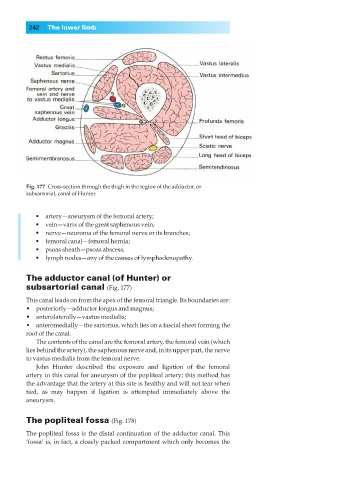
                Fig. 177◊Cross-section through the thigh in the region of the adductor, or
                subsartorial, canal of Hunter.


                  •◊◊artery—aneurysm of the femoral artery;
                  •◊◊vein—varix of the great saphenous vein;
                  •◊◊nerve—neuroma of the femoral nerve or its branches;
                  •◊◊femoral canal—femoral hernia;
                  •◊◊psoas sheath—psoas abscess;
                  •◊◊lymph nodes—any of the causes of lymphadenopathy.


                The adductor canal (of Hunter) or
                subsartorial canal (Fig. 177)
                This canal leads on from the apex of the femoral triangle. Its boundaries are:
                •◊◊posteriorly—adductor longus and magnus;
                •◊◊anterolaterally—vastus medialis;
                •◊◊anteromedially—the sartorius, which lies on a fascial sheet forming the
                roof of the canal.
                   The contents of the canal are the femoral artery, the femoral vein (which
                lies behind the artery), the saphenous nerve and, in its upper part, the nerve
                to vastus medialis from the femoral nerve.
                   John Hunter described the exposure and ligation of the femoral
                artery in this canal for aneurysm of the popliteal artery; this method has
                the advantage that the artery at this site is healthy and will not tear when
                tied, as may happen if ligation is attempted immediately above the
                aneurysm.


                The popliteal fossa (Fig. 178)
                The popliteal fossa is the distal continuation of the adductor canal. This
                ‘fossa’ is, in fact, a closely packed compartment which only becomes the

