


Page 37 - Clinical Anatomy
P. 37
ECA1  7/18/06  6:31 PM  Page 22


                 22  The Thorax


                   2nd costal
                    cartilage
                     Internal
                thoracic artery
                   and veins
                     Thymus
                    Superior
                   vena cava
                 Right phrenic
                      nerve                                          Left phrenic
                                                                     nerve
                 Azygos vein
                  Right vagus                                        Left vagus
                      nerve                                          nerve
                     Trachea                                         Left recurrent
                 Oesophagus                                          laryngeal nerve
                                                                     Aortic arch
                         T4                                          Thoracic
                                                                     duct
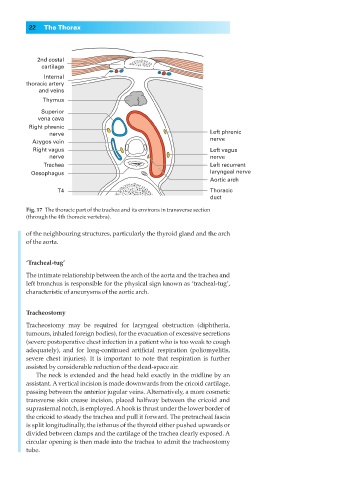
                Fig. 17◊The thoracic part of the trachea and its environs in transverse section
                (through the 4th thoracic vertebra).

                of the neighbouring structures, particularly the thyroid gland and the arch
                of the aorta.

                ‘Tracheal-tug’

                The intimate relationship between the arch of the aorta and the trachea and
                left bronchus is responsible for the physical sign known as ‘tracheal-tug’,
                characteristic of aneurysms of the aortic arch.


                Tracheostomy
                Tracheostomy may be required for laryngeal obstruction (diphtheria,
                tumours, inhaled foreign bodies), for the evacuation of excessive secretions
                (severe postoperative chest infection in a patient who is too weak to cough
                adequately), and for long-continued artificial respiration (poliomyelitis,
                severe chest injuries). It is important to note that respiration is further
                assisted by considerable reduction of the dead-space air.
                   The neck is extended and the head held exactly in the midline by an
                assistant. A vertical incision is made downwards from the cricoid cartilage,
                passing between the anterior jugular veins. Alternatively, a more cosmetic
                transverse skin crease incision, placed halfway between the cricoid and
                suprasternal notch, is employed. Ahook is thrust under the lower border of
                the cricoid to steady the trachea and pull it forward. The pretracheal fascia
                is split longitudinally, the isthmus of the thyroid either pushed upwards or
                divided between clamps and the cartilage of the trachea clearly exposed. A
                circular opening is then made into the trachea to admit the tracheostomy
                tube.

