


Page 40 - Clinical Anatomy
P. 40
ECA1  7/18/06  6:31 PM  Page 25


                                                                   The lower respiratory tract  25


                                       Blood supply
                                       Mixed venous blood is returned to the lungs by the pulmonary arteries; the
                                       air passages are themselves supplied by the bronchial arteries, which are
                                       small branches of the descending aorta. The bronchial arteries, although
                                        small, are of great clinical importance. They maintain the blood supply to
                                        the lung parenchyma after pulmonary embolism, so that, if the patient
                                        recovers, lung function returns to normal.
                                          The superior and inferior pulmonary veins return oxygenated blood to the
                                       left atrium, while the bronchial veins drain into the azygos system.

                                       Lymphatic drainage

                                       The lymphatics of the lung drain centripetally from the pleura towards the
                                       hilum. From the bronchopulmonary lymph nodes in the hilum, efferent lymph
                                        channels pass to the tracheobronchial nodes at the bifurcation of the trachea,
                                        thence to the paratracheal nodes and the mediastinal lymph trunks to drain
                                        usually directly into the brachiocephalic veins or, rarely, indirectly via the
                                        thoracic or right lymphatic duct.


                                       Nerve supply
                                       The pulmonary plexuses derive fibres from both the vagi and the sympa-
                                       thetic trunk. They supply efferents to the bronchial musculature (sympa-
                                       thetic bronchodilator fibres) and receive afferents from the mucous
                                       membrane of the bronchioles and from the alveoli.

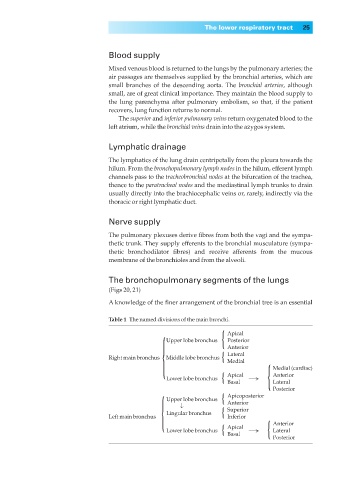
                                       The bronchopulmonary segments of the lungs
                                       (Figs 20, 21)
                                       A knowledge of the finer arrangement of the bronchial tree is an essential


                                        Table 1◊The named divisions of the main bronchi. Apical

                                                       { Upper lobe bronchus  {  Posterior
                                                                          Anterior
                                                        Middle lobe bronchus {
                                                                          Lateral
                                        Right main bronchus               Medial
                                                        Lower lobe bronchus {  Apical  →  {  Medial (cardiac)
                                                                                       Anterior
                                                                          Basal        Lateral
                                                                                       Posterior
                                                        Upper lobe bronchus {
                                                                          Apicoposterior
                                                       {  Lingular bronchus {  Anterior
                                                            ↓
                                                                          Superior
                                        Left main bronchus                Inferior     Anterior
                                                        Lower lobe bronchus  {  Apical  →  {  Lateral
                                                                          Basal
                                                                                       Posterior

