


Page 50 - Clinical Anatomy
P. 50
ECA1  7/18/06  6:31 PM  Page 35


                                                                            The mediastinum     35


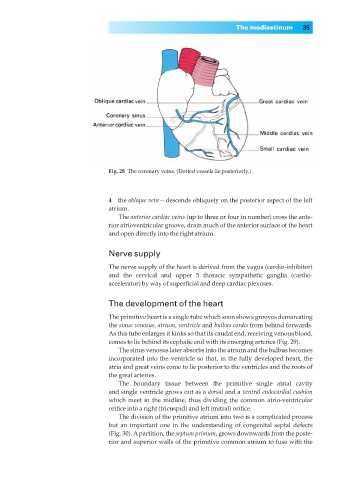
                                        Fig. 28◊The coronary veins. (Dotted vessels lie posteriorly.)


                                        4◊◊the oblique vein — descends obliquely on the posterior aspect of the left
                                        atrium.
                                          The anterior cardiac veins (up to three or four in number) cross the ante-
                                        rior atrioventricular groove, drain much of the anterior surface of the heart
                                        and open directly into the right atrium.


                                        Nerve supply
                                        The nerve supply of the heart is derived from the vagus (cardio-inhibitor)
                                        and the cervical and upper 5 thoracic sympathetic ganglia (cardio-
                                        accelerator) by way of superficial and deep cardiac plexuses.

                                        The development of the heart

                                        The primitive heart is a single tube which soon shows grooves demarcating
                                        the sinus venosus, atrium, ventricle and bulbus cordis from behind forwards.
                                        As this tube enlarges it kinks so that its caudal end, receiving venous blood,
                                        comes to lie behind its cephalic end with its emerging arteries (Fig. 29).
                                          The sinus venosus later absorbs into the atrium and the bulbus becomes
                                        incorporated into the ventricle so that, in the fully developed heart, the
                                        atria and great veins come to lie posterior to the ventricles and the roots of
                                        the great arteries.
                                          The boundary tissue between the primitive single atrial cavity
                                        and single ventricle grows out as a dorsal and a ventral endocardial cushion
                                        which meet in the midline, thus dividing the common atrio-ventricular
                                        orifice into a right (tricuspid) and left (mitral) orifice.
                                          The division of the primitive atrium into two is a complicated process
                                        but an important one in the understanding of congenital septal defects
                                        (Fig. 30). Apartition, the septum primum, grows downwards from the poste-
                                        rior and superior walls of the primitive common atrium to fuse with the

