


Page 106 - Clinical Application of Mechanical Ventilation
P. 106
72     Chapter 3


                                                      A
                                    70                                       60                B
                                    60
                                  Pressure (cm H 2 O)  40                  Pressure (cm H 2 O)  50
                                    50
                                                                             40
                                                                             30
                                    30
                                    20
                                                                             10
                                    10                                       20

                                             1     2      3     4                     1     2      3     4
                                                   Time (sec)                               Time (sec)


                                                      C
                                                                                               D
                                    60                                       60
                                  Pressure (cm H 2 O)  40                  Pressure (cm H 2 O)  40
                                                                             50
                                    50
                                                                             30
                                    30
                                                                             20
                                    20
                                    10


                                             1     2     3      4            10       1     2      3     4       © Cengage Learning 2014
                                                   Time (sec)                               Time (sec)
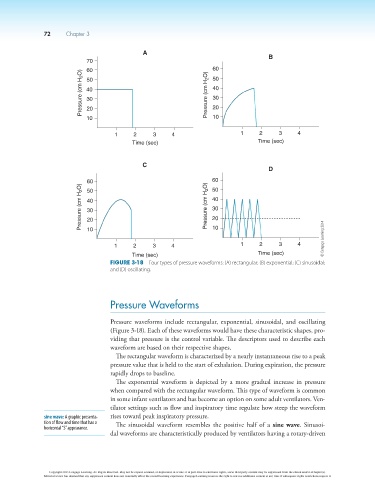
                                            Figure 3-18  Four types of pressure waveforms: (A) rectangular; (B) exponential; (C) sinusoidal;
                                            and (D) oscillating.


                                            Pressure Waveforms


                                            Pressure  waveforms  include  rectangular,  exponential,  sinusoidal,  and  oscillating
                                            (Figure 3-18). Each of these waveforms would have these characteristic shapes, pro-
                                            viding that pressure is the control variable. The descriptors used to describe each
                                            waveform are based on their respective shapes.
                                             The rectangular waveform is characterized by a nearly instantaneous rise to a peak
                                            pressure value that is held to the start of exhalation. During expiration, the pressure
                                            rapidly drops to baseline.
                                             The  exponential  waveform  is  depicted  by  a  more  gradual  increase  in  pressure
                                            when compared with the rectangular waveform. This type of waveform is common
                                            in some infant ventilators and has become an option on some adult ventilators. Ven-
                                            tilator settings such as flow and inspiratory time regulate how steep the waveform
                      sine wave: A graphic presenta-  rises toward peak inspiratory pressure.
                      tion of flow and time that has a   The sinusoidal  waveform resembles the  positive  half of a sine wave. Sinusoi-
                      horizontal “S” appearance.
                                            dal waveforms are characteristically produced by ventilators having a rotary-driven


                        Copyright 2013 Cengage Learning. All Rights Reserved. May not be copied, scanned, or duplicated, in whole or in part. Due to electronic rights, some third party content may be suppressed from the eBook and/or eChapter(s).
                      Editorial review has deemed that any suppressed content does not materially affect the overall learning experience. Cengage Learning reserves the right to remove additional content at any time if subsequent rights restrictions require it.

