


Page 101 - Clinical Application of Mechanical Ventilation
P. 101
Classification of Mechanical Ventilators  67


                                                                                c       d
                                                         Pressure


                                                         a                     b                     e


                                                                                                          © Cengage Learning 2014


                                                                                   f          g
                                                                                          h
                                                                                                    Time
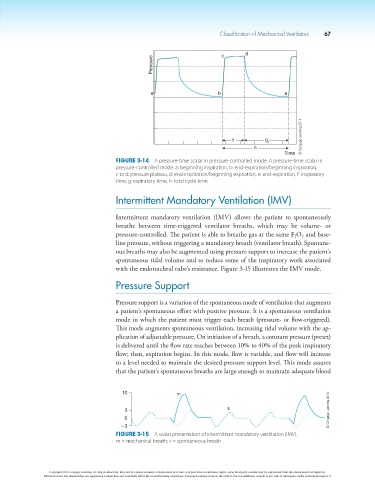
                                             Figure 3-14  A pressure-time scalar in pressure-controlled mode. A pressure-time scalar in
                                             pressure-controlled mode. a: beginning inspiration, b: end-expiration/beginning inspiration,
                                             c to d: pressure plateau, d: end-inspiration/beginning expiration, e: end-expiration, f: inspiratory
                                             time, g: expiratory time, h: total cycle time.


                                             Intermittent Mandatory Ventilation (IMV)


                                             Intermittent  mandatory  ventilation  (IMV)  allows  the  patient  to  spontaneously
                                             breathe  between  time-triggered  ventilator  breaths,  which  may  be  volume-  or
                                             pressure-controlled. The patient is able to breathe gas at the same F O  and base-
                                                                                                          2
                                                                                                        I
                                             line pressure, without triggering a mandatory breath (ventilator breath). Spontane-
                                             ous breaths may also be augmented using pressure support to increase the patient’s
                                             spontaneous tidal volume and to reduce some of the inspiratory work associated
                                             with the endotracheal tube’s resistance. Figure 3-15 illustrates the IMV mode.

                                             Pressure Support


                                             Pressure support is a variation of the spontaneous mode of ventilation that augments
                                             a patient’s spontaneous effort with positive pressure. It is a spontaneous ventilation
                                             mode in which the patient must trigger each breath (pressure- or flow-triggered).
                                             This mode augments spontaneous ventilation, increasing tidal volume with the ap-
                                             plication of adjustable pressure. On initiation of a breath, a constant pressure (preset)
                                             is delivered until the flow rate reaches between 10% to 40% of the peak inspiratory
                                             flow; then, expiration begins. In this mode, flow is variable, and flow will increase
                                             to a level needed to maintain the desired pressure support level. This mode assures
                                             that the patient’s spontaneous breaths are large enough to maintain adequate blood


                                               10                m

                                                3                                 s                                © Cengage Learning 2014
                                                0
                                               23
                                             Figure 3-15  A scalar presentation of intermittent mandatory ventilation (IMV).
                                             m = mechanical breath; s = spontaneous breath


                        Copyright 2013 Cengage Learning. All Rights Reserved. May not be copied, scanned, or duplicated, in whole or in part. Due to electronic rights, some third party content may be suppressed from the eBook and/or eChapter(s).
                      Editorial review has deemed that any suppressed content does not materially affect the overall learning experience. Cengage Learning reserves the right to remove additional content at any time if subsequent rights restrictions require it.

