


Page 346 - Clinical Application of Mechanical Ventilation
P. 346
312    Chapter 11


                                             The use of the sine or ascending ramp flow waveforms may be appropriate for
                                            controlled ventilation where patient effort, flow, or volume of gas being demanded
                                            is not an issue. When a patient is heavily sedated and there is no patient effort to
                                            breathe, the slow rise to set peak flow levels may improve lung gas distribution
                                            because there is less resistance to gas flow. Higher flow rates cause higher resistance
                                            to flow. Also, when there is variable flow resistance in diseased airways throughout
                                            the lungs, gas follows the path of least resistance, preferentially ventilating normal
                                            lung parenchyma. Utilizing slower flow rates or rise time to set peak flow levels
                                            may reduce flow resistance and improve gas distribution to the poorly ventilated
                                            areas of the lung. During assisted (patient-triggered) ventilation, however, there is
                                            a time lag between patient demand for flow because of ventilator inspiratory valve
                                            opening response time and time for gas to accelerate to the flow level demanded.
                                            When the initial flow level is set higher than demanded, it will often compensate
                                            for this time lag and improve ventilator-patient synchrony (Marini et al., 1985).

                      EFFECTS OF CONSTANT FLOW DURING
                      VOLUME-CONTROLLED VENTILATION


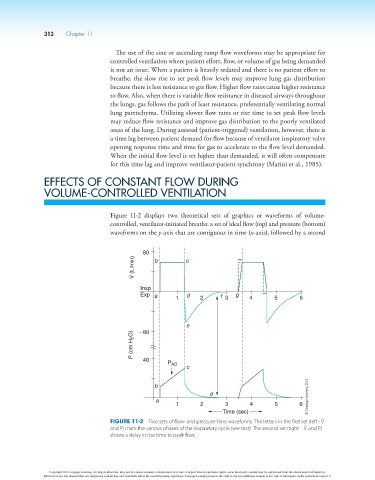
                                            Figure  11-2  displays  two  theoretical  sets  of  graphics  or  waveforms  of  volume-
                                            controlled, ventilator-initiated breaths: a set of ideal flow (top) and pressure (bottom)
                                            waveforms on the y-axis that are contiguous in time (x-axis), followed by a second


                                                      80
                                                   V (L/min)  b     c


                                                     Insp
                                                     Exp  a      1   d   2      f  3  g  4       5       6


                                                                     e
                                                     280
                                                   P (cm H 2 O)


                                                      40
                                                              P
                                                                AO
                                                                     c
                                                          b
                                                                            d
                                                           a                                                © Cengage Learning 2014
                                                                 1       2       3       4       5       6
                                                                                Time (sec)
                                                                                                                 #
                                            Figure 11-2  Two sets of flow- and pressure-time waveforms. The letters in the first set (left - V
                                                                                                           #
                                            and P) mark the various phases of the respiratory cycle (see text). The second set (right  - V and P)
                                            shows a delay in rise time to peak flow.


                        Copyright 2013 Cengage Learning. All Rights Reserved. May not be copied, scanned, or duplicated, in whole or in part. Due to electronic rights, some third party content may be suppressed from the eBook and/or eChapter(s).
                      Editorial review has deemed that any suppressed content does not materially affect the overall learning experience. Cengage Learning reserves the right to remove additional content at any time if subsequent rights restrictions require it.

