


Page 481 - Clinical Application of Mechanical Ventilation
P. 481
Pharmacotherapy for Mechanical Ventilation  447


                                                TABLE 13-19 Clinical Signs of Inadequate Pain Control

                                                Tachycardia in the absence of hypoxemia

                                                Blood pressure changes

                                                Dilated pupils
                                                Diaphoresis

                                                Grimacing
                                                Restlessness

                                                Guarding
                                             © Cengage Learning 2014


                                             Agents for Seizures and Elevated Intracranial

                                             Pressure (Barbiturates)


                                             Barbiturates, once widely used in critically ill patients for sedation and anxiolysis,
                        barbiturates: A group of drugs
                        that depresses the central nervous   have limited applications in patients on mechanical ventilation because of respira-
                        system. Adverse effects are many,   tory and cardiovascular depression. For sedative action, they have been replaced by
                        including alteration of the respira-
                        tion, heart rate, blood pressure,   safer drugs such as benzodiazepines. Barbiturates may be preferred in certain situ-
                        and temperature. They are used   ations, such as seizure disorders, control of elevated intracranial pressure (normal
                        in seizure disorders, control of
                        elevated intracranial pressure.  ICP 8 to 12 mm Hg, ,20 mm Hg in clinical practice).
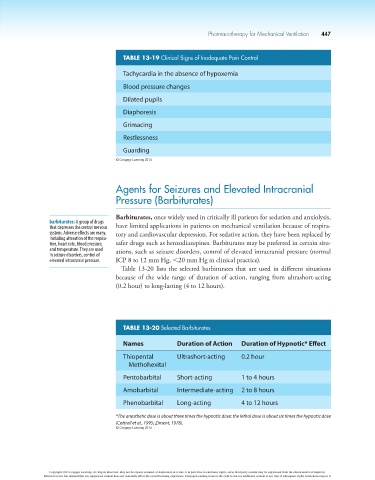
                                               Table 13-20 lists the selected barbiturates that are used in different situations
                                             because of the wide range of duration of action, ranging from ultrashort-acting
                                             (0.2 hour) to long-lasting (4 to 12 hours).


                                                TABLE 13-20 Selected Barbiturates

                                                Names            Duration of Action   Duration of Hypnotic* Effect

                                                Thiopental       Ultrashort-acting    0.2 hour
                                                  Methohexital
                                                Pentobarbital    Short-acting         1 to 4 hours

                                                Amobarbital      Intermediate-acting  2 to 8 hours

                                                Phenobarbital    Long-acting          4 to 12 hours
                                             *The anesthetic dose is about three times the hypnotic dose; the lethal dose is about six times the hypnotic dose
                                             (Cottrell et al., 1995; Ziment, 1978).
                                             © Cengage Learning 2014


                        Copyright 2013 Cengage Learning. All Rights Reserved. May not be copied, scanned, or duplicated, in whole or in part. Due to electronic rights, some third party content may be suppressed from the eBook and/or eChapter(s).
                      Editorial review has deemed that any suppressed content does not materially affect the overall learning experience. Cengage Learning reserves the right to remove additional content at any time if subsequent rights restrictions require it.

