


Page 477 - Clinical Application of Mechanical Ventilation
P. 477
Pharmacotherapy for Mechanical Ventilation  443


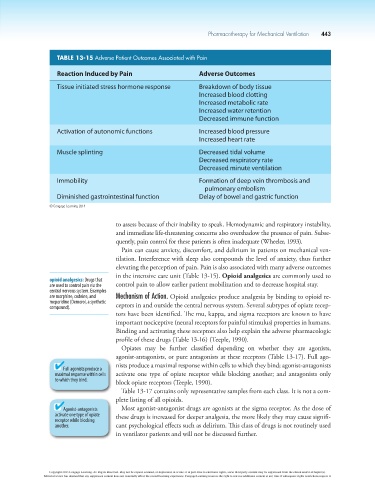
                          TABLE 13-15 Adverse Patient Outcomes Associated with Pain

                          Reaction Induced by Pain                       Adverse Outcomes

                          Tissue initiated stress hormone response       Breakdown of body tissue
                                                                         Increased blood clotting
                                                                         Increased metabolic rate
                                                                         Increased water retention
                                                                         Decreased immune function
                          Activation of autonomic functions              Increased blood pressure
                                                                         Increased heart rate
                          Muscle splinting                               Decreased tidal volume
                                                                         Decreased respiratory rate
                                                                         Decreased minute ventilation
                          Immobility                                     Formation of deep vein thrombosis and
                                                                          pulmonary embolism
                          Diminished gastrointestinal function           Delay of bowel and gastric function

                        © Cengage Learning 2014

                                             to assess because of their inability to speak. Hemodynamic and respiratory instability,
                                             and immediate life-threatening concerns also overshadow the presence of pain. Subse-
                                             quently, pain control for these patients is often inadequate (Wheeler, 1993).
                                               Pain can cause anxiety, discomfort, and delirium in patients on mechanical ven-
                                             tilation. Interference with sleep also compounds the level of anxiety, thus further
                                             elevating the perception of pain. Pain is also associated with many adverse outcomes
                                             in the intensive care unit (Table 13-15). Opioid analgesics are commonly used to
                        opioid analgesics: Drugs that
                        are used to control pain via the   control pain to allow earlier patient mobilization and to decrease hospital stay.
                        central nervous system. Examples
                        are morphine, codeine, and   Mechanism of Action. Opioid analgesics produce analgesia by binding to opioid re-
                        meperidine (Demerol, a synthetic
                        compound).           ceptors in and outside the central nervous system. Several subtypes of opiate recep-
                                             tors have been identified. The mu, kappa, and sigma receptors are known to have
                                             important nociceptive (neural receptors for painful stimulus) properties in humans.
                                             Binding and activating these receptors also help explain the adverse pharmacologic
                                             profile of these drugs (Table 13-16) (Teeple, 1990).
                                               Opiates  may  be  further  classified  depending  on  whether  they  are  agonists,
                                             agonist-antagonists, or pure antagonists at these receptors (Table 13-17). Full ago-
                                             nists produce a maximal response within cells to which they bind; agonist-antagonists
                            Full agonists produce a
                          maximal response within cells   activate one type of opiate receptor while blocking another; and antagonists only
                          to which they bind.  block opiate receptors (Teeple, 1990).
                                               Table 13-17 contains only representative samples from each class. It is not a com-
                                             plete listing of all opioids.
                            Agonist-antagonists   Most agonist-antagonist drugs are agonists at the sigma receptor. As the dose of
                          activate one type of opiate   these drugs is increased for deeper analgesia, the more likely they may cause signifi-
                          receptor while blocking
                          another.           cant psychological effects such as delirium. This class of drugs is not routinely used
                                             in ventilator patients and will not be discussed further.


                        Copyright 2013 Cengage Learning. All Rights Reserved. May not be copied, scanned, or duplicated, in whole or in part. Due to electronic rights, some third party content may be suppressed from the eBook and/or eChapter(s).
                      Editorial review has deemed that any suppressed content does not materially affect the overall learning experience. Cengage Learning reserves the right to remove additional content at any time if subsequent rights restrictions require it.

