


Page 170 - Cardiac Nursing
P. 170
LWBK340-c06_p132-152.qxd  09/09/2009  08:25 AM  Page 146 Aptara


                  146    PA R T  II / Physiologic and Pathologic Responses


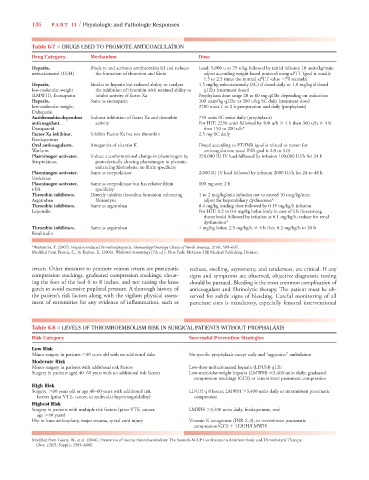
                  Table 6-7 ■ DRUGS USED TO PROMOTE ANTICOAGULATION
                  Drug Category       Mechanism                          Dose
                  Heparin,            Binds to and activates antithrombin III and reduces  Load: 5,000 u or 75 u/kg followed by initial infusion 18 units/kg/min;
                  unfractionated (UFH)  the formation of thrombin and fibrin  adjust according weight based protocol using aPTT (goal is usually
                                                                           1.5 to 2.5 times the normal aPTT value  70 seconds)
                  Heparin,            Similar to heparin but reduced ability to catalyze  1.5 mg/kg subcutaneously (SC) if dosed daily or 1.0 mg/kg if dosed
                  low-molecular-weight  the inhibition of thrombin with retained ability to   q12hr (treatment doses)
                  (LMWH), Enoxaparin   inhibit activity of factor Xa     Prophylaxis dose range 20 to 60 mg q12hr depending on indication
                  Heparin,            Same as enoxaparin                 100 units/kg q12hr or 200 u/kg SC daily (treatment dose)
                  low-molecular weight,                                  2500 units 1 to 2 h preoperation and daily (prophylaxis)
                  Dalteparin
                  Antithrombin-dependent   Indirect inhibition of factor Xa and thrombin   750 units SC twice daily (prophylaxis)
                  anticoagulant,       activity                          For HIT: 2250 units followed by 400 u/h   4 h then 300 u/h   4 h
                  Danaparoid                                               then 150 to 200 u/h*
                  Factor Xa inhibitor,  Inhibits Factor Xa but not thrombin  2.5 mg SC daily
                  Fondaparinux
                  Oral anticoagulants,   Antagonist of vitamin K         Dosed according to PT/INR (goal is related to reason for
                  Warfarin                                                 anticoagulation; usual INR goal is 2.0 to 3.0)
                  Plasminogen activator,   Induce a conformational change in plasminogen by   250,000 IU IV load followed by infusion 100,000 IU/h for 24 h
                  Streptokinase        proteolytically cleaving plasminogen to plasmin,
                                       enhancing fibrinolysis; no fibrin specificity
                  Plasminogen activator,   Same as streptokinase         2,000 IU IV load followed by infusion 2000 IU/h for 24 to 48 h
                  Urokinase
                  Plasminogen activator,  Same as streptokinase but has relative fibrin   100 mg over 2 h
                  t-PA                 specificity
                  Thrombin inhibitors,   Directly inhibits thrombin formation enhancing   1 to 2 mcg/kg/min infusion not to exceed 10 mcg/kg/min;
                  Argatroban           fibrinolysis                         adjust for hepatobiliary dysfunction*
                  Thrombin inhibitors,   Same as argatroban              0.4 mg/kg loading dose followed by 0.15 mg/kg/h infusion
                  Lepirudin                                              For HIT: 0.2 to 0.4 mg/kg bolus (only in case of life threatening
                                                                           thrombosis) followed by infusion at 0.1 mg/kg/h; reduce for renal
                                                                           dysfunction*
                  Thrombin inhibitors,   Same as argatroban              1 mg/kg bolus; 2.5 mg/kg/h   4 h then 0.2 mg/kg/h to 20 h
                  Bivalirudin
                  *Warkentin, T. (2007). Heparin-induced thrombocytopenia. Hematology/Oncology Clinics of North America, 21(4), 589–607.
                  Modified from Francis, C., & Kaplan, K. (2006). Willaims’s hematology (7th ed.). New York: McGraw-Hill Medical Publishing Division.


                  return. Other measures to promote venous return are pneumatic  redness, swelling, asymmetry, and tenderness, are critical. If any
                  compression stockings, graduated compression stockings, elevat-  signs and symptoms are observed, objective diagnostic testing
                  ing the foot of the bed 6 to 8 inches, and not raising the knee  should be pursued. Bleeding is the most common complication of
                  gatch to avoid excessive popliteal pressure. A thorough history of  anticoagulant and fibrinolytic therapy. The patient must be ob-
                  the patient’s risk factors along with the vigilant physical assess-  served for subtle signs of bleeding. Careful monitoring of all
                  ment of extremities for any evidence of inflammation, such as  puncture sites is mandatory, especially femoral interventional


                  Table 6-8 ■ LEVELS OF THROMBOEMBOLISM RISK IN SURGICAL PATIENTS WITHOUT PROPHALAXIS
                  Risk Category                                       Successful Prevention Strategies
                  Low Risk
                  Minor surgery in patients  40 years old with no additional risks  No specific prophylaxis except early and “aggressive” ambulation
                  Moderate Risk
                  Minor surgery in patients with additional risk factors  Low-dose unfractionated heparin (LDUH) q12h
                  Surgery in patients aged 40–60 years with no additional risk factors  Low-molecular-weight heparin (LMWH)  3,400 units daily; graduated
                                                                       compression stockings (GCS) or intermittent pneumatic compression
                  High Risk
                  Surgery.  60 years old or age 40–60 years with additional risk   LDUH q 8 hours; LMWH  3,400 units daily or intermittent pneumatic
                    factors (prior VTE, cancer, or molecular hypercoagulability)  compression
                  Highest Risk
                  Surgery in patients with multiple risk factors (prior VTE, cancer,   LMWH  3,400 units daily, fondaparinux, oral
                    age  40 years)
                  Hip or knee arthroplasty, major trauma, spinal cord injury  Vitamin K antagonists (INR 2–3); or intermittent pneumatic
                                                                       compression/GCS
 LDUH/LMWH

                  Modified from Geerts, W., et al. (2004). Prevention of venous thromboembolism: The Seventh ACCP Conference on Antithrombotic and Thrombolytic Therapy.
                         6
                         6
                    Chest, 126(3, Suppl.), 338S–400S.

