


Page 684 - ACCCN's Critical Care Nursing
P. 684
Resuscitation 661


                                                      Advanced Life Support
                                                           for Adults

                                                                                  During CPR
                                           Start CPR                              Airway adjuncts (LMA / ETT)
                                     30 compressions: 2 breaths                   Oxygen
                                       Minimise Interruptions                     Waveform capnography
                                                                                  IV / IO access
                                                                                  Plan actions before interrupting compressions
                                                                                        (e.g. charge manual defibrillator)
                                             Attach                               Drugs
                                       Defibrillator / Monitor                          Shockable
                                                                                                        nd
                                                                                            * Adrenaline 1 mg after 2  shock
                                                                                                nd
                                                                                              (then every 2  loop)
                                                                                                           rd
                                                                                            * Amiodarone 300 mg after 3  shock
                                                                                        Non Shockable
                                                                                            * Adrenaline 1 mg immediately
                                                                                                nd
                                                                                              (then every 2  loop)
                                            Assess                  Non
                    Shockable
                                            Rhythm                Shockable
                                                                                  Consider and Correct
                                                                                  Hypoxia
                                                                                  Hypovolaemia
                      Shock                                                       Hyper / hypokalaemia / metabolic disorders
                                                                                  Hypothermia / hyperthermia
                                                                                  Tension pneumothorax
                                                                                  Tamponade
                       CPR                                          CPR           Toxins
                   for 2 minutes                                 for 2 minutes    Thrombosis (pulmonary / coronary)
                                            Return of
                                          Spontaneous                             Post Resuscitation Care
                                          Circulation?                            Re-evaluate ABCDE
                                                                                  12 lead ECG
                                                                                  Treat precipitating causes
                                                                                  Re-evaluate oxygenation and ventilation
                                                                                  Temperature control (cool)
                                      Post Resuscitation Care
                                                                                                       December 2010
                                                                               62
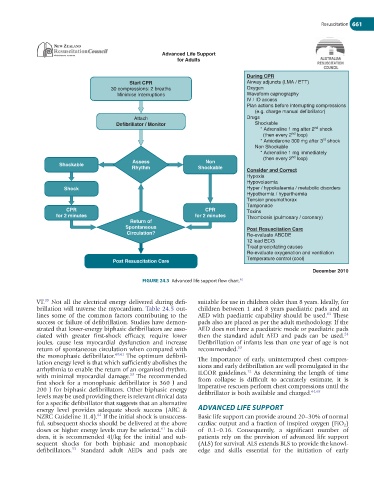
                                                FIGURE 24.3  Advanced life support flow chart.

                39
             VT.  Not all the electrical energy delivered during defi-  suitable for use in children older than 8 years. Ideally, for
             brillation will traverse the myocardium. Table 24.5 out-  children between 1 and 8 years paediatric pads and an
                                                                                                            63
             lines  some  of  the  common  factors  contributing  to  the   AED with paediatric capability should be used.  These
             success or failure of defibrillation. Studies have demon-  pads also are placed as per the adult methodology. If the
             strated that lower-energy biphasic defibrillators are asso-  AED does not have a paediatric mode or paediatric pads
                                                                                                                  24
             ciated  with  greater  first-shock  efficacy,  require  lower   then  the  standard  adult  AED  and  pads  can  be  used.
             joules,  cause  less  myocardial  dysfunction  and  increase   Defibrillation of infants less than one year of age is not
             return of spontaneous circulation when compared with   recommended. 53
             the monophasic defibrillator. 60,61  The optimum defibril-  The  importance  of  early,  uninterrupted  chest  compres-
             lation energy level is that which sufficiently abolishes the   sions and early defibrillation are well promulgated in the
             arrhythmia to enable the return of an organised rhythm,   ILCOR  guidelines.   As  determining  the  length  of  time
                                                                                  12
                                            53
             with minimal myocardial damage.  The recommended     from  collapse  is  difficult  to  accurately  estimate,  it  is
             first  shock  for  a  monophasic  defibrillator  is  360  J  and     imperative rescuers perform chest compressions until the
             200  J  for  biphasic  defibrillators.  Other  biphasic  energy   defibrillator is both available and charged. 64,65
             levels may be used providing there is relevant clinical data
             for a specific defibrillator that suggests that an alternative
             energy  level  provides  adequate  shock  success  (ARC  &   ADVANCED LIFE SUPPORT
                                 62
             NZRC Guideline 11.4).  If the initial shock is unsuccess-  Basic life support can provide around 20–30% of normal
             ful, subsequent shocks should be delivered at the above   cardiac output and a fraction of inspired oxygen (FiO 2 )
                                                      61
             doses or higher energy levels may be selected.  In chil-  of  0.1–0.16.  Consequently,  a  significant  number  of
             dren,  it  is  recommended  4J/kg  for  the  initial  and  sub-  patients rely on the provision of advanced life support
             sequent  shocks  for  both  biphasic  and  monophasic   (ALS) for survival. ALS extends BLS to provide the knowl-
                         53
             defibrillators.   Standard  adult  AEDs  and  pads  are   edge  and  skills  essential  for  the  initiation  of  early

