


Page 545 - Concise Pathology for Exam Preparation ( PDFDrive )
P. 545
530    SECTION II  Diseases of Organ Systems


                                                                                Infiltrating cords
                                                                                of tumour cells


                                                                                Dense fibrous
                                                                                stroma


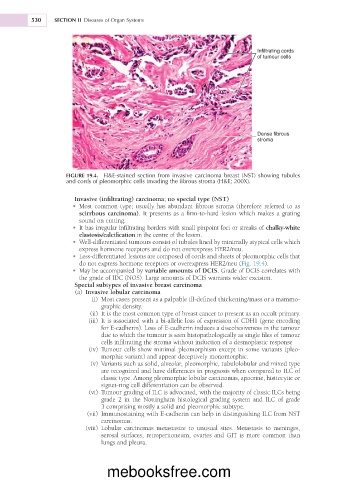
                     FIGURE  19.4.  H&E-stained  section  from  invasive  carcinoma  breast  (NST)  showing  tubules
                     and cords of pleomorphic cells invading the fibrous stroma (H&E; 200X).


                        Invasive	(infiltrating)	carcinoma;	no	special	type	(NST)
                       •	 Most common type; usually has abundant fibrous stroma (therefore referred to as
                         scirrhous	carcinoma).	It presents as a firm-to-hard lesion which makes a grating
                         sound on cutting.
                       •	 It has irregular infiltrating borders with small pinpoint foci or streaks of chalky-white
                         elastosis/calcification in the centre of the lesion.
                       •	 Well-differentiated tumours consist of tubules lined by minimally atypical cells which
                         express hormone receptors and do not overexpress HER2/neu.
                       •	 Less-differentiated lesions are composed of cords and sheets of pleomorphic cells that
                         do not express hormone receptors or overexpress HER2/neu (Fig. 19.4).
                       •	 May be accompanied by variable	amounts	of	DCIS. Grade of DCIS correlates with
                         the grade of IDC (NOS). Large amounts of DCIS warrants wider excision.
                        Special	subtypes	of	invasive	breast	carcinoma
                         (a)  Invasive	lobular	carcinoma
                             (i)  Most cases present as a palpable ill-defined thickening/mass or a mammo-
                                graphic density.
                             (ii)  It is the most common type of breast cancer to present as an occult primary.
                            (iii)  It is associated with a bi-allelic loss of expression of CDH1 (gene encoding
                                for E-cadherin). Loss of E-cadherin induces a discohesiveness in the tumour
                                due to which the tumour is seen histopathologically as single files of tumour
                                cells infiltrating the stroma without induction of a desmoplastic response
                            (iv)  Tumour cells show minimal pleomorphism except in some variants (pleo-
                                morphic variant) and appear deceptively monomorphic.
                             (v)  Variants such as solid, alveolar, pleomorphic, tubulolobular and mixed type
                                are recognized and have differences in prognosis when compared to ILC of
                                classic type. Among pleomorphic lobular carcinomas, apocrine, histiocytic or
                                signet-ring cell differentiation can be observed.
                            (vi)  Tumour grading of ILC is advocated, with the majority of classic ILCs being
                                grade  2  in  the  Nottingham  histological  grading  system  and  ILC  of  grade
                                3 comprising mostly a solid and pleomorphic subtype.
                            (vii)  Immunostaining with E-cadherin can help in distinguishing ILC from NST
                                carcinomas.
                           (viii)  Lobular  carcinomas  metastasize  to  unusual  sites.  Metastasis  to  meninges,
                                serosal  surfaces,  retroperitoneum,  ovaries  and  GIT  is  more  common  than
                                lungs and pleura.


                                  mebooksfree.com

