


Page 1116 - Hematology_ Basic Principles and Practice ( PDFDrive )
P. 1116
982    Part VII  Hematologic Malignancies


                                                              of  the  molecular  pathology  of  pediatric  AML.  Ongoing  DNA
                  Allogeneic Hematopoietic Stem Cell Transplantation in
         BOX 62.1  First Remission                            sequencing  efforts  and  studies  on  the  epigenetic  state  of  leukemia
                                                              cells, coupled with biologic studies to understand the role of indi-
          Although the use of allogeneic hematopoietic stem cell transplantation   vidual mutations as well as the spectrum of mutations within a given
          (HSCT) in first remission is controversial, we recommend it for high-risk   patient,  will  likely  produce  a  much  deeper  understanding  of  the
          patients, including those with -7, t(6;11)(q27;q23), t(10;11)(p12;q23),   disease and mechanisms of drug resistance over the next several years.
          t(10;11)(p11.2;q23),  t(5;11)(q35;p15.5),  t(6;9)(p23;q34),  t(8;16)  In this chapter we discuss the major subtypes of AML and our current
          (p11;p13),  inv(16)(p13.3q24.3),  and  t(16;21)(q24;q22).  Until  the   understanding of the biologic processes that mediate disease.
          impact of FLT3 inhibitors on the outcome of patients with FLT3 internal
          tandem duplication (ITD) has been determined, we recommend HSCT
          for patients with FLT3-ITD and high allelic ratios or poor response to   The Core-Binding Factor Leukemias
          therapy. Patients who do not have high-risk genetic features but who
          have high (>1% after the first course of therapy) or persistent (>0.1%
          after two courses of therapy) levels of minimal residual disease (MRD)   The  CBF  transcription  complex  is  a  heterodimeric  complex  com-
          are also at high risk of relapse and are therefore candidates for HSCT   posed  of  an  alpha  DNA-binding  subunit  (RUNX1,  RUNX2,  or
          in  first  remission.  Because  recent  studies  have  demonstrated  that   RUNX3),  and  a  non-DNA-binding  beta  subunit  (CBFβ).  The
          outcomes after HSCT are similar regardless of donor type, we believe   complex functions as a master regulator that controls the birth of the
          that the decision to perform HSCT in first remission should be based   definitive hematopoietic stem cell (HSC) during embryogenesis and
          on  the  factors  described  above,  rather  than  on  the  availability  of  a   plays  important  roles  in  normal  hematopoietic  cells,  both  in  the
          matched donor. Thus, patients who are classified as high-risk acute   control of their differentiation state as well as their effector functions.
          myeloid leukemia based on genetic features or MRD should undergo   RUNX1 was the first identified mammalian CBF gene and was iso-
          HSCT  using  a  matched  sibling  donor,  matched  unrelated  donor,
          haploidentical donor, or cord blood in first remission. Prior to transplant,   lated as part of the AML-associated translocation t(8;21)(q22;q22.3).
          reasonable efforts should be made to reduce the level of MRD as much   Following the discovery of RUNX1, the inv(16) and the less common
          as possible without causing organ toxicity or infectious complications   t(16;16)(p13;q22), which are found in the majority of acute mono-
          that may increase transplant-related morbidity or mortality.  blastic leukemias with eosinophilia (FAB-M4Eo), were cloned and
                                                              shown to result in a fusion between CBFβ and MYH11, the gene
                                                              that encodes smooth muscle myosin heavy chain (SMMHC). Subse-
                                                              quently, rare somatic mutations of RUNX1 were detected in de novo
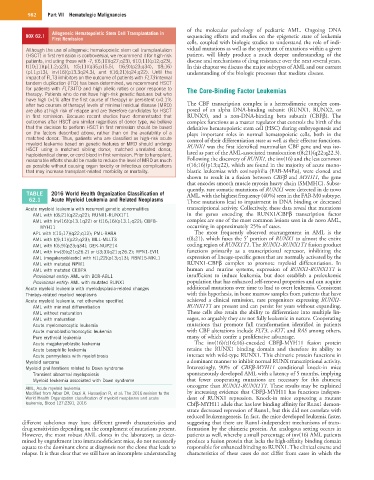
          TABLE   2016 World Health Organization Classification of   AML, with the highest frequency (40%) seen in the FAB-M0 subtype.
          62.1    Acute Myeloid Leukemia and Related Neoplasms  These mutations lead to impairment in DNA binding or decreased
         Acute myeloid leukemia with recurrent genetic abnormalities  transcriptional activity. Collectively, these data reveal that mutations
            AML with t(8;21)(q22;q22); RUNX1-RUNX1T1          in  the  genes  encoding  the  RUNX1/CBFβ  transcription  factor
            AML with inv(16)(p13.1q22) or t(16;16)(p13.1;q22); CBFB-  complex are one of the most common lesions seen in de novo AML,
              MYH11                                           occurring in approximately 25% of cases.
            APL with t(15;17)(q22;q12); PML-RARA                 The  most  frequently  observed  rearrangement  in  AML  is  the
            AML with t(9;11)(p22;q23); MLL-MLLT3              t(8;21), which fuses the 5′ portion of RUNX1 to almost the entire
            AML with t(6;9)(p23;q34); DEK-NUP214              coding region of RUNX1T1. The RUNX1-RUNX1T1 fusion product
            AML with inv(3)(q21q26.2) or t(3;3)(q21;q26.2); RPN1-EVI1  functions  primarily  as  a  transcriptional  repressor,  inhibiting  the
            AML (megakaryoblastic) with t(1;22)(p13;q13); RBM15-MKL1  expression of lineage-specific genes that are normally activated by the
            AML with mutated NPM1                             RUNX1-CBFβ  complex  to  promote  myeloid  differentiation.  In
            AML with mutated CEBPA                            human  and  murine  systems,  expression  of  RUNX1-RUNX1T1  is
            Provisional entity: AML with BCR-ABL1             insufficient  to  induce  leukemia,  but  does  establish  a  preleukemic
            Provisional entity: AML with mutated RUNX1        population that has enhanced self-renewal properties and can acquire
         Acute myeloid leukemia with myelodysplasia-related changes  additional mutations over time to lead to overt leukemia. Consistent
         Therapy-related myeloid neoplasms                    with this hypothesis, in bone marrow samples from patients that have
         Acute myeloid leukemia, not otherwise specified      achieved  a  clinical  remission,  rare  progenitors  expressing  RUNX1-
            AML with minimal differentiation                  RUNX1T1 are present and can persist for years without expanding.
            AML without maturation                            These cells also retain the ability to differentiate into multiple lin-
            AML with maturation                               eages, so arguably they are not fully leukemic in nature. Cooperating
            Acute myelomonocytic leukemia                     mutations  that  promote  full  transformation  identified  in  patients
            Acute monoblastic/monocytic leukemia              with CBF alterations include FLT3, c-KIT, and RAS among others,
            Pure erythroid leukemia                           many of which confer a proliferative advantage.
            Acute megakaryoblastic leukemia                      The  inv(16)/t(16;16)-encoded  CBFβ-MYH11  fusion  protein
            Acute basophilic leukemia                         retains  the  RUNX1  binding  domain  and  therefore  its  ability  to
            Acute panmyelosis with myelofibrosis              interact with wild-type RUNX1. This chimeric protein functions in
         Myeloid sarcoma                                      a dominant manner to inhibit normal RUNX transcriptional activity.
         Myeloid proliferations related to Down syndrome      Interestingly,  90%  of  CBFβ-MYH11  conditional  knock-in  mice
            Transient abnormal myelopoiesis                   spontaneously developed AML with a latency of 5 months, implying
            Myeloid leukemia associated with Down syndrome    that  fewer  cooperating  mutations  are  necessary  for  this  chimeric
                                                              oncogene than RUNX1-RUNX1T1. These results may be explained
         AML, Acute myeloid leukemia.
         Modified from Arber DA, Orazi A, Hasserjian R, et al: The 2016 revision to the   by increasing evidence that CBFβ-MYH11 has functions indepen-
         World Health Organization classification of myeloid neoplasms and acute   dent  of  RUNX1  repression.  Knock-in  mice  expressing  a  mutant
         leukemia, Blood 127:2391, 2016                       Cbfβ-MYH11 allele that has low binding affinity for Runx1 demon-
                                                              strate decreased repression of Runx1, but this did not correlate with
                                                              reduced leukemogenesis. In fact, the mice developed leukemia faster,
        different  subclones  may  have  different  growth  characteristics  and   suggesting that there are Runx1-independent mechanisms of trans-
        drug sensitivities depending on the complement of mutations present.   formation by the chimeric protein. An analogous setting occurs in
        However, the most robust AML clones in the laboratory, as deter-  patients as well, whereby a small percentage of inv(16) AML patients
        mined by engraftment into immunodeficient mice, do not necessarily   produce a fusion protein that lacks the high-affinity binding domain
        equate to the dominant clone at diagnosis nor the clone that leads to   responsible for enhanced binding to RUNX1. The clinical course and
        relapse. It is thus clear that we still have an incomplete understanding   characteristics of these cases do not differ from cases in which the

