


Page 1129 - Hematology_ Basic Principles and Practice ( PDFDrive )
P. 1129
Chapter 63  Myelodysplastic Syndromes and Myeloproliferative Neoplasms in Children  995


                          Mutant receptor tyrosine kinases:
                          TEL-PDGFRβ (CMML), CKIT and FLT3 (AML)


                                                                RAS-GDP
                                                 Grb2   SOS
                                           Shc
                               JAK                  Gab2                        Neurofibromin
                                            SHP-2               Ras-GTP*           (JMML)
                             STAT
                                           (JMML)
                                                                       (AML, JMML, CMML, MDS)

                                                 BCR-ABL
                                                                                  “Ras pathway” lesions:
                              JAK2 mutations:      (CML)      Effector pathways    AML         60%
                             PV       >90%                                         MPD
                             ET         50%                                             JMML    75%
                             CIMF       50%                                             CMML    40%
                             CMML       10%                                             CML  >95%


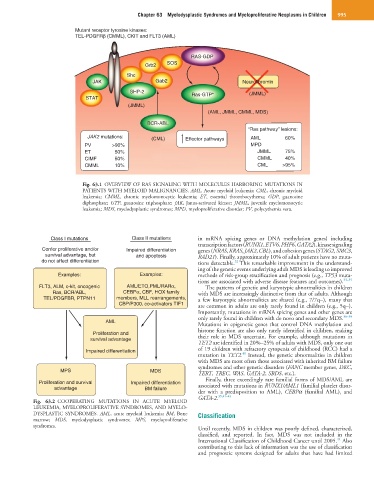
                            Fig. 63.1  OVERVIEW OF RAS SIGNALING WITH MOLECULES HARBORING MUTATIONS IN
                            PATIENTS WITH MYELOID MALIGNANCIES. AML, Acute myeloid leukemia; CML, chronic myeloid
                            leukemia;  CMML,  chronic  myelomonocytic  leukemia;  ET,  essential  thrombocythema;  GDP,  guanosine
                            diphosphate;  GTP,  guanosine  triphosphate;  JAK,  Janus-activated  kinase;  JMML,  juvenile  myelomonocytic
                            leukemia; MDS, myelodysplastic syndromes; MPD, myeloproliferative disorder; PV, polycythemia vera.


                  Class I mutations         Class II mutations    in  mRNA  spicing  genes  or  DNA  methylation  genes)  including
                                                                  transcription factors (RUNX1, ETV6, PHF6, GATA2), kinase signaling
               Confer proliferative and/or  Impaired differentiation  genes (NRAS, KRAS, JAK2, CBL), and cohesion genes (STAG2, SMC3,
                survival advantage, but       and apoptosis       RAD21). Finally, approximately 10% of adult patients have no muta-
               do not affect differentiation                      tions detectable.  This remarkable improvement in the understand-
                                                                              32
                                                                  ing of the genetic events underlying adult MDS is leading to improved
                    Examples:                  Examples:          methods of risk-group stratification and prognosis (e.g., TP53 muta-
                                                                  tions are associated with adverse disease features and outcomes). 33–35
              FLT3, ALM, c-kit, oncogenic  AML/ETO,PML/RARα,        The patterns of genetic and karyotypic abnormalities in children
                  Ras, BCR/ABL,          CEBPα, CBF, HOX family   with MDS are increasingly distinctive from that of adults. Although
               TEL/PDGFBR, PTPN11      members, MLL rearrangements,  a few karyotypic abnormalities are shared (e.g., 7/7q−), many that
                                        CBP/P300, co-activators TIF1  are common in adults are only rarely found in children (e.g., 5q−).
                                                                  Importantly, mutations in mRNA spicing genes and other genes are
                                                                  only rarely found in children with de novo and secondary MDS. 36–39
                                    AML
                                                                  Mutations in epigenetic genes that control DNA methylation and
                                                                  histone function are also only rarely identified in children, making
                               Proliferation and
                               survival advantage                 their role in MDS uncertain. For example, although mutations in
                                                                  TET2 are identified in 20%–25% of adults with MDS, only one out
                             Impaired differentiation             of 19 children with refractory cytopenia of childhood (RCC) had a
                                                                                40
                                                                  mutation in TET2.  Instead, the genetic abnormalities in children
                                                                  with MDS are most often those associated with inherited BM failure
                                                                  syndromes and other genetic disorders (FANC member genes, DKC,
                     MPS                          MDS             TERT, TREC, WAS, GATA-2, SBDS, etc.).
                                                                    Finally, three exceedingly rare familial forms of MDS/AML are
              Proliferation and survival    Impaired differentiation
                   advantage                    BM failure        associated with mutations in RUNX1/AML1 (familial platelet disor-
                                                                  der  with  a  predisposition  to  AML),  CEBPα  (familial  AML),  and
                                                                  GATA-2. 39,41–43
            Fig.  63.2  COOPERATING  MUTATIONS  IN  ACUTE  MYELOID
            LEUKEMIA, MYELOPROLIFERATIVE SYNDROMES, AND MYELO-
            DYSPLASTIC SYNDROMES. AML, acute myeloid leukemia; BM, Bone   Classification
            marrow;  MDS,  myelodysplastic  syndromes;  MPS,  myeloproliferative
            syndromes.
                                                                  Until recently, MDS in children was poorly defined, characterized,
                                                                  classified,  and  reported.  In  fact,  MDS  was  not  included  in  the
                                                                                                               44
                                                                  International Classification of Childhood Cancer until 2005.  Also
                                                                  contributing to this lack of information was the use of classification
                                                                  and  prognostic  systems  designed  for  adults  that  have  had  limited

