


Page 1226 - Hematology_ Basic Principles and Practice ( PDFDrive )
P. 1226
1072   Part VII  Hematologic Malignancies


                                      Normoxia                              Hypoxia
                                               Iron      HIF-2α

                                                            or
                                                         HIF-1α                  HIF-1β
                         Oxygen
                                           PHD


                                                                      HIF-1α
                                                                                      Erythropoietin
                              HIF-1α                                  HIF-1β             VEGF
                                                                               HIF-1α   GLUT1
                                     OH                                    or  κIF-1β


                                               Degradation
                           Ubiquitination
                           by von Hippel-
                             Lindau
                                                                         CGTG
                                                                      Upregulation of
                                                                  hypoxia-responsive genes


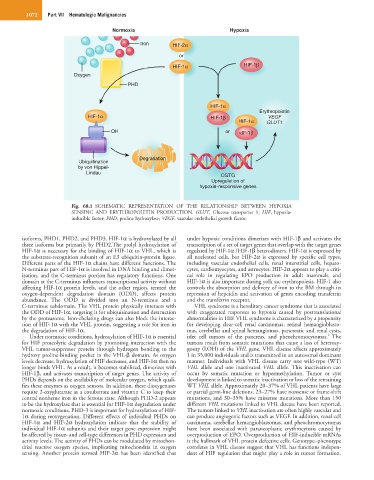
                        Fig.  68.1  SCHEMATIC  REPRESENTATION  OF  THE  RELATIONSHIP  BETWEEN  HYPOXIA
                        SENSING  AND  ERYTHROPOIETIN  PRODUCTION.  GLUT,  Glucose  transporter  1;  HIF,  hypoxia-
                        inducible factor; PHD, proline hydroxylase; VEGF, vascular endothelial growth factor.


        isoforms, PHD1, PHD2, and PHD3. HIF-1α is hydroxylated by all   under hypoxic conditions dimerizes with HIF-1β and activates the
        three isoforms but primarily by PHD2.The prolyl hydroxylation of   transcription of a set of target genes that overlap with the target genes
        HIF-1α is necessary for the binding of HIF-1α to VHL, which is   regulated by HIF-1α /HIF-1β heterodimers. HIF-1α is expressed by
        the substrate-recognition subunit of an E3 ubiquitin-protein ligase.   all  nucleated  cells,  but  HIF-2α  is  expressed  by  specific  cell  types,
        Different parts of the HIF-1α chains have different functions. The   including  vascular  endothelial  cells,  renal  interstitial  cells,  hepato-
        N-terminus part of HIF-1α is involved in DNA binding and dimer-  cytes, cardiomyocytes, and astrocytes. HIF-2α appears to play a criti-
        ization, and the C-terminus portion has regulatory functions. One   cal  role  in  regulating  EPO  production  in  adult  mammals,  and
        domain at the C-terminus influences transcriptional activity without   HIF-1α is also important during yolk sac erythropoiesis. HIF-1 also
        affecting  HIF-1α  protein  levels,  and  the  other  region,  termed  the   controls the absorption and delivery of iron to the BM through its
        oxygen-dependent  degradation  domain  (ODD),  affects  protein   repression of hepcidin and activation of genes encoding transferrin
        abundance.  The  ODD  is  divided  into  an  N-terminus  and  a   and the transferrin receptor.
        C-terminus subdomain. The VHL protein physically interacts with   VHL syndrome is a hereditary cancer syndrome that is associated
        the ODD of HIF-1α, targeting it for ubiquitination and destruction   with  exaggerated  responses  to  hypoxia  caused  by  posttranslational
        by the proteasome. Iron-chelating drugs can also block the interac-  abnormalities in HIF. VHL syndrome is characterized by a propensity
        tion of HIF-1α with the VHL protein, suggesting a role for iron in   for  developing  clear-cell  renal  carcinomas,  retinal  hemangioblasto-
        the degradation of HIF-1α.                            mas, cerebellar and spinal hemangiomas, pancreatic and renal cysts,
                                                                                                            2
           Under normoxic conditions, hydroxylation of HIF-1α is essential   islet  cell  tumors  of  the  pancreas,  and  pheochromocytomas.   The
        for HIF proteolytic degradation by promoting interaction with the   tumors result from somatic mutations that cause a loss of heterozy-
        VHL  tumor-suppressor  protein  through  hydrogen  bonding  to  the   gosity (LOH) of the VHL gene. VHL disease affects approximately
        hydroxy proline-binding pocket in the VHL-β domain. As oxygen   1 in 35,000 individuals and is transmitted in an autosomal dominant
        levels decrease, hydroxylation of HIF decreases, and HIF-1α then no   manner.  Individuals  with  VHL  disease  carry  one  wild-type  (WT)
        longer binds VHL. As a result, it becomes stabilized, dimerizes with   VHL  allele  and  one  inactivated  VHL  allele. This  inactivation  can
        HIF-1β, and activates transcription of target genes. The activity of   occur  by  somatic  mutation  or  hypermethylation.  Tumor  or  cyst
        PHDs depends on the availability of molecular oxygen, which quali-  development is linked to somatic inactivation or loss of the remaining
        fies these enzymes as oxygen sensors. In addition, these dioxygenases   WT VHL allele. Approximately 20–37% of VHL patients have large
        require 2-oxyglutarate as a cosubstrate and vitamin C to keep their   or partial germ-line deletions, 23–27% have nonsense or frame-shift
        central nonheme iron in the ferrous state. Although PHD-2 appears   mutations, and 30–35% have missense mutations. More than 150
        to be the hydroxylase that is essential for HIF-1α degradation under   different VHL mutations linked to VHL disease have been reported.
        normoxic conditions, PHD-3 is important for hydroxylation of HIF-  The tumors linked to VHL inactivation are often highly vascular and
        1α during reoxygenation. Different effects of individual PHDs on   can produce angiogenic factors such as VEGF. In addition, renal cell
        HIF-1α  and  HIF-2α  hydroxylation  indicate  that  the  stability  of   carcinoma, cerebellar hemangioblastomas, and pheochromocytomas
        individual HIF-1α subunits and their target gene expression might   have  been  associated  with  paraneoplastic  erythrocytosis  caused  by
        be affected by tissue- and cell-type differences in PHD expression and   overproduction of EPO. Overproduction of HIF-inducible mRNAs
        activity levels. The activity of PHDs can be modulated by mitochon-  is the hallmark of VHL protein defective cells. Genotype–phenotype
        drial  reactive  oxygen  species,  implicating  mitochondria  in  oxygen   correlates in VHL disease suggest that VHL has functions indepen-
        sensing.  Another  protein  termed  HIF-2α  has  been  identified  that   dent of HIF regulation that might play a role in tumor formation.

