


Page 1262 - Hematology_ Basic Principles and Practice ( PDFDrive )
P. 1262
1108   Part VII  Hematologic Malignancies


                           Cell membrane


                                             CALR MUT  +  +  +      CALR MUT  +  +  +  MPL
                                                       2                  3
                          ER

                                      - - -
                                        KDEL

                                                                            JAK–STAT
                                   CALR WT  − − −                           activation  4
                                                        - - - KDEL
                                                KDEL


                                    CALR WT
                                                                           Oncogenic
                                                      1                   transformation  5
                                           p.L367fs ∗ 46

                                    CALR  MUT
                           Nucleus

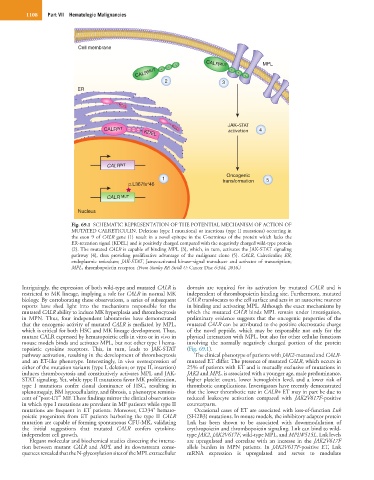
                        Fig. 69.1  SCHEMATIC REPRESENTATION OF THE POTENTIAL MECHANISM OF ACTION OF
                        MUTATED CALRETICULIN. Deletions (type I mutations) or insertions (type II mutations) occurring in
                        the exon 9 of CALR gene (1) result in a novel epitope in the C-terminus of the protein which lacks the
                        ER-retention signal (KDEL) and is positively charged compared with the negatively charged wild-type protein
                        (2). The mutated CALR is capable of binding MPL (3), which, in turn, activates the JAK-STAT signaling
                        pathway  (4),  thus  providing  proliferative  advantage  of  the  malignant  clone  (5).  CALR,  Calreticulin;  ER,
                        endoplasmic reticulum; JAK-STAT, Janus-activated kinase–signal transducer and activator of transcription;
                        MPL, thrombopoietin receptor. (From Stanley RF, Steidl U: Cancer Disc 6:344, 2016.)


        Intriguingly, the expression of both wild-type and mutated CALR is   domain  are  required  for  its  activation  by  mutated  CALR  and  is
        restricted to MK lineage, implying a role for CALR in normal MK   independent of thrombopoietin binding site. Furthermore, mutated
        biology. By corroborating these observations, a series of subsequent   CALR translocates to the cell surface and acts in an autocrine manner
        reports  have  shed  light  into  the  mechanisms  responsible  for  the   in binding and activating MPL. Although the exact mechanisms by
        mutated CALR ability to induce MK hyperplasia and thrombocytosis   which the mutated CALR binds MPL remain under investigation,
        in  MPN. Thus,  four  independent  laboratories  have  demonstrated   preliminary evidence suggests that the oncogenic properties of the
        that the oncogenic activity of mutated CALR is mediated by MPL,   mutated CALR can be attributed to the positive electrostatic charge
        which is critical for both HSC and MK lineage development. Thus,   of  the  novel  peptide,  which  may  be  responsible  not  only  for  the
        mutant CALR expressed by hematopoietic cells in vitro or in vivo in   physical interaction with MPL, but also for other cellular functions
        mouse models binds and activates MPL, but not other type I hema-  involving  the  normally  negatively  charged  portion  of  the  protein
        topoietic  cytokine  receptors.  This,  in  turn,  leads  to  JAK-STAT   (Fig. 69.1).
        pathway activation, resulting in the development of thrombocytosis   The clinical phenotype of patients with JAK2-mutated and CALR-
        and  an  ET-like  phenotype.  Interestingly,  in  vivo  overexpression  of   mutated ET differ. The presence of mutated CALR, which occurs in
        either of the mutation variants (type I, deletion; or type II, insertion)   25% of patients with ET and is mutually exclusive of mutations in
        induces thrombocytosis and constitutively activates MPL and JAK-  JAK2 and MPL, is associated with a younger age, male predominance,
        STAT signaling. Yet, while type II mutations favor MK proliferation,   higher platelet count, lower hemoglobin level, and a lower risk of
        type  I  mutations  confer  clonal  dominance  of  HSC,  resulting  in   thrombotic complications. Investigators have recently demonstrated
        splenomegaly, BM hypocellularity, and fibrosis, a phenotype reminis-  that the lower thrombotic rate in CALR+ ET may in part be due to
        cent of “post-ET” MF. These findings mirror the clinical observations   reduced  leukocyte  activation  compared  with  JAK2V617F-positive
        in which type I mutations are prevalent in MF patients while type II   counterparts.
                                                   +
        mutations are frequent in ET patients. Moreover, CD34  hemato-  Occasional cases of ET are associated with loss-of-function Lnk
        poietic  progenitors  from  ET  patients  harboring  the  type  II  CALR   (SH2B3) mutations. In mouse models, the inhibitory adaptor protein
        mutation are capable of forming spontaneous CFU-MK, validating   Lnk  has  been  shown  to  be  associated  with  downmodulation  of
        the  initial  suggestions  that  mutated  CALR  confers  cytokine-  erythropoietin and thrombopoietin signaling. Lnk can bind to wild-
        independent cell growth.                              type JAK2, JAK2V617F, wild-type MPL, and MPLW515L. Lnk levels
           Elegant molecular and biochemical studies dissecting the interac-  are  upregulated  and  correlate  with  an  increase  in  the  JAK2V617F
        tion  between  mutant  CALR  and  MPL  and  its  downstream  conse-  allele  burden  in  MPN  patients.  In  JAK2V617F-positive  ET,  Lnk
        quences revealed that the N-glycosylation sites of the MPL extracellular   mRNA  expression  is  upregulated  and  serves  to  modulate

