


Page 1265 - Hematology_ Basic Principles and Practice ( PDFDrive )
P. 1265
Chapter 69  Essential Thrombocythemia  1111


             TABLE   Frequency of Neurologic Complaints Associated With
              69.1   Essential Thrombocythemia
             Manifestations                           Patients (n)
             Headache                                   13
             Paresthesias                               10
             Posterior cerebral circulatory ischemia     9
             Anterior cerebral circulatory ischemia      6
             Visual disturbances                         6
             Epileptic seizures                          2
             Total number of patients                   33
             Data from Jabaily J, Iland HJ, Laszlo J, et al: Neurologic manifestations of
             essential thrombocythemia. Ann Intern Med 99:513, 1983.


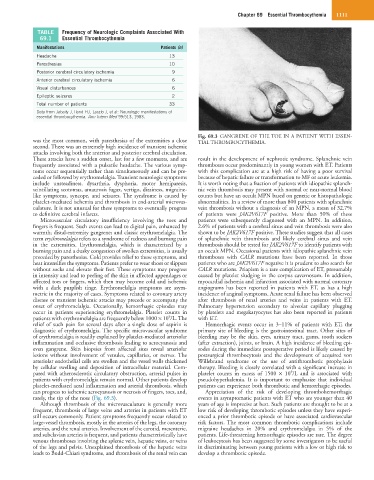
                                                                  Fig. 69.3  GANGRENE OF THE TOE IN A PATIENT WITH ESSEN-
            was the most common, with paresthesias of the extremities a close   TIAL THROMBOCYTHEMIA.
            second. There was an extremely high incidence of transient ischemic
            attacks involving both the anterior and posterior cerebral circulation.
            These attacks have a sudden onset, last for a few moments, and are   result in the development of nephrotic syndrome. Splanchnic vein
            frequently associated with a pulsatile headache. The various symp-  thromboses occur predominantly in young women with ET. Patients
            toms occur sequentially rather than simultaneously and can be pre-  with this complication are at a high risk of having a poor survival
            ceded or followed by erythromelalgia. Transient neurologic symptoms   because of hepatic failure or transformation to MF or acute leukemia.
            include  unsteadiness,  dysarthria,  dysphoria,  motor  hemiparesis,   It is worth noting that a fraction of patients with idiopathic splanch-
            scintillating scotomas, amaurosis fugax, vertigo, dizziness, migraine-  nic vein thrombosis may present with normal or near-normal blood
            like  symptoms,  syncope,  and  seizures. The  syndrome  is  caused  by   counts but have an occult MPN based on genetic or histopathologic
            platelet-mediated ischemia and thrombosis in end-arterial microvas-  abnormalities. In a review of more than 800 patients with splanchnic
            culature. It is not unusual for these symptoms to eventually progress   vein thrombosis without a diagnosis of an MPN, a mean of 32.7%
            to definitive cerebral infarcts.                      of  patients  were  JAK2V617F  positive.  More  than  50%  of  these
              Microvascular  circulatory  insufficiency  involving  the  toes  and   patients  were  subsequently  diagnosed  with  an  MPN.  In  addition,
            fingers is frequent. Such events can lead to digital pain, enhanced by   2.6% of patients with a cerebral sinus and vein thrombosis were also
            warmth; distal-extremity gangrene; and classic erythromelalgia. The   shown to be JAK2V617F positive. These studies suggest that all cases
            term erythromelalgia refers to a syndrome of redness and burning pain   of  splanchnic  vein  thrombosis  and  likely  cerebral  sinus  and  vein
            in  the  extremities.  Erythromelalgia,  which  is  characterized  by  a   thrombosis should be tested for JAK2V617F to identify patients with
            burning pain and a dusky congestion of swollen extremities, is usually   an occult MPN. Occasional patients with idiopathic splanchnic vein
            preceded by paresthesias. Cold provides relief to these symptoms, and   thromboses  with  CALR  mutations  have  been  reported.  In  those
            heat intensifies the symptoms. Patients prefer to wear shoes or slippers   patients who are JAK2V617F negative it is prudent to also search for
            without socks and elevate their feet. These symptoms may progress   CALR mutations. Priapism is a rare complication of ET, presumably
            in intensity and lead to peeling of the skin in affected appendages or   caused by platelet sludging in the corpus cavernosum. In addition,
            affected toes or fingers, which then may become cold and ischemic   myocardial ischemia and infarction associated with normal coronary
            with  a  dark  purplish  tinge.  Erythromelalgia  symptoms  are  asym-  angiograms  has  been  reported  in  patients  with  ET,  as  has  a  high
            metric in the majority of cases. Symptoms related to coronary artery   incidence of anginal symptoms. Acute renal failure has been observed
            disease or transient ischemic attacks may precede or accompany the   after  thrombosis  of  renal  arteries  and  veins  in  patients  with  ET.
            onset  of  erythromelalgia.  Occasionally,  hemorrhagic  episodes  may   Pulmonary  hypertension  secondary  to  alveolar  capillary  plugging
            occur  in  patients  experiencing  erythromelalgia.  Platelet  counts  in   by platelets and megakaryocytes has also been reported in patients
                                                        9
            patients with erythromelalgia are frequently below 1000 × 10 /L. The   with ET.
            relief of such pain for several days after a single dose of aspirin is   Hemorrhagic  events  occur  in  3–11%  of  patients  with  ET;  the
            diagnostic of erythromelalgia. The specific microvascular syndrome   primary site of bleeding is the gastrointestinal tract. Other sites of
            of erythromelalgia is readily explained by platelet-mediated arteriolar   bleeding may be the skin, eyes, urinary tract, gums, tooth sockets
            inflammation and occlusive thrombosis leading to acrocyanosis and   (after extraction), joints, or brain. A high incidence of bleeding epi-
            even  gangrene.  Skin  biopsies  from  affected  sites  reveal  arteriolar   sodes during the immediate postoperative period is likely caused by
            lesions  without  involvement  of  venules,  capillaries,  or  nerves. The   postsurgical  thrombocytosis  and  the  development  of  acquired  von
            arteriolar endothelial cells are swollen and the vessel walls thickened   Willebrand  syndrome  or  the  use  of  antithrombotic  prophylaxis
            by cellular swelling and deposition of intracellular material. Com-  therapy. Bleeding is closely correlated with a significant increase in
                                                                                                9
            pared with atherosclerotic circulatory obstruction, arterial pulses in   platelet  counts  in  excess  of  1500  ×  10 /L  and  is  associated  with
            patients with erythromelalgia remain normal. Other patients develop   pseudohyperkalemia.  It  is  important  to  emphasize  that  individual
            platelet-mediated acral inflammation and arterial thrombosis, which   patients can experience both thrombotic and hemorrhagic episodes.
            can progress to ischemic acrocyanosis or necrosis of fingers, toes, and,   Appreciation  of  the  risk  of  developing  thrombohemorrhagic
            rarely, the tip of the nose (Fig. 69.3).              events in asymptomatic patients with ET who are younger than 40
              Although  thrombosis  of  the  microvasculature  is  generally  more   years of age is imprecise at best. Such patients are thought to be at a
            frequent, thrombosis of large veins and arteries in patients with ET   low risk of developing thrombotic episodes unless they have experi-
            still occurs commonly. Patient symptoms frequently occur related to   enced a prior thrombotic episode or have associated cardiovascular
            large-vessel thrombosis, mostly in the arteries of the legs, the coronary   risk  factors. The  most  common  thrombotic  complications  include
            arteries, and the renal arteries. Involvement of the carotid, mesenteric,   migraine  headaches  in  20%  and  erythromelalgia  in  5%  of  the
            and subclavian arteries is frequent, and patients characteristically have   patients. Life-threatening hemorrhagic episodes are rare. The degree
            venous thromboses involving the splenic vein, hepatic veins, or veins   of leukocytosis has been suggested by some investigators to be useful
            of the legs and pelvis. Unexplained thrombosis of the hepatic veins   in discriminating between young patients with a low or high risk to
            leads to Budd-Chiari syndrome, and thrombosis of the renal vein can   develop a thrombotic episode.

