


Page 1385 - Hematology_ Basic Principles and Practice ( PDFDrive )
P. 1385
Chapter 76  Origin of Non-Hodgkin Lymphoma  1231


                                                                    GCB DLBCL
                                                      Follicular lymphoma    Burkitt lymphoma
                                                        BCL2 (t 14;18)       c-MYC (t 8; 14)
                                                                                     ABC DLBCL  Multiple myeloma
                                                     Antigen


                                                                               NFkB
                            Pro–B cell  Pre–B cell Naive mature B cell               Plasmablast  Plasma cell
                                                                Germinal center reaction
                                          Mantle cell lymphoma  AID    Somatic hypermutation
                              Bone marrow hematopoiesis
                                                                       BCL2
                                                                       MYC
                                                               BCL6    NFkB
                                                                       p21
                                                                       p27
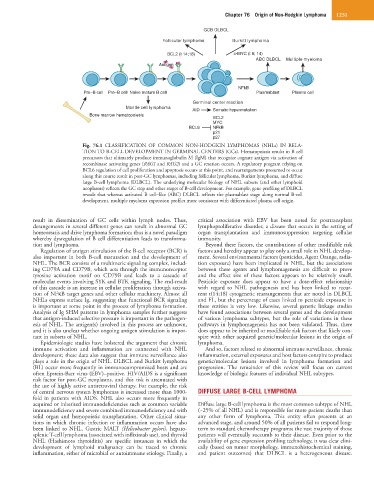
                            Fig.  76.1  CLASSIFICATION  OF  COMMON  NON-HODGKIN  LYMPHOMAS  (NHLs)  IN  RELA-
                            TION TO B-CELL DEVELOPMENT IN GERMINAL CENTERS (GCs). Hematopoiesis results in B cell
                            precursors that ultimately produce immunoglobulin M (IgM) that recognize cognate antigen via activation of
                            recombinase activating genes (RAG1 and RAG2) and a GC reaction occurs. A regulatory program relying on
                            BCL6 regulation of cell proliferation and apoptosis occurs at this point, and rearrangements presumed to occur
                            along this course result in post-GC lymphomas, including follicular lymphoma, Burkitt lymphoma, and diffuse
                            large B-cell lymphoma (DLBCL). The underlying molecular biology of NHL subsets (and other lymphoid
                            neoplasms) reflects the GC step and other stages of B-cell development. For example, gene profiling of DLBCL
                            reveals that whereas activated B cell–like (ABC) DLBCL reflects the plasmablast stage along normal B-cell
                            development, multiple myeloma expression profiles more consistent with differentiated plasma cell origin.


            result  in  dissemination  of  GC  cells  within  lymph  nodes.  Thus,   critical  association  with  EBV  has  been  noted  for  posttransplant
            derangements in several different genes can result in abnormal GC   lymphoproliferative disorder, a disease that occurs in the setting of
            homeostasis and drive lymphoma formation; thus is a novel paradigm   organ  transplantation  and  immunosuppression  targeting  cellular
            whereby dysregulation of B cell differentiation leads to transforma-  immunity.
            tion and lymphoma.                                      Beyond these factors, the contributions of other modifiable risk
              Regulation of antigen stimulation of the B-cell receptor (BCR) is   factors and heredity appear to play only a small role in NHL develop-
            also  important  in  both  B-cell  maturation  and  the  development  of   ment. Several environmental factors (pesticides, Agent Orange, radia-
            NHL. The BCR consists of a multimeric signaling complex, includ-  tion exposure) have been implicated in NHL, but the associations
            ing CD79A and CD79B, which acts through the immunoreceptor   between  these  agents  and  lymphomagenesis  are  difficult  to  prove
            tyrosine  activation  motif  on  CD79B  and  leads  to  a  cascade  of   and  the  effect  size  of  these  factors  appears  to  be  relatively  small.
            molecular events involving SYK and BTK signaling. The end-result   Pesticide  exposure  does  appear  to  have  a  dose-effect  relationship
            of this cascade is an increase in cellular proliferation through activa-  with  regard  to  NHL  pathogenesis  and  has  been  linked  to  recur-
            tion of NFκB target genes and other cellular machinery. Almost all   rent t(14;18) cytogenetic rearrangements that are noted in DLBCL
            NHLs express surface Ig, suggesting that functional BCR signaling   and FL, but the percentage of cases linked to pesticide exposure in
            is important at some point in the process of lymphoma formation.   these  entities  is  very  low.  Likewise,  several  genetic  linkage  studies
            Analysis of Ig SHM patterns in lymphoma samples further suggests   have found associations between several genes and the development
            that antigen-induced selective pressure is important in the pathogen-  of  various  lymphoma  subtypes,  but  the  role  of  variations  in  these
            esis of NHL. The antigen(s) involved in this process are unknown,   pathways in lymphomagenesis has not been validated. Thus, there
            and it is also unclear whether ongoing antigen stimulation is impor-  does appear to be inherited or modifiable risk factors that likely con-
            tant in subsets of NHL.                               spire with other acquired genetic/molecular lesions in the origin of
              Epidemiologic studies have bolstered the argument that chronic   lymphoma.
            immune  activation  and  inflammation  are  connected  with  NHL   And so, factors related to abnormal immune surveillance, chronic
            development; these data also suggest that immune surveillance also   inflammation, external exposures and host factors conspire to produce
            plays a role in the origin of NHL. DLBCL and Burkitt lymphoma   genetic/molecular  lesions  involved  in  lymphoma  formation  and
            (BL) occur more frequently in immunocompromised hosts and are   progression.  The  remainder  of  this  review  will  focus  on  current
            often Epstein-Barr virus (EBV)–positive. HIV/AIDS is a significant   knowledge of biologic features of individual NHL subtypes.
            risk factor for post-GC neoplasms, and this risk is attenuated with
            the use of highly active antiretroviral therapy. For example, the risk
            of central nervous system lymphomas is increased more than 1000-  DIFFUSE LARGE B-CELL LYMPHOMA
            fold  in  patients  with  AIDS.  NHL  also  occurs  more  frequently  in
            acquired or inherited immunodeficiencies such as common variable   Diffuse large B-cell lymphoma is the most common subtype of NHL
            immunodeficiency and severe combined immunodeficiency and with   (~25% of all NHL) and is responsible for more patient deaths than
            solid  organ  and  hemopoietic  transplantation.  Other  clinical  situa-  any  other  form  of  lymphoma.  This  entity  often  presents  at  an
            tions in which chronic infection or inflammation occurs have also   advanced stage, and around 50% of all patients fail to respond long-
            been  linked  to  NHL.  Gastric  MALT  (Helicobacter  pylori),  hepato-  term to standard chemotherapy programs; the vast majority of those
            splenic T-cell lymphoma (associated with infliximab use), and thyroid   patients will eventually succumb to their disease. Even prior to the
            NHL  (Hashimoto  thyroiditis)  are  specific  instances  in  which  the   availability of gene expression profiling technology, it was clear clini-
            development  of  lymphoid  malignancy  can  be  traced  to  chronic   cally (based on tumor morphology, immunohistochemical staining,
            inflammation, either of microbial or autoimmune etiology. Finally, a   and  patient  outcomes)  that  DLBCL  is  a  heterogeneous  disease.

