


Page 1386 - Hematology_ Basic Principles and Practice ( PDFDrive )
P. 1386
1232   Part VII  Hematologic Malignancies


                                  Ezh2  fl/fl              Ezh2  Y641N                Ezh2  Y641N
                                  Vehicle                   Vehicle                   GSK503


                   PNA


                          500 µm


                   EZH2


                   Ki67


                   B220


                             Ezh2  fl/fl    Ezh2  Y641N


                                                           H3K27me3      Ezh2  fl/fl


                                                                       Ezh2  Y641N                   ∗∗
                                                           Histone 3
                                                                               0      1      2     3
                                                                                     H3K27me3/H3
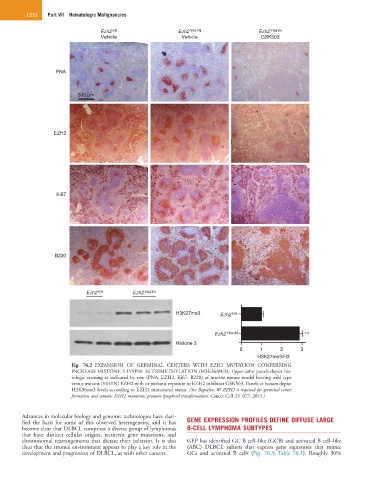
                        Fig.  76.2  EXPANSION  OF  GERMINAL  CENTERS  WITH  EZH2  MUTATION  CONFERRING
                        INCREASE HISTONE 3 LYSINE 36 TRIMETHYLATION (H3K36ME3). Upper color panels depict his-
                        tologic staining as indicated by row (PNA, EZH2, Ki67, B220) of murine mouse model bearing wild type
                        versus mutant (Y641N) EZH2 with or without exposure to EZH2 inhibitor GSK503. Panels at bottom depict
                        H3K36me3 levels according to EZH2 mutational status. (See Beguelin, W: EZH2 is required for germinal center
                        formation and somatic EZH2 mutations promote lymphoid transformation. Cancer Cell 23: 677, 2013.)


        Advances in molecular biology and genomic technologies have clari-
        fied  the  basis  for  some  of  this  observed  heterogeneity,  and  it  has   GENE EXPRESSION PROFILES DEFINE DIFFUSE LARGE
        become clear that DLBCL comprises a diverse group of lymphomas   B-CELL LYMPHOMA SUBTYPES
        that  have  distinct  cellular  origins,  recurrent  gene  mutations,  and
        chromosomal  rearrangements  that  dictate  their  behavior.  It  is  also   GEP has identified GC B cell–like (GCB) and activated B cell–like
        clear that the stromal environment appears to play a key role in the   (ABC)  DLBCL  subsets  that  express  gene  signatures  that  mimic
        development and progression of DLBCL, as with other cancers.  GCs  and  activated  B  cells  (Fig.  76.3; Table  76.1).  Roughly  30%

