


Page 1420 - Hematology_ Basic Principles and Practice ( PDFDrive )
P. 1420
1266   Part VII  Hematologic Malignancies


                                                   Germinal
                                                    center
           Naive B cells                           reaction


                                         Somatic
                                         hypermutation
                FDC

                                                 Memory B
                Helper                           cell
                T cells


                                    Plasma cell
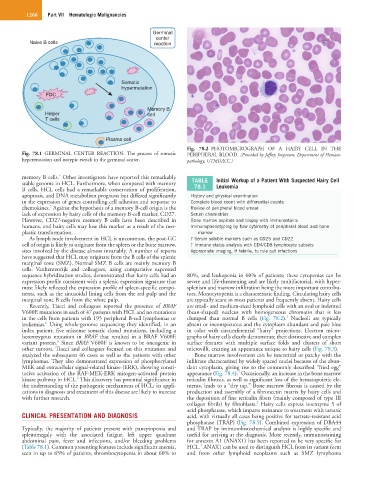
                                                              Fig.  78.2  PHOTOMICROGRAPH  OF  A  HAIRY  CELL  IN  THE
        Fig.  78.1  GERMINAL  CENTER  REACTION.  The  process  of  somatic   PERIPHERAL BLOOD. (Provided by Jeffrey Jorgensen, Department of Hemato-
        hypermutation and isotypic switch in the germinal center.   pathology, UTMDACC.)

                    5
        memory B cells.  Other investigators have reported this remarkably   TABLE   Initial Workup of a Patient With Suspected Hairy Cell
        stable genome in HCL. Furthermore, when compared with memory   78.1  Leukemia
        B cells, HCL cells had a remarkable conservation of proliferation,
        apoptosis, and DNA metabolism programs but differed significantly   History and physical examination
        in the expression of genes controlling cell adhesion and response to   Complete blood count with differential counts
                 5
        chemokines.  Against the hypothesis of a memory B-cell origin is the   Review of peripheral blood smear
        lack of expression by hairy cells of the memory B-cell marker, CD27.   Serum chemistries
        However,  CD27-negative  memory  B  cells  have  been  described  in   Bone marrow aspirate and biopsy with immunostains
        humans, and hairy cells may lose this marker as a result of the neo-  Immunophenotyping by flow cytometry of peripheral blood and bone
        plastic transformation.                                   marrow
           As lymph node involvement in HCL is uncommon, the post-GC   ? Serum soluble markers such as CD25 and CD22
        cell of origin is likely to originate from the spleen or the bone marrow,   ? Immune status analysis with CD4/CD8 lymphocyte subsets
        sites involved by the disease almost invariably. A number of reports   Appropriate imaging, if febrile, to rule out infections
        have suggested that HCL may originate from the B cells of the splenic
        marginal zone (SMZ). Normal SMZ B cells are mainly memory B
        cells.  Vanhentenrijk  and  colleagues,  using  comparative  expressed
        sequence hybridization studies, demonstrated that hairy cells had an   80%, and leukopenia in 60% of patients; these cytopenias can be
        expression profile consistent with a splenic expression signature that   severe and life-threatening and are likely multifactorial, with hyper-
        most likely reflected the expression profile of spleen-specific compo-  splenism and marrow infiltration being the more important contribu-
        nents, such as the sinusoidal lining cells from the red pulp and the   tors. Monocytopenia is a characteristic finding. Circulating hairy cells
        marginal zone B cells from the white pulp.            are typically scant in most patients and frequently absent. Hairy cells
           Recently, Tiacci  and  colleagues  reported  the  presence  of  BRAF   are small- and medium-sized lymphoid cells with an oval or indented
        V600E mutations in each of 47 patients with HCL and no mutations   (bean-shaped)  nucleus  with  homogeneous  chromatin  that  is  less
                                                                                               1
        in the cells from patients with 195 peripheral B-cell lymphomas or   clumped  than  normal  B  cells  (Fig.  78.2).   Nucleoli  are  typically
                6
        leukemias.  Using whole-genome sequencing they identified, in an   absent or inconspicuous and the cytoplasm abundant and pale blue
        index  patient,  five  missense  somatic  clonal  mutations,  including  a   in  color  with  circumferential  “hairy”  projections.  Electron  micro-
        heterozygous  mutation  in  BRAF  that  resulted  in  a  BRAF  V600E   graphs of hairy cells clearly demonstrate their distinctive and complex
                    6
        variant protein.  Since BRAF V600F is known to be oncogenic in   surface  features  with  multiple  surface  folds  and  clusters  of  short
        other tumors, Tiacci and colleagues focused on this mutation and   microvilli, creating an appearance unique to hairy cells (Fig. 78.3).
        analyzed the subsequent 46 cases as well as the patients with other   Bone marrow involvement can be interstitial or patchy with the
        lymphomas. They also demonstrated expression of phosphorylated   infiltrate characterized by widely spaced nuclei because of the abun-
        MEK and extracellular signal-related kinase (ERK), showing consti-  dant cytoplasm, giving rise to the commonly described “fried egg”
                                                                               1
        tutive activation of the RAF-MEK-ERK mitogen-activated protein   appearance (Fig. 78.4).  Occasionally, an increase in the bone marrow
                          6
        kinase pathway in HCL.  This discovery has potential significance in   reticulin fibrosis, as well as significant loss of the hematopoietic ele-
        the understanding of the pathogenic mechanisms of HCL; its appli-  ments, leads to a “dry tap.” Bone marrow fibrosis is caused by the
        cations in diagnosis and treatment of this disease are likely to increase   production and assembly of a fibronectin matrix by hairy cells and
        with further research.                                the deposition of fine reticulin fibers (mainly composed of type III
                                                                                     2
                                                              collagen  fibrils)  by  fibroblasts.   Hairy  cells  express  isoenzyme  5  of
                                                              acid phosphatase, which imparts resistance to treatment with tartaric
        CLINICAL PRESENTATION AND DIAGNOSIS                   acid, with virtually all cases being positive for tartrate-resistant acid
                                                              phosphatase (TRAP) (Fig. 78.5). Combined expression of DBA44
        Typically,  the  majority  of  patients  present  with  pancytopenia  and   and TRAP by immunohistochemical analysis is highly specific and
        splenomegaly  with  the  associated  fatigue,  left  upper  quadrant   useful for arriving at the diagnosis. More recently, immunostaining
        abdominal  pain,  fever  and  infections,  and/or  bleeding  problems   for annexin A1 (ANAX1) has been reported to be very specific for
                                                                   7
        (Table 78.1). Common presenting features include significant anemia,   HCL.  ANAX1 can be used to distinguish HCL from its variant form
        seen in up to 85% of patients, thrombocytopenia in about 60% to   and  from  other  lymphoid  neoplasms  such  as  SMZ  lymphoma

