


Page 1627 - Hematology_ Basic Principles and Practice ( PDFDrive )
P. 1627
1448   Part VIII  Comprehensive Care of Patients with Hematologic Malignancies


                                           Integuement              Phagocytes

                                            Mucosal barrier injury  Monocytopenia
                                             Indwelling catheters
                                                 Radiation
                                                                  Neutropenia
                                                   Surgery
                                                    Antibiotics
                             Humoral immunity  Immunoglobin- deficiency Splenectomy  Breaks in skin  (Anti-T-cell abs)  immunity


                                                                                        Cell-mediated
                                                                                 Lymphopenia
                                                                               Corticosteroids


                                        HLA type  PRRs  Mutations in microbial  Fungal ?  Bacterial ?  Retrovirus  Herpes virus
                                 Genetic                                                  pathogens  Immunomodulatory


                                                        Uremia  Iron overload
                                                          Nutrition status
                                                        Ketoacidosis     specific risks
                                                        Hyperglycemia    Patient, age


                                                   Metabolic                 Transplantation  Malignancy status  Chemotherapy intensity


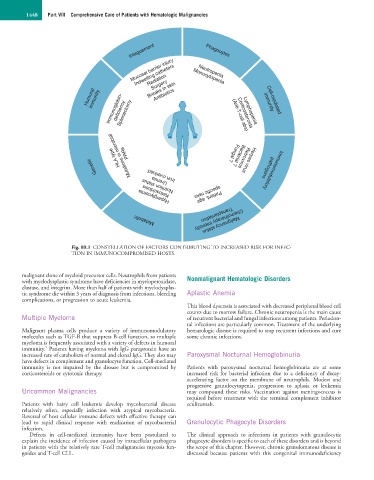
                        Fig. 89.1  CONSTELLATION OF FACTORS CONTRIBUTING TO INCREASED RISK FOR INFEC-
                        TION IN IMMUNOCOMPROMISED HOSTS.


        malignant clone of myeloid precursor cells. Neutrophils from patients   Nonmalignant Hematologic Disorders
        with myelodysplastic syndrome have deficiencies in myeloperoxidase,
        elastase, and integrins. More than half of patients with myelodysplas-
        tic syndrome die within 3 years of diagnosis from infections, bleeding   Aplastic Anemia
        complications, or progression to acute leukemia.
                                                              This blood dyscrasia is associated with decreased peripheral blood cell
                                                              counts due to marrow failure. Chronic neutropenia is the main cause
        Multiple Myeloma                                      of recurrent bacterial and fungal infections among patients. Periodon-
                                                              tal infections are particularly common. Treatment of the underlying
        Malignant  plasma  cells  produce  a  variety  of  immunomodulatory   hematologic disease is required to stop recurrent infections and cure
        molecules such as TGF-B that suppress B-cell function, so multiple   some chronic infections.
        myeloma is frequently associated with a variety of defects in humoral
                5
        immunity.  Patients having myeloma with IgG paraprotein have an
        increased rate of catabolism of normal and clonal IgG. They also may   Paroxysmal Nocturnal Hemoglobinuria
        have defects in complement and granulocyte function. Cell-mediated
        immunity  is  not  impaired  by  the  disease  but  is  compromised  by   Patients  with  paroxysmal  nocturnal  hemoglobinuria  are  at  some
        corticosteroids or cytotoxic therapy.                 increased  risk  for  bacterial  infection  due  to  a  deficiency  of  decay-
                                                              accelerating  factor  on  the  membrane  of  neutrophils.  Modest  and
                                                              progressive  granulocytopenia,  progression  to  aplasia  or  leukemia
        Uncommon Malignancies                                 may  compound  these  risks.  Vaccination  against  meningococcus  is
                                                              required before treatment with the terminal complement inhibitor
        Patients  with  hairy  cell  leukemia  develop  mycobacterial  disease     eculizumab.
        relatively  often,  especially  infection  with  atypical  mycobacteria.
        Reversal of host cellular immune defects with effective therapy can
        lead  to  rapid  clinical  response  with  eradication  of  mycobacterial   Granulocytic Phagocyte Disorders
        infection.
           Defects  in  cell-mediated  immunity  have  been  postulated  to   The  clinical  approach  to  infections  in  patients  with  granulocytic
        explain the incidence of infection caused by intracellular pathogens   phagocyte disorders is specific to each of these disorders and is beyond
        in patients with the relatively rare T-cell malignancies mycosis fun-  the scope of this chapter. However, chronic granulomatous disease is
        goides and T-cell CLL.                                discussed  because  patients  with  this  congenital  immunodeficiency

