


Page 1772 - Hematology_ Basic Principles and Practice ( PDFDrive )
P. 1772
1576   Part IX  Cell-Based Therapies


                                                                               NK      DC
                           HIV
                          CD4
                   NK                                                   L ymph nodes


                          CMV                                                           NK     AML

                   NK     Lung
                                                                             Bone marrow


                                                                                               Epithelial
                                                                                          ILC
                           HCV

                   NK      Liver


                                                                                     Donor
                                                                                               Recipient
                                                                                      NK
                           NK     Endometrium                                                    CD34


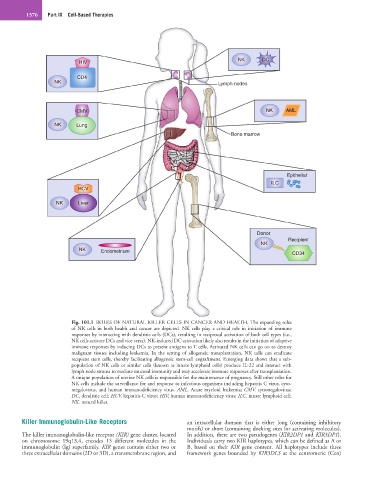
                        Fig. 101.1  ROLES OF NATURAL KILLER CELLS IN CANCER AND HEALTH. The expanding roles
                        of NK cells in both health and cancer are depicted. NK cells play a critical role in initiation of immune
                        responses by interacting with dendritic cells (DCs), resulting in reciprocal activation of both cell types (i.e.,
                        NK cells activate DCs and vice versa). NK-induced DC activation likely also results in the initiation of adaptive
                        immune responses by inducing DCs to present antigens to T cells. Activated NK cells can go on to destroy
                        malignant  tissues  including  leukemia.  In  the  setting  of  allogeneic  transplantation,  NK  cells  can  eradicate
                        recipient stem cells, thereby facilitating allogeneic stem-cell engraftment. Emerging data shows that a sub-
                        population of NK cells or similar cells (known as innate lymphoid cells) produce IL-22 and interact with
                        lymph node stroma to mediate mucosal immunity and may accelerate immune responses after transplantation.
                        A unique population of uterine NK cells is responsible for the maintenance of pregnancy. Still other roles for
                        NK cells include the surveillance for and response to infectious organisms including hepatitis C virus, cyto-
                        megalovirus, and human immunodeficiency virus. AML, Acute myeloid leukemia; CMV, cytomegalovirus;
                        DC, dendritic cell; HCV, hepatitis C virus; HIV, human immunodeficiency virus; ILC, innate lymphoid cell;
                        NK, natural killer.


        Killer Immunoglobulin-Like Receptors                  an  intracellular  domain  that  is  either  long  (containing  inhibitory
                                                              motifs) or short (containing docking sites for activating molecules).
        The killer immunoglobulin-like receptor (KIR) gene cluster, located   In addition, there are two pseudogenes (KIR2DP1 and KIR3DP1).
        on  chromosome  19q13.4,  encodes  15  different  molecules  in  the   Individuals carry two KIR haplotypes, which can be defined as A or
        immunoglobulin (Ig) superfamily. KIR genes contain either two or   B,  based  on  their  KIR  gene  content.  All  haplotypes  include  three
        three extracellular domains (2D or 3D), a transmembrane region, and   framework  genes  bounded  by  KIR3DL3  at  the  centromeric  (Cen)

