


Page 1780 - Hematology_ Basic Principles and Practice ( PDFDrive )
P. 1780
1584   Part IX  Cell-Based Therapies


                                                              move to earlier stages of treatment. Additional studies are planned
                                                              and ongoing within HL.
                               T Cell
                        Stimulation Inhibition
                                                              Non-Hodgkin Lymphoma
            CD27
                ICOS           TCR              TIM-3         While PD-1 blockade has shown the most promise in HL, clinical
                   CD28                    PD-1               activity has also been seen in multiple types of NHL including FL,
                       CD137      LAG3  CTLA-4
                            OX40                              DLBCL, and T-cell lymphoma. Interest in CBT in NHL has been
                                                                                                        9
                                                              driven by the  durable responses seen with  ipilimumab,  as well  as
                                                              by  an  early  study  of  pidilizumab  in  patients  with  R/R  HMs  that
                                                                                                    21
                                                              demonstrated an isolated CR in a patient with FL.  Based on these
                                                              results, a phase II trial examined combination therapy with pidili-
                                                              zumab and rituximab in patients with rituximab-sensitive relapsed
                                                                                                               22
                                                              FL. Among 32 patients, the ORR was 66%, with a 52% CR rate.
                                                              While it is difficult to assess the activity of this combination without
                                                              a  monotherapy  control  arm,  these  rates  compare  favorably  with
                                                              historic controls treated with rituximab alone. In addition, immuno-
                           OX40L
                       CD137L   MHC                           histochemical analysis showed that PD-1 expression was significantly
                    B7-1               B7-1  PD-L1            higher on T cells of responders, mechanistically supporting the role
               ICOSL B7-2              B7-2  PD-L2            of PD-1 activity in the combination.  Preliminary results from the
                                                                                          22
            CD70                                 Gal-9
                                                              previously mentioned phase 1 nivolumab trial (NCT01592370) also
                                                              demonstrated activity in FL and DLBCL with OR rates of 40% and
                                                                            23
                                                              36%,  respectively.  The  underlying  biology  of  PD-1  blockade  in
                        Antigen-presenting cell               these malignancies is less well understood. In general, FL is considered
                                                              to be one of the more immune sensitive HMs based on occasionally
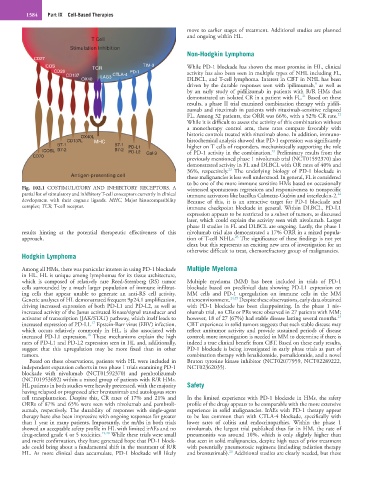
        Fig.  102.1  COSTIMULATORY  AND  INHIBITORY  RECEPTORS.  A   witnessed spontaneous regressions and responsiveness to nonspecific
        partial list of stimulatory and inhibitory T-cell coreceptors currently in clinical   immune activators like bacillus Calmette-Guérin and interleukin-2.
                                                                                                               22
        development  with  their  cognate  ligands.  MHC,  Major  histocompatibility   Because  of  this,  it  is  an  attractive  target  for  PD-1  blockade  and
        complex; TCR, T-cell receptor.                        immune  checkpoint  blockade  in  general. Within  DLBCL,  PD-L1
                                                              expression appears to be restricted to a subset of tumors, as discussed
                                                              later, which could explain the activity seen with nivolumab. Larger
                                                              phase II studies in FL and DLBCL are ongoing. Lastly, the phase 1
        results  hinting  at  the  potential  therapeutic  effectiveness  of  this     nivolumab trial also demonstrated a 17% ORR in a mixed popula-
                                                                              23
        approach.                                             tion of T-cell NHLs.  The significance of these findings is not yet
                                                              clear, but this represents an exciting new area of investigation for an
                                                              otherwise difficult to treat, chemorefractory group of malignancies.
        Hodgkin Lymphoma
        Among all HMs, there was particular interest in using PD-1 blockade   Multiple Myeloma
        in HL. HL is unique among lymphomas for its tissue architecture,
        which  is  composed  of  relatively  rare  Reed-Sternberg  (RS)  tumor   Multiple  myeloma  (MM)  has  been  included  in  trials  of  PD-1
        cells surrounded by a much larger population of immune infiltrat-  blockade  based  on  preclinical  data  showing  PD-L1  expression  on
        ing  cells  that  appear  unable  to  generate  an  anti-RS  cell  activity.   MM  cells  and  PD-1  upregulation  on  immune  cells  in  the  MM
        Genetic analyses of HL demonstrated frequent 9p24.1 amplification,   microenvironment. 24,25  Despite these observations, early data obtained
        driving increased expression of both PD-L1 and PD-L2, as well as   with  PD-1  blockade  has  been  disappointing.  In  the  phase  1  niv-
        increased activity of the Janus activated kinase/signal transducer and   olumab trial, no CRs or PRs were observed in 27 patients with MM;
                                                                                                               23
        activator of transcription (JAK/STAT) pathway, which itself leads to   however, 18 of 27 (67%) had stable disease lasting several months.
                               17
        increased expression of PD-L1.  Epstein-Barr virus (EBV) infection,   CBT experience in solid tumors suggests that such stable disease may
        which  occurs  relatively  commonly  in  HL,  is  also  associated  with   reflect  antitumor  activity  and  provide  sustained  periods  of  disease
                              18
        increased PD-L1 expression.  These mechanisms explain the high   control; more investigation is needed in MM to determine if there is
        rates of PD-L1 and PD-L2 expression seen in HL and, additionally,   indeed a true clinical benefit from CBT. Based on these early results,
        suggest  that  this  upregulation  may  be  more  fixed  than  in  other    PD-1 blockade is being investigated in early phase trials as part of
        tumors.                                               combination therapy with lenalidomide, pomalidomide, and a novel
           Based on these observations, patients with HL were included in   Bruton tyrosine kinase inhibitor (NCT02077959, NCT02289222,
        independent expansion cohorts in two phase 1 trials examining PD-1   NCT02362035).
        blockade  with  nivolumab  (NCT01592370)  and  pembrolizumab
        (NCT01953692) within a mixed group of patients with R/R HMs.
        HL patients in both studies were heavily pretreated, with the majority   Safety
        having relapsed or progressed after brentuximab and autologous stem
        cell  transplantation.  Despite  this,  CR  rates  of  17%  and  21%  and   In the limited experience with PD-1 blockade in HMs, the safety
        ORRs of 87% and 65% were seen with nivolumab and pembroli-  profile of the drugs appears to be comparable with the more extensive
        zumab,  respectively.  The  durability  of  responses  with  single-agent   experience in solid malignancies. IrAEs with PD-1 therapy appear
        therapy have also been impressive with ongoing responses for greater   to  be  less  common  than  with  CTLA-4  blockade,  specifically  with
        than 1 year in many patients. Importantly, the mAbs in both trials   lower  rates  of  colitis  and  endocrinopathies.  Within  the  phase  1
        showed an acceptable safety profile in HL with limited irAEs and no   nivolumab, the largest trial published thus far in HM, the rate of
        drug-related grade 4 or 5 toxicities. 19,20  While these trials were small   pneumonitis  was  around  10%,  which  is  only  slightly  higher  than
        and merit confirmation, they have generated hope that PD-1 block-  that seen in solid malignancies, despite high rates of prior treatment
        ade could bring about a fundamental shift in the treatment of R/R   with potentially pneumotoxic regimens (including radiation therapy
                                                                            23
        HL.  As  more  clinical  data  accumulate,  PD-1  blockade  will  likely   and brentuximab).  Additional studies are clearly needed, but these

