


Page 1953 - Hematology_ Basic Principles and Practice ( PDFDrive )
P. 1953
Chapter 113  Human Leukocyte Antigen and Human Neutrophil Antigen Systems  1733


                          A                            B
                                  tPE


                                                           tPE


                                  CD8FITC                                     CD8FITC
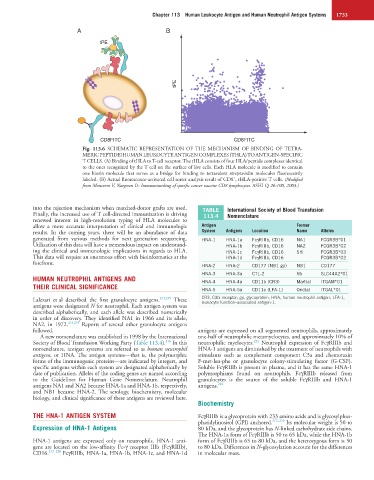
                            Fig.  113.6  SCHEMATIC  REPRESENTATION  OF THE  MECHANISM  OF  BINDING  OF TETRA-
                            MERIC PEPTIDE/HUMAN LEUKOCYTE ANTIGEN COMPLEXES (THLA) TO ANTIGEN-SPECIFIC
                            T CELLS. (A) Binding of tHLA to T-cell receptor. The tHLA consists of four HLA/peptide complexes identical
                            to the ones recognized by the T cell on the surface of live cells. Each HLA molecule is modified to contain
                            one  biotin  molecule  that  serves  as  a  bridge  for  binding  to  tetravalent  streptavidin  molecules  fluorescently
                                                                             +
                            labeled. (B) Actual fluorescence-activated cell sorter analysis result of CD8 , tHLA-positive T cells. (Modified
                            from Monsurro V, Nargosen D: Immunotracking of specific cancer vaccine CD8 lymphocytes. ASHI Q 26:100, 2003.)


            into the rejection mechanism when matched-donor grafts are used.   TABLE   International Society of Blood Transfusion
            Finally, the increased use of T cell-directed immunization is driving   113.4  Nomenclature
            renewed  interest  in  high-resolution  typing  of  HLA  molecules  to
            allow  a  more  accurate  interpretation  of  clinical  and  immunologic   Antigen    Former
            results.  In  the  coming  years,  there  will  be  an  abundance  of  data   System  Antigens  Location  Name  Alleles
            generated  from  various  methods  for  next  generation  sequencing.   HNA-1  HNA-1a  FcγRIIIb, CD16  NA1  FCGR3B*01
            Utilization of this data will have a tremendous impact on understand-  HNA-1b  FcγRIIIb, CD16  NA2  FCGR3B*02
            ing the clinical and immunologic implications in regards to HLA.   HNA-1c  FcγRIIIb, CD16  SH  FCGR3B*03
            This data will require an enormous effort with bioinformatics at the     HNA-1d  FcγRIIIb, CD16  FCGR3B*02
            forefront.
                                                                   HNA-2   HNA-2   CD177 (NB1 gp)  NB1    CD177
                                                                   HNA-3   HNA-3a  CTL-2          5b      SLC44A2*01
            HUMAN NEUTROPHIL ANTIGENS AND                          HNA-4   HNA-4a  CD11b (CR3)    Mart(a)  ITGAM*01
            THEIR CLINICAL SIGNIFICANCE                            HNA-5   HNA-5a  CD11a (LFA-1)  Ond(a)  ITGAL*01
            Lalezari  et al  described  the  first  granulocyte  antigens. 214,215   These   CR3, C3bi receptor; gp, glycoprotein; HNA, human neutrophil antigen; LFA-1,
                                                                   leukocyte function–associated antigen-1.
            antigens were designated N for neutrophil. Each antigen system was
            described  alphabetically,  and  each  allele  was  described  numerically
            in order of discovery. They identified NA1 in 1966 and its allele,
            NA2,  in  1972. 214,215   Reports  of  several  other  granulocyte  antigens
            followed.                                             antigens are expressed on all segmented neutrophils, approximately
              A new nomenclature was established in 1998 by the International   one-half of neutrophilic metamyelocytes, and approximately 10% of
                                                       216
                                                                                    221
            Society of Blood Transfusion Working Party (Table 113.4).  In this   neutrophilic  myelocytes.   Neutrophil  expression  of  FcγRIIIb  and
            nomenclature, antigen systems are referred to as human neutrophil   HNA-1 antigens are diminished by the treatment of neutrophils with
            antigens, or HNA. The antigen systems—that is, the polymorphic   stimulants  such  as  complement  component  C5a  and  chemotaxin
            forms of the immunogenic proteins—are indicated by integers, and   F-met-leu-phe  or  granulocyte  colony-stimulating  factor  (G-CSF).
            specific antigens within each system are designated alphabetically by   Soluble FcγRIIIb is present in plasma, and it has the same HNA-1
            date of publication. Alleles of the coding genes are named according   polymorphisms  found  on  neutrophils.  FcγRIIIb  released  from
            to  the  Guidelines  for  Human  Gene  Nomenclature.  Neutrophil   granulocytes  is  the  source  of  the  soluble  FcγRIIIb  and  HNA-1
            antigens NA1 and NA2 became HNA-1a and HNA-1b, respectively,   antigens. 222
            and  NB1  became  HNA-2.  The  serology,  biochemistry,  molecular
            biology, and clinical significance of these antigens are reviewed here.
                                                                  Biochemistry

            THE HNA-1 ANTIGEN SYSTEM                              FcγRIIIb is a glycoprotein with 233 amino acids and is glycosylphos-
                                                                  phatidylinositol (GPI) anchored. 217–220  Its molecular weight is 50 to
            Expression of HNA-1 Antigens                          80 kDa, and the glycoprotein has N-linked carbohydrate side chains.
                                                                  The HNA-1a form of FcγRIIIb is 50 to 65 kDa, while the HNA-1b
            HNA-1  antigens  are  expressed  only  on  neutrophils.  HNA-1  anti-  form of FcγRIIIb is 65 to 80 kDa, and the heterozygous form is 50
            gens are located on the low-affinity Fc-γ receptor IIIb (FcγRIIIb),   to 80 kDa. Differences in N-glycosylation account for the differences
            CD16. 217–220  FcγRIIIb, HNA-1a, HNA-1b, HNA-1c, and HNA-1d   in molecular mass.

