


Page 2348 - Hematology_ Basic Principles and Practice ( PDFDrive )
P. 2348
2090   Part XII  Hemostasis and Thrombosis


                                                Small angle
                Crystal structure                                           Electron microscopy
                                               X-ray scattering


              Bouma et al.; Schwarzenbacher et al.  Hammel et al.             Agar et al.


                                                                                        Epitope R39-R43 available
                                                                                          for binding antibodies


                                                        Domain V with positive charge  Phospholipid  Negatively charged
                                                                                               carbohydrate chain
                                                        Domain I and II with  Anionic phospholipid
                                                        positive-charged epitope
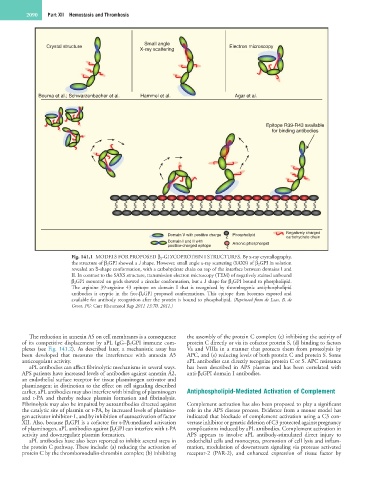
                        Fig. 141.1  MODELS FOR PROPOSED β 2-GLYCOPROTEIN I STRUCTURES. By x-ray crystallography,
                        the structure of β 2GPI showed a J shape. However, small angle x-ray scattering (SAXS) of β 2GPI in solution
                        revealed an S-shape conformation, with a carbohydrate chain on top of the interface between domains I and
                        II. In contrast to the SAXS structure, transmission electron microscopy (TEM) of negatively stained unbound
                        β 2GPI mounted on grids showed a circular conformation, but a J shape for β 2GPI bound to phospholipid.
                        The  arginine  39-arginine  43  epitope  on  domain  I  that  is  recognized  by  thrombogenic  antiphospholipid
                        antibodies  is  cryptic  in  the  free-β 2GPI  proposed  conformations. This  epitope  then  becomes  exposed  and
                        available for antibody recognition after the protein is bound to phospholipid. (Reprinted from de Laat, B, de
                        Groot, PG: Curr Rheumatol Rep 2011 13:70, 2011.)


           The reduction in annexin A5 on cell membranes is a consequence   the assembly of the protein C complex; (c) inhibiting the activity of
        of its competitive displacement by aPL IgG–β 2 GPI immune com-  protein C directly or via its cofactor protein S, (d) binding to factors
        plexes (see Fig. 141.2). As described later, a mechanistic assay has   Va and VIIIa in a manner that protects them from proteolysis by
        been  developed  that  measures  the  interference  with  annexin  A5   APC, and (e) reducing levels of both protein C and protein S. Some
        anticoagulant activity.                               aPL antibodies can directly recognize protein C or S. APC resistance
           aPL antibodies can affect fibrinolytic mechanisms in several ways.   has  been  described  in  APS  plasmas  and  has  been  correlated  with
        APS patients have increased levels of antibodies against annexin A2,   anti-β 2 GPI domain I antibodies.
        an endothelial surface receptor for tissue plasminogen activator and
        plasminogen; in distinction to the effect on cell signaling described
        earlier, aPL antibodies may also interfere with binding of plasminogen   Antiphospholipid-Mediated Activation of Complement
        and  t-PA  and  thereby  reduce  plasmin  formation  and  fibrinolysis.
        Fibrinolysis may also be impaired by autoantibodies directed against   Complement activation has also been proposed to play a significant
        the catalytic site of plasmin or t-PA, by increased levels of plasmino-  role in the APS disease process. Evidence from a mouse model has
        gen activator inhibitor-1, and by inhibition of autoactivation of factor   indicated that blockade of complement activation using a C3 con-
        XII. Also, because β 2GPI is a cofactor for t-PA-mediated activation   vertase inhibitor or genetic deletion of C3 protected against pregnancy
        of plasminogen, aPL antibodies against β 2GPI can interfere with t-PA   complications induced by aPL antibodies. Complement activation in
        activity and downregulate plasmin formation.          APS  appears  to  involve  aPL  antibody-stimulated  direct  injury  to
           aPL antibodies have also been reported to inhibit several steps in   endothelial cells and monocytes, promotion of cell lysis and inflam-
        the protein C pathway. These include: (a) reducing the activation of   mation, modulation of downstream signaling via protease activated
        protein C by the thrombomodulin-thrombin complex; (b) inhibiting   receptor-2  (PAR-2),  and  enhanced  expression  of  tissue  factor  by

