


Page 2421 - Hematology_ Basic Principles and Practice ( PDFDrive )
P. 2421
Chapter 148  Peripheral Artery Disease  2161


                                                                  stenosis, and an extensive collateral circulation. In such cases, mea-
                                                                  surement of the ABI after walking will detect a decrease in the ankle
                                                                  systolic pressure relative to brachial artery systolic pressure, thereby
                                                                  revealing the presence of PAD.

                                                                  Noninvasive Testing and Imaging for
                                                                  Diagnosis of Peripheral Artery Disease

                                                                  Several other noninvasive tests may help in the diagnosis of PAD and
                                                                  in the identification of sites of stenosis. These tests include segmental
                                                                  pressures  with  pulse  volume  recordings,  duplex  ultrasonography,
                                                                  computed  tomography  angiography  (CTA),  magnetic  resonance
                                                                  angiography (MRA), and conventional contrast angiography. When
                                                                  measuring segmental leg pressures, systolic blood pressure measure-
                                                                  ments are obtained at multiple levels in the leg, typically in the upper
                                                                  thigh, lower thigh, upper calf, ankle, and across the metatarsal region
                                                                  of the foot. Systolic blood pressures in these sites are then compared
                                                                  with the higher of the arm systolic blood pressures. A significant drop
                                                                  in blood pressure (>20 mmHg) from one level to the next can localize
                                                                  arterial  stenosis  with  a  high  degree  of  precision.  An  upper  thigh
                                                                  pressure that is lower than the arm pressure indicates stenosis in the
                                                                  distal aorta or in the iliac or femoral arteries (or both). In patients
                                                                  with vascular calcification, measurement and interpretation of seg-
                                                                  mental pressures are unreliable. Pulse volume recordings can also be
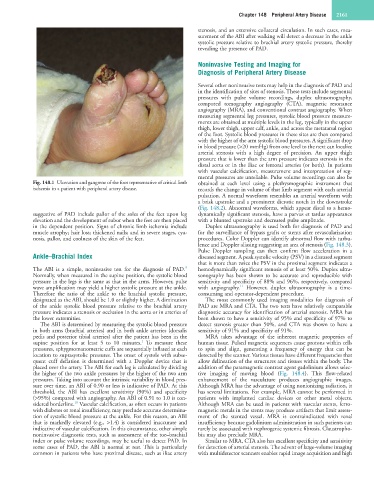
            Fig. 148.1  Ulceration and gangrene of the foot representative of critical limb   obtained  at  each  level  using  a  plethysmographic  instrument  that
            ischemia in a patient with peripheral artery disease.   records the change in volume of that limb segment with each arterial
                                                                  pulsation. A normal waveform resembles an arterial waveform with
                                                                  a brisk upstroke and a prominent dicrotic notch in the downstroke
                                                                  (Fig. 148.2). Abnormal waveforms, which appear distal to a hemo-
            suggestive of PAD include pallor of the soles of the feet upon leg   dynamically significant stenosis, have a parvus et tardus appearance
            elevation and the development of rubor when the feet are then placed   with a blunted upstroke and decreased pulse amplitude.
            in the dependent position. Signs of chronic limb ischemia include   Duplex ultrasonography is used both for diagnosis of PAD and
            muscle atrophy; hair loss; thickened nails; and in severe stages, cya-  for the surveillance of bypass grafts or stents after revascularization
            nosis, pallor, and coolness of the skin of the feet.  procedures. Color Doppler can identify abnormal flow with turbu-
                                                                  lence and Doppler aliasing suggesting an area of stenosis (Fig. 148.3).
                                                                  Pulse  Doppler  sampling  can  then  confirm  flow  acceleration  in  a
            Ankle–Brachial Index                                  diseased segment. A peak systolic velocity (PSV) in a diseased segment
                                                                  that is more than twice the PSV in the proximal segment indicates a
                                                              9
            The  ABI  is  a  simple,  noninvasive  test  for  the  diagnosis  of  PAD.    hemodynamically significant stenosis of at least 50%. Duplex ultra-
            Normally, when measured in the supine position, the systolic blood   sonography  has  been  shown  to  be  accurate  and  reproducible  with
            pressure in the legs is the same as that in the arms. However, pulse   sensitivity and specificity of 88% and 96%, respectively, compared
                                                                               11
            wave amplification may yield a higher systolic pressure at the ankle.   with  angiography.   However,  duplex  ultrasonography  is  a  time-
            Therefore  the  ratio  of  the  ankle  to  the  brachial  systolic  pressure,   consuming and operator-dependent procedure.
            designated as the ABI, should be 1.0 or slightly higher. A diminution   The  most  commonly  used  imaging  modalities  for  diagnosis  of
            of  the  ankle  systolic  blood  pressure  relative  to  the  brachial  artery   PAD are MRA and CTA. The two tests have relatively comparable
            pressure indicates a stenosis or occlusion in the aorta or in arteries of   diagnostic accuracy for identification of arterial stenosis. MRA has
            the lower extremities.                                been shown to have a sensitivity of 95% and specificity of 97% to
              The ABI is determined by measuring the systolic blood pressure   detect  stenosis  greater  than  50%,  and  CTA  was  shown  to  have  a
            in both arms (brachial arteries) and in both ankle arteries (dorsalis   sensitivity of 91% and specificity of 91%.
            pedis and posterior tibial arteries) after the patient has been in the   MRA  takes  advantage  of  the  inherent  magnetic  properties  of
                                               1
            supine  position  for  at  least  5  to  10  minutes.   To  measure  these   human tissue. Pulsed magnetic sequences cause protons within cells
            pressures, sphygmomanometric cuffs are sequentially inflated at each   to  spin  and  align,  generating  a  frequency  of  energy  that  can  be
            location to suprasystolic pressures. The onset of systole with subse-  detected by the scanner. Various tissues have different frequencies that
            quent  cuff  deflation  is  determined  with  a  Doppler  device  that  is   allow delineation of the structures and tissues within the body. The
            placed over the artery. The ABI for each leg is calculated by dividing   addition of the paramagnetic contrast agent gadolinium allows selec-
            the higher of the two ankle pressures by the higher of the two arm   tive  imaging  of  moving  blood  (Fig.  148.4).  This  flow-related
            pressures. Taking into account the intrinsic variability in blood pres-  enhancement  of  the  vasculature  produces  angiographic  images.
            sure over time, an ABI of 0.90 or less is indicative of PAD. At this   Although MRA has the advantage of using nonionizing radiation, it
            threshold,  the  ABI  has  excellent  sensitivity  (90%)  and  specificity   has several limitations. For example, MRA cannot be performed in
            (>95%) compared with angiography. An ABI of 0.91 to 1.0 is con-  patients  with  implanted  cardiac  devices  or  other  metal  objects.
                         10
            sidered borderline.  Vascular calcification, as often occurs in patients   Although MRA can be used in patients with vascular stents, ferro-
            with diabetes or renal insufficiency, may preclude accurate determina-  magnetic metals in the stents may produce artifacts that limit assess-
            tion of systolic blood pressure at the ankle. For this reason, an ABI   ment  of  the  stented  vessel.  MRA  is  contraindicated  with  renal
            that  is  markedly  elevated  (e.g.,  >1.4)  is  considered  inaccurate  and   insufficiency because gadolinium administration in such patients can
            indicative of vascular calcification. In this circumstance, other simple   rarely be associated with nephrogenic systemic fibrosis. Claustropho-
            noninvasive diagnostic tests, such as assessment of the toe–brachial   bia may also preclude MRA.
            index or pulse volume recordings, may be useful to detect PAD. In   Similar to MRA, CTA also has excellent specificity and sensitivity
            some cases of PAD, the ABI is normal at rest. This is particularly   for detection of arterial stenosis. The advent of large-volume imaging
            common in patients who have proximal disease, such as iliac artery   with multidetector scanners enables rapid image acquisition and high

