


Page 2426 - Hematology_ Basic Principles and Practice ( PDFDrive )
P. 2426
2166   Part XII  Hemostasis and Thrombosis


                  A                        B                   C                   D
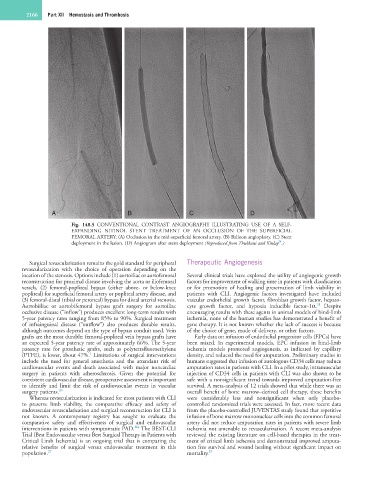
                        Fig.  148.5  CONVENTIONAL  CONTRAST  ANGIOGRAPHY  ILLUSTRATING  USE  OF  A  SELF-
                        EXPANDING  NITINOL  STENT  TREATMENT  OF  AN  OCCLUSION  OF  THE  SUPERFICIAL
                        FEMORAL ARTERY. (A) Occlusion in the mid-superficial femoral artery. (B) Balloon angioplasty. (C) Stent
                                                                                            24
                        deployment in the lesion. (D) Angiogram after stent deployment (Reproduced from Thukkani and Kinlay .)

           Surgical revascularization remains the gold standard for peripheral   Therapeutic Angiogenesis
        revascularization  with  the  choice  of  operation  depending  on  the
        location of the stenosis. Options include (1) aortoiliac or aortofemoral   Several clinical trials have explored the utility of angiogenic growth
        reconstruction for proximal disease involving the aorta or iliofemoral   factors for improvement of walking time in patients with claudication
        vessels,  (2)  femoral-popliteal  bypass  (either  above-  or  below-knee   or  for  promotion  of  healing  and  preservation  of  limb  viability  in
        popliteal) for superficial femoral artery or popliteal artery disease, and   patients  with  CLI.  Angiogenic  factors  investigated  have  included
        (3) femoral-distal (tibial or peroneal) bypass for distal arterial stenosis.   vascular endothelial growth factor, fibroblast growth factor, hepato-
                                                                                                         28
        Aortobiiliac  or  aortobifemoral  bypass  graft  surgery  for  aortoiliac   cyte  growth  factor,  and  hypoxia  inducible  factor-1α.   Despite
        occlusive disease (“inflow”) produces excellent long-term results with   encouraging results with these agents in animal models of hind-limb
        5-year patency rates ranging from 85% to 90%. Surgical treatment   ischemia, none of the human studies has demonstrated a benefit of
        of  infrainguinal  disease  (“outflow”)  also  produces  durable  results,   gene therapy. It is not known whether the lack of success is because
        although outcomes depend on the type of bypass conduit used. Vein   of the choice of gene, mode of delivery, or other factors.
        grafts are the most durable; femoral-popliteal vein bypass grafts have   Early data on infusion of endothelial progenitor cells (EPCs) have
        an expected 5-year patency rate of approximately 66%. The 5-year   been  mixed.  In  experimental  models,  EPC  infusion  in  hind-limb
        patency  rate  for  prosthetic  grafts,  such  as  polytetrafluoroethylene   ischemia  models  promoted  angiogenesis,  as  indicated  by  capillary
                              1
        (PTFE), is lower, about 47%.  Limitations of surgical interventions   density, and reduced the need for amputation. Preliminary studies in
        include  the  need  for  general  anesthesia  and  the  attendant  risk  of   humans suggested that infusion of autologous CD34 cells may reduce
        cardiovascular  events  and  death  associated  with  major  noncardiac   amputation rates in patients with CLI. In a pilot study, intramuscular
        surgery  in  patients  with  atherosclerosis.  Given  the  potential  for   injection of CD34 cells in patients with CLI was also shown to be
        coexistent cardiovascular disease, preoperative assessment is important   safe with a nonsignificant trend towards improved amputation-free
        to  identify  and  limit  the  risk  of  cardiovascular  events  in  vascular   survival. A meta-analysis of 12 trials showed that while there was an
        surgery patients. 26                                  overall benefit of bone marrow–derived cell therapy, these benefits
           Whereas revascularization is indicated for most patients with CLI   were  considerably  less  and  nonsignificant  when  only  placebo-
        to  preserve  limb  viability,  the  comparative  efficacy  and  safety  of   controlled randomized trials were assessed. In fact, more recent data
        endovascular revascularization and surgical reconstruction for CLI is   from the placebo-controlled JUVENTAS study found that repetitive
        not  known.  A  contemporary  registry  has  sought  to  evaluate  the   infusion of bone marrow mononuclear cells into the common femoral
        comparative  safety  and  effectiveness  of  surgical  and  endovascular   artery did not reduce amputation rates in patients with severe limb
                                             26a
        interventions in patients with symptomatic PAD.  The BEST-CLI   ischemia not amenable to revascularization. A recent meta-analysis
        Trial (Best Endovascular versus Best Surgical Therapy in Patients with   reviewed the existing literature on cell-based therapies in the treat-
        Critical  Limb  Ischemia)  is  an  ongoing  trial  that  is  comparing  the   ment of critical limb ischemia and demonstrated improved amputa-
        relative  benefits  of  surgical  versus  endovascular  treatment  in  this   tion free survival and wound healing without significant impact on
        population. 27                                        mortality. 29

