


Page 300 - Hematology_ Basic Principles and Practice ( PDFDrive )
P. 300
248    Part III  Immunologic Basis of Hematology


                                                              These cells originate in the lamina propria and migrate to the mesen-
                                                              teric lymph nodes, where they drive the differentiation of gut-homing
                                                                   +
                                                              FoxP3   regulatory T  cells  (Tregs) by producing  retinoic acid (RA)
                                                              from dietary vitamin A.
                                                                                   +
                                                                                               +
                                                                 In addition, the BDCA3  (DC1 CD141 ) DC subset has been
                                                                                               +
                                                              found to be the equivalent of murine CD8α  DCs, and are involved
                                                                                           +
                                                              at  cross-presenting  antigens  to  CD8   T  cells.  They  express  the
                                                              chemokine receptor XCR1 and the DC NK lectin group receptor 1
                                                              C-type lectin, a sensor for necrotic cells, and specifically β-actin, and
                                                              they mediate the phagocytosis of dead cells. They also express basic
                                                              leucine zipper transcriptional factor ATF-like-3 (BATF3) and INF
                                                              regulatory factor-8 (IRF8), which may be essential for their develop-
                                                                         +
                                                              ment. BDCA3  DCs express high levels of TLR3 and TLR8, and,
                                                              upon stimulation by TLR3 agonists (e.g., polyinosinic-polycytidylic
                                                              acid  [poly(I:C)]),  they  secrete  high  amounts  of  IL-12  and  IFN-β,
                                                              both Th1-skewing cytokines. These combined characteristics make
                                                              them attractive targets for DC-based vaccines in cancer and chronic
                                                              immune diseases.
                                                                 Although Langerhans cells and microglia seem to be capable of
                                                              self-renewal in ectodermal tissues, epidermis, and brain, other DCs
                                                              arise  from  blood-borne  precursors  from  BM  as  described  earlier.
                                                              Recent studies of human immunodeficiencies have highlighted the
                                                              transcription  factors  directing  the  development  of  DCs  and  have
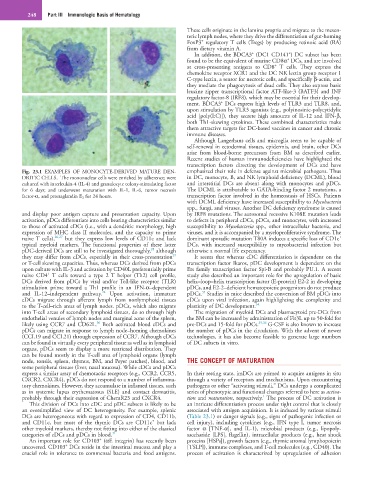
        Fig.  23.1  EXAMPLES  OF  MONOCYTE-DERIVED  MATURE  DEN-  emphasized their role in defense against microbial pathogens. Thus
        DRITIC CELLS.  The mononuclear cells were enriched by adherence; were   in DC, monocyte, B, and NK lymphoid deficiency (DCML), blood
        cultured with interleukin-4 (IL-4) and granulocyte colony-stimulating factor   and  interstitial  DCs  are  absent  along  with  monocytes  and  pDCs.
        for  6  days;  and  underwent  maturation  with  IL-1,  IL-6,  tumor  necrosis   The DCML is attributable to GATA-binding factor 2 mutations, a
        factor-α, and prostaglandin E 2 for 24 hours.         transcription factor involved in the homeostasis of HSCs. Patients
                                                              with DCML deficiency have increased susceptibility to Mycobacteria
                                                              spp., fungi, and viruses. Another DC deficiency syndrome is caused
        and display poor antigen capture and presentation capacity. Upon   by IRF8 mutations. The autosomal recessive K108E mutation leads
        activation, pDCs differentiate into cells bearing characteristics similar   to defects in peripheral cDCs, pDCs, and monocytes, with increased
        to those of activated cDCs (i.e., with a dendritic morphology, high   susceptibility to Mycobacteria spp., other intracellular bacteria, and
        expression  of  MHC  class  II  molecules,  and  the  capacity  to  prime   viruses, and it is accompanied by a myeloproliferative syndrome. The
                                                                                                                +
        naive T  cells), 26,27   but  they  express  low  levels  of  CD11c  and  lack   dominant sporadic mutation T80A induces a specific loss of CD1c
        typical  myeloid  markers. The  functional  properties  of  these  latter   DCs,  with  increased  susceptibility  to  mycobacterial  infection  but
                                                  28
        pDC-derived DCs are still to be investigated thoroughly,  although   otherwise a normal life expectancy.
                                                         29
        they may differ from cDCs, especially in their cross-presentation    It seems that whereas cDC differentiation is dependent on the
        or T-cell skewing capacities. Thus, whereas DCs derived from pDCs   transcription factor Ikaros, pDC development is dependent on the
        upon culture with IL-3 and activation by CD40L preferentially prime   Ets family transcription factor Spi-B and probably PU.1. A recent
                 +
        naive  CD4   T  cells  toward  a  type  2  T  helper  (Th2)  cell  profile,   study also described an important role for the upregulation of basic
        DCs  derived  from  pDCs  by  viral  and/or Toll-like  receptor  (TLR)   helix–loop–helix transcription factor (E-protein) E2-2 in developing
        stimulation  prime  toward  a  Th1  profile  in  an  IFN-α–dependent   pDCs, and E2-2–deficient hematopoietic progenitors do not produce
                                                                   33
                                  24
        and  IL-12–independent  pathway.   Upon  activation,  immature   pDCs.  Studies in mice described the conversion of BM pDCs into
        cDCs  migrate  through  afferent  lymph  from  nonlymphoid  tissues   cDCs  upon  viral  infection,  again  highlighting  the  complexity  and
        to the T-cell–rich areas of lymph nodes. pDCs, which also migrate   plasticity of DC development. 34
        into T-cell areas of secondary lymphoid tissues, do so through high   The migration of myeloid DCs and plasmacytoid pre-DCs from
        endothelial venules of lymph nodes and marginal zone of the spleen,   the BM can be increased by administration of Flt3L up to 50-fold for
                                 30
        likely using CCR7 and CD62L.  Both activated blood cDCs and   pre-DCs and 15-fold for pDCs. 35,36  G-CSF is also known to increase
        pDCs can migrate in response to lymph node–homing chemokines   the number of pDCs in the circulation. With the advent of newer
        (CCL19 and CCL21) through expression of CCR7. Although cDCs   technologies, it has also become feasible to generate large numbers
        can be found in virtually every peripheral tissue as well as in lymphoid   of DC subsets in vitro.
        organs, pDCs seem to display a more restricted distribution. They
        can be found mostly in the T-cell area of lymphoid organs (lymph
        node, tonsils, spleen, thymus, BM, and Peyer patches), blood, and   THE CONCEPT OF MATURATION
        some peripheral tissues (liver, nasal mucosa). While cDCs and pDCs
        express a similar array of chemotactic receptors (e.g., CCR2, CCR5,   In their resting state, imDCs are primed to acquire antigens in situ
        CXCR2, CXCR4), pDCs do not respond to a number of inflamma-  through a variety of receptors and mechanisms. Upon encountering
        tory chemokines. However, they accumulate in inflamed tissues, such   pathogens or other “activating stimuli,” DCs undergo a complicated
        as  in  systemic  lupus  erythematosus  (SLE)  and  contact  dermatitis,   series of phenotypic and functional changes referred to here as activa-
                                                                                       1
        probably through their expression of ChemR23 and CXCR4.  tion and maturation, respectively.  The process of DC activation is
           This division of DCs into cDC and pDC subsets is likely to be   an intricate differentiation process under tight control that is closely
        an  oversimplified  view  of  DC  heterogeneity.  For  example,  splenic   associated with antigen acquisition. It is induced by various stimuli
        DCs are heterogeneous with regard to expression of CD4, CD11b,   (Table 23.1) or danger signals (e.g., signs of pathogenic infection or
                                                   +
        and  CD11c,  but  most  of  the  thymic  DCs  are  CD11c   but  lack   cell  injury),  including  cytokines  (e.g.,  IFN  type  I,  tumor  necrosis
        other myeloid markers, thereby not fitting into either of the classical   factor  α  [TNF-α],  and  IL-1),  microbial  products  (e.g.,  lipopoly-
        categories of cDCs and pDCs in blood. 31              saccharide [LPS], flagellin), intracellular products (e.g., heat shock
                                  +
           An important role for CD103  (αE integrin) has recently been   proteins [HSPs]), growth factors (e.g., thymic stromal lymphopoietin
                      +
        uncovered. CD103  DCs reside in the intestinal mucosa and play a   [TSLP]), immune complexes, and T-cell molecules (e.g., CD40). The
        crucial role in tolerance to commensal bacteria and food antigens.   process  of  activation  is  characterized  by  upregulation  of  adhesion

